


/file/publisher-c1a3f893382d2b2f8a9aa22a654d9c97/2020/10/2bda679309c88e264ef963588bbe46d2.jpg)

COMMENT | Could Malaysia's judiciary rise again?
COMMENT | The blade fell in 1988. Not a surgical incision, but a cleaver’s brutal arc through Malaysia’s constitutional spine.
The tribunalisation of Lord President Salleh Abas - an architect of judicial dignity - and the purging of Supreme Court judges, was no transient squall. It was an institutional amputation.
The scalpel of politics severed the spinal cord linking the bench to its lifeblood: judicial independence. Honour bled onto marble floors. The temple’s sanctum lay defiled.
Within marble chambers
where the scales of justice
have trembled through tempest and calm,
where in silent corridors,
darkness once consumed light,
where the sacred spirit of law
endured its darkest winter -
here lives a story of its struggle
and its resurrection.
The robe, once rent by a political blade,
was rewoven with threads of courage;
how the flame, once dimmed to dying ember,
burns bright once more:
luminous, defiant, and eternal.
- GK Ganesan
COMMENT | The blade fell in 1988. Not a surgical incision, but a cleaver’s brutal arc through Malaysia’s constitutional spine.
The tribunalisation of Lord President Salleh Abas - an architect of judicial dignity - and the purging of Supreme Court judges, was no transient squall. It was an institutional amputation.
The scalpel of politics severed the spinal cord linking the bench to its lifeblood: judicial independence. Honour bled onto marble floors. The temple’s sanctum lay defiled.
A glacial winter descended, spanning decades
Within court corridors, silence echoed like the chambers of a tomb. Backlogs metastasised - 120,000 cases had festered by 2008, burying justice beneath strata of neglect.
Public trust withered to a skeletal 26 percent, as cynicism seeped into the civic marrow.
Beyond Malaysia’s shores, the president of the International Court of Justice mourned, “a compromised temple”; while domestically, retired judge Gopal Sri Ram lamented a descent into “constitutional nihilism”.
The Lina Joy appeal languished for eight years in procedural purgatory - a soul trapped between theological doctrine and civil identity, emblematic of justice entombed by inertia.
The courts moved, but only like spectres through fog.
The embers beneath ash
Yet, within the frost, embers glowed.
Resistance was not always public, but etched in quiet defiance: a dissenting judgment carefully worded, a precedent upheld against whispered threats.
The thaw began not with fanfare, but with the silent tenacity of those who remembered the robe’s covenant.
When Tengku Maimun Tuan Mat ascended to the Chief Justiceship in 2019, she inherited not merely an institution, but ruins.
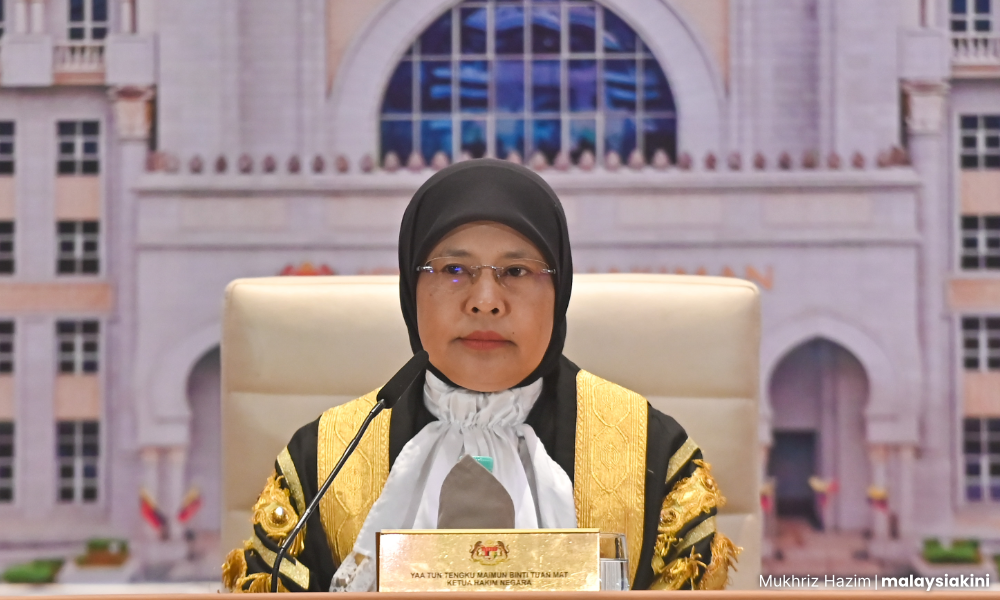
Foundations, cracked by tremors of distrust, awaited rebuilding. Stone by stone, she began repointing the edifice.
The Judicial Appointments Commission (JAC) - once a cipher for patronage - was reforged.
Deliberations emerged from shadowed chambers; recommendations were published like illuminated manuscripts.
Merit became the lodestar. Sycophancy and nepotism retreated, like mist before dawn.
Jurisprudential spring: A tapestry of courage
What blossomed was a jurisprudential renaissance, radiant in its diversity. Each ruling became a thread rewoven into the nation’s constitutional tapestry:
Against executive overreach
In Semenyih Jaya (2017), the Federal Court resurrected the Basic Structure Doctrine - a constitutional defibrillator.
“Parliament,” it declared, “is bound by the Constitution’s supreme animating spirit.”
The ruling electrified practitioners and legal academia, and sovereignty returned to the people.
Sanctuary of belief
M Indira Gandhi (2018) shielded private faith from state intrusion. The court forbade compulsion in matters of conscience, affirming that belief thrives not in state-prescribed cages, but in the sanctuary of the soul.
Confronting corruption
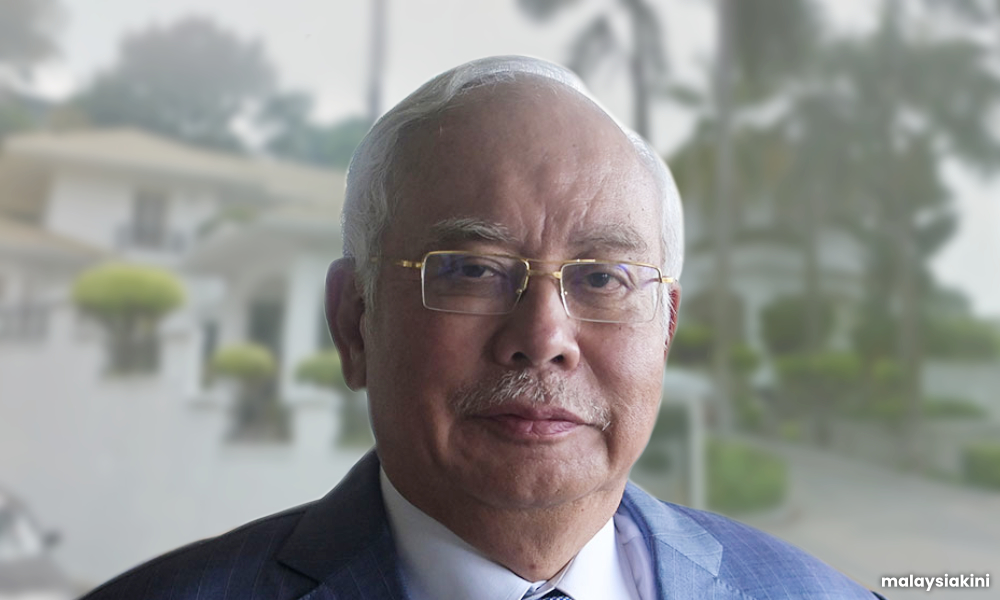
In Najib Abdul Razak v PP (2022), three courts found a former prime minister guilty of corruption with the precision of forensic archaeologists.
Constitutional Supremacy and the shadow of the courts, even over parliamentary privilege
Gobind Singh Deo [2014] addressed the delicate balance between protecting parliamentary privilege and ensuring that elected representatives can fulfil their role as stewards of the people’s voice within the constitutional framework.
Federal Court judge Suriyadi emphasised that, because of the constitutional supremacy in Malaysia, “the court’s shadow [is] cast over Parliament’s proceedings. The court’s presence ensures that a check and balance exists.”
Beyond these titans, renewal touched every branch of the law
Taxpayer Justice
In Transocean Drilling Sdn Bhd and Keysight Technologies Malaysia Sdn Bhd [2024], the court barred retroactive tax assessments, affirming that fiscal certainty is the bedrock of commerce.
Travel bans prevented
Maria Chin Abdullah v Ketua Pengarah Imigresen & Anor [2021] involved the question of whether the Immigration Department could impose travel bans against critics of the government.

The Federal Court ruled that the Immigration director-general had acted unlawfully in imposing the travel ban.
Assembly rights
Nik Nazmi Nik Ahmad v PP dissolved arbitrary police permits, declaring streets the people’s forum. The ruling echoed through Bersih rallies.
Procedural sanctity
R Sivarasa v Badan Peguam Malaysia (2010) questioned whether a provision that barred a lawyer-politician from participating in Bar Council elections was inconsistent with the Constitution, proving that justice begins with process.
Criminal law redemption
In PP v Mohd Khairul Mahadi bin Hanapi [2022], even the Sessions Court rose to the occasion, declining to convict a person on the grounds of defective procedures and evidential issues.
The alchemy of renewal
This transformation transcended doctrine. It lived in the texture of justice.
Judgments as literature: Opinions now gleam with diamond clarity.
Who can forget judge Abdoolcader’s opening salvo in his ex-tempore, self-proclaimed, “vigorous” dissent in Government of Malaysia v Lim Kit Siang (1988): “I intend to translate the sting of the thing into language as mild as I can mobilise and muster without mincing words.”

Lyrical language, thought long interred after judge Abdoolcader’s passing, found its voice again in the words of judge Zainun Ali: “Wherefore now stands the judge? It would appear that he sits by the sidelines and dutifully anoints the assessors’ decision.”
The backlog vanquished: Through digital alchemy (MyJudgment portals) and monastic work ethic, case backlogs receded 68 percent by 2023. Justice shed its shackles of delay.
Temples of justice: The Kota Kinabalu courthouse rose, not just stone and glass, but a physical ode to renewal. Its vaulted ceilings whisper of transparency; its open arches defy opacity.
Committed judges: Retired Chief Justice Richard Malanjum captured the judiciary’s ethos: “They work now with Benedictine discipline. The robe is no longer cloth - it is covenant.”
And so, night after long night, lights burned in judges’ chambers. Footnotes were polished, and precedents re-examined. The bench remembered its oath.
Gathering storms: The test of time
Yet no renaissance is impervious to twilight. Eight judicial titans - the architects of this rebirth - approach mandatory retirement by 2026.
Their departure is not routine. It is an exodus of institutional memory.
Apart from the first woman Chief Justice of Malaysia, Tun Tengku Maimun Tuan Mat, in order of age, judges Harmindar Singh Dhaliwal, Abdul Rahman Sebli, Zabariah Yusof, Hasnah Hashim, Hanipah Farikullah, Abang Iskandar Abang Hashim, and Nallini Pathmanathan are names synonymous with the Rule of Law, and they will exit the stage: a Changing of the Guard.
Their successors, though erudite, are untested in constitutional furnaces. The Judicial Appointments Commission now faces its crucible:
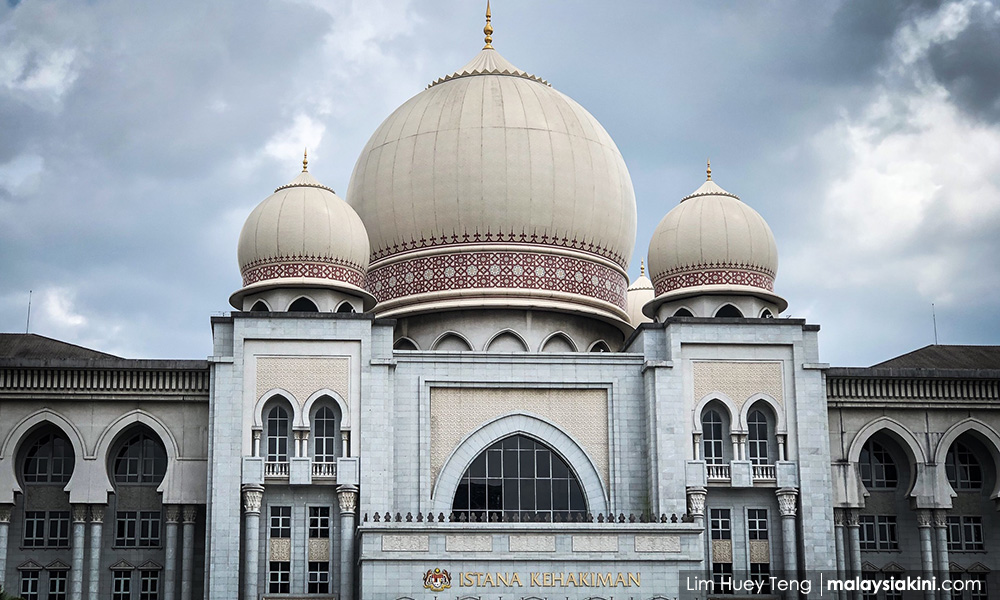
Will meritocracy withstand political nostalgia? Can the forge resist regressive tempering?
A single misstep - a politically compliant appointment, a retreat on judicial review - could fracture the edifice.
The oligarchy watches, and waits. The shadows of 1988 linger in alcoves.
Epilogue: The eternal flame
This, then, is Malaysia’s judicial odyssey:
A fall into abyss.
A climb toward light.
A beacon reignited.
The courts today stand as both tribunal and testament. Their judgments bind both litigants and history.
Yet the flame remains vulnerable - to complacency, to covert pressure, and, crucially, to the changing of the guard.
For the Rule of Law is neither a monument for mere lip service, nor a relic consigned to the mists of things long forgotten.
“It is a living flame, flickering, and defiant: and yet vulnerable to every wind.”
Guard it not with rhetoric, Malaysia, but with relentless vigilance. For in its glow resides your sovereignty.
GK GANESAN is a lawyer and an international commercial arbitrator.
Gratitude: the author thanks UK Menon, KN Geetha, TP Vaani, JN Lheela and Lydia Jaynthi.
Malaysiakini has obtained permission to republish this article, which first appeared here.
The views expressed here are those of the author/contributor and do not necessarily represent the views of Malaysiakini.
/file/1169/adfa3c09494ead48b4b6f5caf9a3ad4b.jpeg)
/file/publisher-c1a3f893382d2b2f8a9aa22a654d9c97/2025/06/d999e3bd11b15e6b1efe863312151fae.jpg)
/file/publisher-c1a3f893382d2b2f8a9aa22a654d9c97/2019/11/64f0b0fbb5ee34f12b79b87494dd7e23.jpg)
/file/publisher-c1a3f893382d2b2f8a9aa22a654d9c97/2025/04/cbef37e460dc6e59b0614fbb801730ab.jpg)
/file/publisher-c1a3f893382d2b2f8a9aa22a654d9c97/2020/06/f157fe876f28f156b981e1861826bc0d.jpg)
/file/publisher-c1a3f893382d2b2f8a9aa22a654d9c97/2025/05/88256c52fe8880ba310467c5600377c3.jpg)


Report this comment
Are you sure you want to delete this comment?
This action cannot be undone.