


/file/publisher-c1a3f893382d2b2f8a9aa22a654d9c97/2021/02/ff8194f70d3cf04ee5dadb75062cf58c.jpg)

COMMENT | Was majority decision on SIS absolutely correct?
COMMENT | In 2014, the Selangor government gazetted a fatwa which, inter alia, declared that Sisters in Islam (SIS), individuals, organisations and institutions that adopt ideologies of liberalism and pluralism are deviant and against the teaching of Islam.
The state fatwa committee prepared the fatwa.
Being aggrieved by the aforesaid fatwa, SIS and its founder,...
COMMENT | In 2014, the Selangor government gazetted a fatwa which, inter alia, declared that Sisters in Islam (SIS), individuals, organisations and institutions that adopt ideologies of liberalism and pluralism are deviant and against the teaching of Islam.
The state fatwa committee prepared the fatwa.
Being aggrieved by the aforesaid fatwa, SIS and its founder, Zainah Mahfoozah Anwar, filed a judicial review asking, among other things, for an order of certiorari quashing the said fatwa.
The applicants, however, lost the legal battle at the High Court in that the said court of first instance refused to grant their reliefs for judicial review.
Thereafter, they lost once again at the Court of Appeal. Hence, they sought an intervention from the apex court through their final appeal.
And yesterday they were lucky. The Federal Court, in a majority decision, held that the fatwa which declared liberalism and religious pluralism as deviant cannot be applied to SIS Malaysia Forum - a company limited by guarantee - on the ground that it is not a natural person professing the religion of Islam.
Natural persons, not artificial entities
In delivering the said majority decision, the learned chief justice ruled that the term “persons professing the religion of Islam” in the Federal Constitution refers exclusively to natural persons, and not artificial entities such as companies or organisations.
Tengku Maimun Tuan Mat also held, “although the subject matter of the dispute relates to a fatwa, the issue before us is about the interpretation of the words ‘persons professing the religion of Islam’ in Item 1 of List II – State List, Ninth Schedule of the Federal Constitution (Item 1)”.

In my view, the majority decision was correct in holding that the words “persons professing the religion of Islam” should not have referred to an artificial person such as SIS Malaysia Forum - a company limited by guarantee, simply because it is not a natural person professing the religion of Islam.
After all, how was a company supposed to repent as dictated by the wording in the fatwa?
Perhaps the majority decision could be easily defended if the sole issue in this case merely entailed the interpretation of the words.
If that was the true nature of SIS’ application, it goes without saying that the Federal Court definitely possesses the sole jurisdiction to embark on such a constitutional interpretation.
But was the issue only confined to a constitutional interpretation?
Beyond constitutional interpretation
With the greatest respect, it seems to me that the issues before the apex court were beyond the issue of constitutional interpretation.
One may safely argue that the applicants’ application for judicial review, in pith and substance, essentially entailed the issue of an application which sought to invalidate a fatwa must come under the exclusive purview of the syariah court.
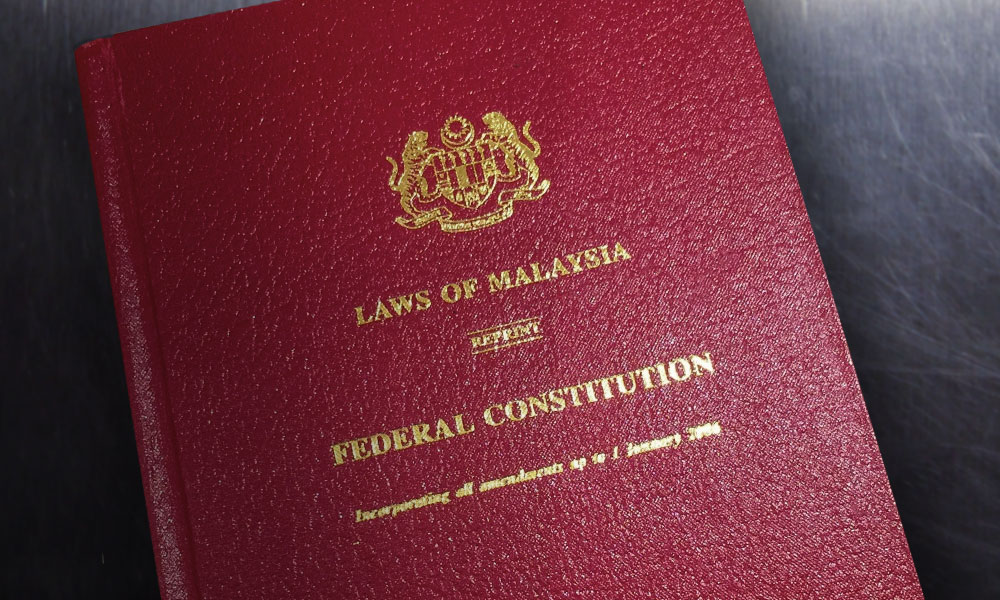
Hence, the application for judicial review should have triggered Article 121 (1A) of the Federal Constitution, meaning that the civil court has no power to assume jurisdiction on this very issue.
In my view, the majority decision should have decided that the subject matter involved in this case, in pith and substance, essentially deals with the issue of fatwa and not the issue of constitutional interpretation.
Therefore, the fit and proper forum to adjudicate any issue revolving around a fatwa must be solely conferred to the syariah court. Otherwise, one may argue that Article 121(1A) would become an otiose provision.
As rightly pointed out in the dissenting view held by Abu Bakar Jais, “the High Court was absolutely correct to decide on the present case by determining whether the civil courts in the first place, have jurisdiction to hear the application for judicial review.”
To conclude, we may say that insofar as the majority decision of the Federal Court about the constitutional meaning of the “person professing the religion of Islam in Item 1 of List II – State List, Ninth Schedule of the Federal Constitution (Item 1)” is concerned, such a decision was absolutely correct.
However, the dissenting opinion, in my view, was equally right in holding that the matter should have been determined by the syariah court.
HANIPA MAIDIN is a former deputy minister of law.
The views expressed here are those of the author/contributor and do not necessarily represent the views of Malaysiakini.
/file/publisher-c1a3f893382d2b2f8a9aa22a654d9c97/2024/02/c0281926f9b01f4339752d7bfa7efe85.jpg)
/file/publisher-c1a3f893382d2b2f8a9aa22a654d9c97/2025/03/2dfb99c2f9d4655e44cc6050cf36d808.jpg)
/file/publisher-c1a3f893382d2b2f8a9aa22a654d9c97/2025/06/e4772274861a26bd52e75e365e2445dd.jpg)
/file/publisher-c1a3f893382d2b2f8a9aa22a654d9c97/2025/06/5f73e6d7e0cb3c3998fe7a7e7007f3de.jpg)
/file/publisher-c1a3f893382d2b2f8a9aa22a654d9c97/2025/06/268610dfc9d4bc6b9fdc948a3cd4586c.jpg)


Are you sure you want to delete this comment?
This action cannot be undone.