


/file/publisher-c1a3f893382d2b2f8a9aa22a654d9c97/2024/09/2a64ccd9f412db22318e949ee1e0dc7d.jpg)

COMMENT | From Davos to Putrajaya: Sovereignty not optional
COMMENT | It is not often that Canada - the US’ polite northern neighbour - steals the limelight at Davos. Long muted by proximity and dependence on the global hegemon, Canada’s voice at elite global forums has typically remained anchored in the safe harbours of diplomacy, consensus and multilateralism.
Which is why Prime Minister Mark Carney’s intervention landed like glass shattering in a quiet room.
Perhaps it was the shock therapy of US President Donald Trump’s demand that Denmark “hand over” Greenland that finally pushed Canada to bell the cat.
Speaking to the Davos elite, Carney did not mince words...
COMMENT | It is not often that Canada - the US’ polite northern neighbour - steals the limelight at Davos. Long muted by proximity and dependence on the global hegemon, Canada’s voice at elite global forums has typically remained anchored in the safe harbours of diplomacy, consensus and multilateralism.
Which is why Prime Minister Mark Carney’s intervention landed like glass shattering in a quiet room.
Perhaps it was the shock therapy of US President Donald Trump’s demand that Denmark “hand over” Greenland that finally pushed Canada to bell the cat.
Speaking to the Davos elite, Carney did not mince words: “We live in an era of great power rivalry. The rules-based order is fading. The strong do what they can, and the weak suffer what they must.”
The quote - borrowed from Thucydides - was not accidental. It was a reminder that power politics never disappeared; it merely learnt to wear a suit and speak the language of rules.
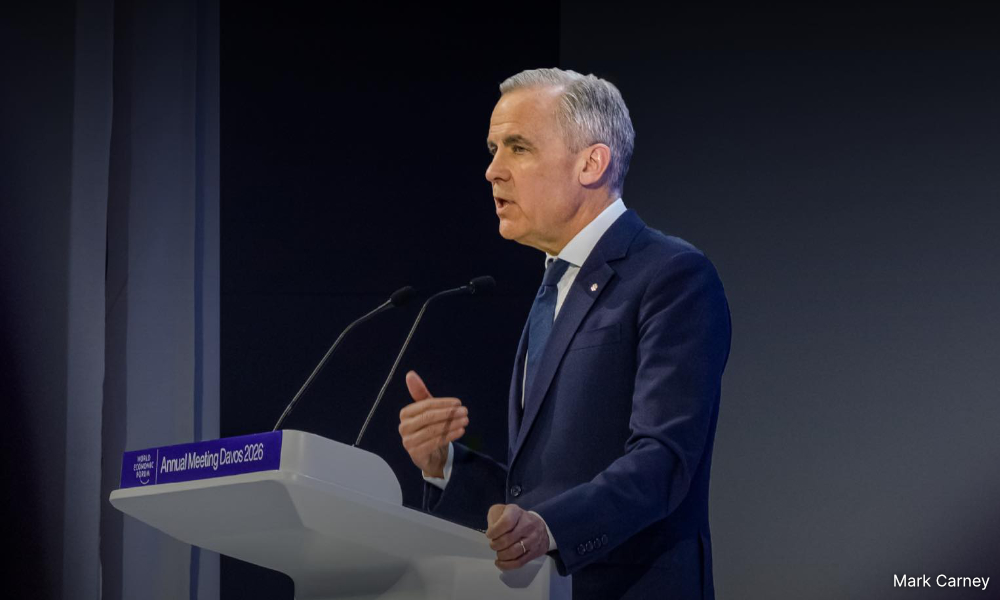
Carney went further, admitting that the so-called rules-based international order had always been, at least in part, a fig leaf.
“We knew that the strongest would exempt themselves when convenient. That trade rules were enforced asymmetrically. And that international law applied with varying rigour depending on who the accused - or the victim - was.”
Nor, he said, should middle powers waste time waiting out another Trump presidency.
“The old order is not coming back. We should not mourn it. Nostalgia is not a strategy.”
In one stroke, Carney punctured the comforting myth that patience and good behaviour would eventually be rewarded. For middle powers, he warned, bilateral negotiations with a hegemon resemble bargaining with gravity.
“We accept what’s offered. We compete with each other to be the most accommodating. It’s the performance of sovereignty while accepting subordination.”
A flag may still fly. A seat may still be occupied. But the script is written elsewhere.
Integration as subordination
Which brings us to Malaysia. The year 2025 was meant to be a banner year: Malaysia’s chairing of Asean, the signing of the Agreement on Reciprocal Trade (ART) with the US, and a steady stream of announcements about mega foreign investments in hyperscale data centres.
The question is simple: Is Malaysia stronger today?
The Asean summits certainly put Malaysia in the global spotlight - a proud moment, a diplomatic carnival, a regional reunion. But like other summits, moving beyond the photo opportunities and formal statements, there was little substantive movement on the issues that matter most.
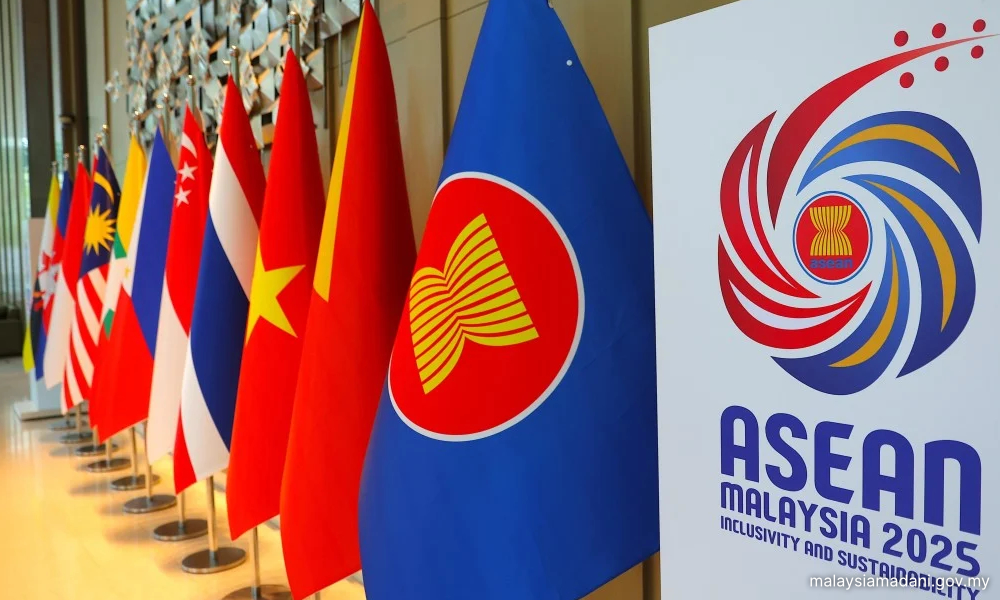
No meaningful progress on Palestine, Ukraine or Myanmar. No joint bargaining on tariffs. No regional position on climate, artificial intelligence (AI), debt or technology governance.
The music played, but nobody danced in the same direction.
Still, not all is lost. Malaysia showed it can play a neutral host, bringing conflicting parties together. Can we envision Malaysia as a diplomatic ballroom? Perhaps Kuala Lumpur should be the new New York or playhouse for BRICS. With a little imagination, courage and diplomatic skills, why not?
The ART, meanwhile, left our leaders dancing to Uncle Sam’s tune. We are now required to “consult” the US before signing certain international agreements. We made oversized concessions for token tariff reductions.
It is as if we celebrated not freedom from the whip, but being beaten a little less.
And then there are data centres. Will they save Malaysia?
Many Malaysians worry that hyperscale data centres will demand the electricity and water of a small city. We once attracted foreign investment by advertising “cheap labour and political stability”. Are we now discounting energy and diverting scarce water resources to feed global computing demands?
More importantly, do these investments lock us more deeply into foreign - largely US -technology ecosystems?
As Carney warned, “You cannot live within the lie of mutual benefit through integration when integration becomes the source of your subordination.”
At some point, the ladder stops being a ladder and starts becoming a leash.
Middle power sovereignty
After Venezuela, one thing is clear: the gloves are off.
The US is openly seeking leverage over China - through control of oil flows, restrictions on market access and dominance over strategic technology sectors such as telecommunications, AI, quantum computing and global media.
Malaysia sits squarely in the crosshairs.
We are a key trading partner of China, while straddling the strategically vital South China Sea. We will be pulled in both directions, whether we like it or not.
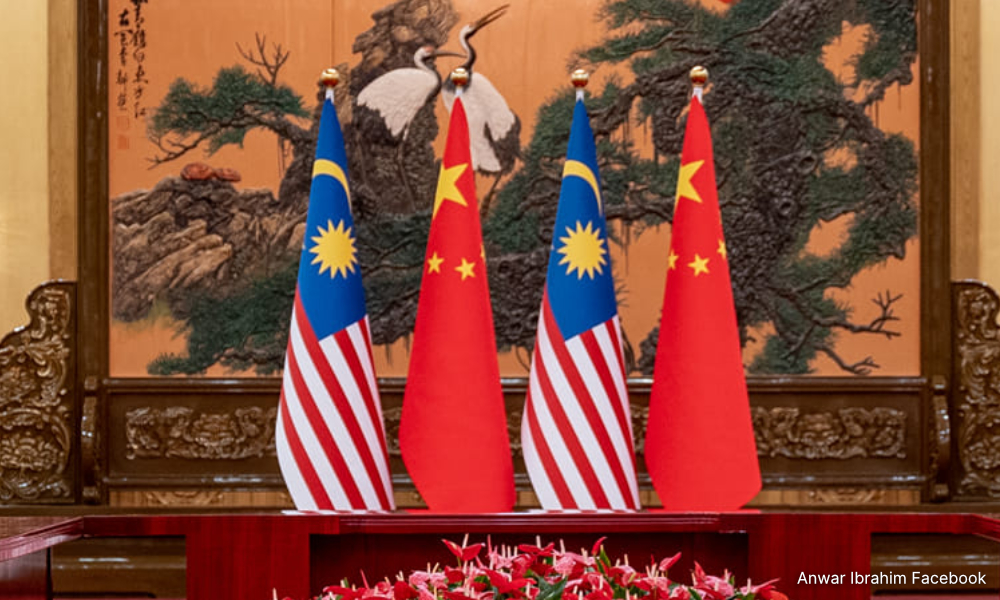
The question is not whether Malaysia can avoid this tug of war, but how we anchor ourselves so we are not torn apart. Can we turn a challenge into an opportunity?
Perhaps it is time to revisit our development strategy - not nostalgically, but soberly, in light of how the world has changed.
In the 1980s, export-led industrialisation was the right answer for Malaysia. By plugging into global supply chains, attracting foreign capital and specialising in manufacturing, the country moved millions out of poverty and transformed itself from an agrarian economy into a semi-industrialised one.
That model assumed a relatively open global trading system, predictable rules and the free flow of goods, capital and technology. For decades, those assumptions largely held.
They no longer do.
Today, trade itself is increasingly weaponised. Tariffs, sanctions, export controls, industrial subsidies and “friendshoring” are no longer exceptional tools; they are standard instruments of great-power competition.
The same supply chains that once delivered efficiency now expose vulnerability. A disruption in the Red Sea, a drought in a grain-exporting country, or a geopolitical dispute between major powers can ripple instantly into domestic prices and shortages.
At the same time, a quieter but equally important shift is underway: Asean’s internal demand is rising. With a combined population of more than 670 million, a growing middle class and accelerating urbanisation, Southeast Asia is no longer just a production base for others - it is becoming a major consumption market in its own right.
This convergence raises a once-taboo question: Is it time to revisit import substitution, as a strategic complement to export-led growth? Not “close the borders”, but “build what matters most”, nationally and regionally. Buy Asean first, where it makes sense?
Food security offers the most obvious and urgent starting point.
Malaysia today lacks meaningful food security and suffers from chronic food inflation. Prices of basic food products are volatile, hitting lower- and middle-income households hardest.

In 2024, Malaysia’s import bill for agriculture and food-related products approached RM150 billion - a staggering figure for a country with arable land, a favourable climate and decades of agricultural experience.
This dependence is not merely an economic issue; it is a strategic risk. Imported food prices are hostage to global commodity markets, currency fluctuations, climate shocks abroad and policy decisions made in foreign capitals.
When exporting countries restrict supply - as they have repeatedly done during crises - import-dependent nations discover that money alone cannot guarantee access.
Expanding domestic food production, therefore, is not a romantic return to kampung economics. It is a hard-headed necessity. Reducing dependence on imported poultry feed, for example, would lower costs across the entire protein supply chain.
Investing in improved farming and agriculture would raise yields without expanding land use. Urban farming, vertical agriculture and peri-urban food systems can shorten supply chains and stabilise prices.
Cutting food waste - currently estimated at millions of tonnes annually - is effectively “new production” without planting a single seed.
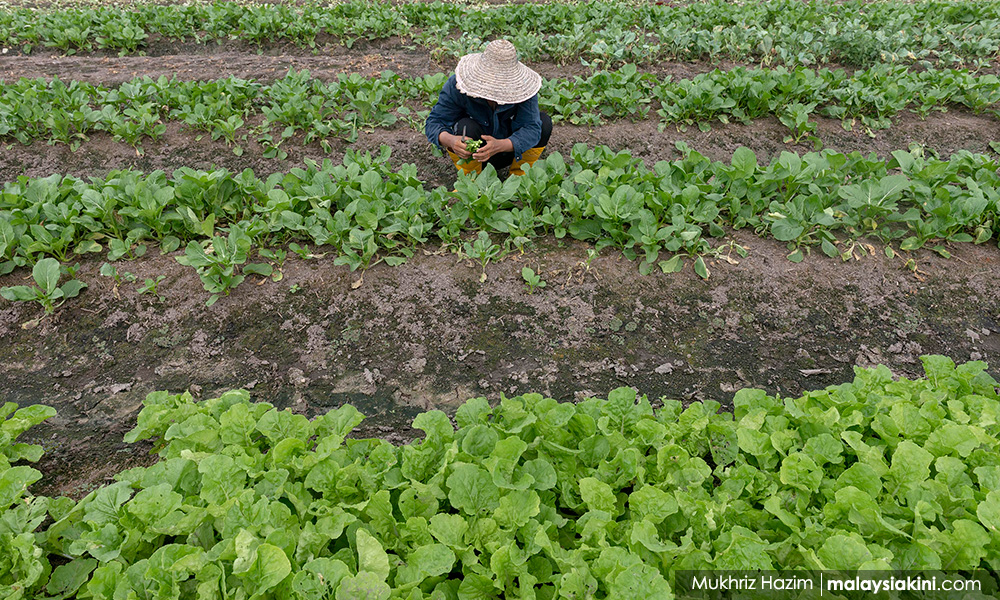
None of this implies abandoning technology or innovation. But innovation must be anchored to material needs. AI that optimises logistics is valuable; AI that cannot ensure affordable food is insufficient.
The government, to its credit, recognises the problem at least rhetorically. The renaming of the Agriculture Ministry to explicitly include food security signals awareness that food is no longer a secondary sector.
Yet in practice, the national conversation remains skewed. We hear far more about data centres, AI investments and digital ambitions than about rice yields, vegetable supply chains or feedstock resilience.
A recalibrated development strategy would not reject exports or technology. It would simply recognise that resilience matters as much as efficiency, and that sovereignty begins not in slogans, but in supply chains.
In a world where trade can be turned off with the stroke of a pen, the ability to feed your population is not backward - it is power.
You cannot eat cloud computing.
Digital sovereignty: From dependency to design
In technology, the imbalance is stark. Malaysia runs a RM7 billion trade-in-services deficit with the US. Government systems, businesses and universities depend heavily on Microsoft and Google.
Our social media and messaging platforms are dominated by Meta and TikTok. Urban delivery logistics are effectively controlled by Grab.

These companies control advertising revenue, shape media consumption and routinely ignore government requests. The rise of AI risks deepening this dependency. As AI becomes embedded in productivity, governance and decision-making, entire systems - and workforces - may become dependent on tools we do not control.
The government has allocated RM2 billion for sovereign AI. That is welcome. But the battle is not simply about building a large local language model.
Historically, we fund a government-linked company or politically connected firm, grant it concessions and monopolies and call it national development. Whether foreign or local, monopolies are bad economics and worse sovereignty.
Instead, procurement and investment should support a diverse ecosystem of Malaysian companies.
The good news is that the economics have changed. With AI-assisted coding - “vibe coding” - the cost of developing software has collapsed. What once took years and millions can now be built in weeks at a fraction of the cost.
Countries far larger than Malaysia - China, India, Russia - have built robust sovereign digital systems. Today, Malaysia can do the same at a scale and cost unimaginable a decade ago.
Buying Malaysian does not mean settling for inferior systems. It means building talent, retaining value and creating platforms that can be exported across Asean and to smaller nations facing the same digital sovereignty risks.
The real challenge is no longer technology. It is adoption.
Governments are uniquely positioned to drive adoption - through regulation, procurement and momentum. Just as we built universities or shifted the administrative capital to Putrajaya, we can mandate new digital defaults.

Rather than merely regulating or blocking foreign platforms, it is time to tender openly for Malaysian-built alternatives: email systems, writing tools, chat apps, social platforms and payment infrastructure.
This would build local capability, save billions over time and prevent technology companies from dictating national terms.
Sovereignty today is not just about borders and flags. It is about food, data, energy, platforms and the invisible systems that organise daily life. Sovereignty must be designed, defended and deployed. In a world where power is naked again, pretending otherwise is not pragmatism - it is denial.
PREMESH CHANDRAN is the co-founder and former CEO of Malaysiakini.
/file/publisher-c1a3f893382d2b2f8a9aa22a654d9c97/2026/01/4bf581989b0f38802810e31ec6db8c83.jpg)
/file/image/75637837_605.jpg)
/file/image/75616210_605.jpg)
/file/publisher-c1a3f893382d2b2f8a9aa22a654d9c97/2024/08/7a271e54144519a19ee77ee9e4ce69c9.jpg)
/file/publisher-c1a3f893382d2b2f8a9aa22a654d9c97/2026/01/361348feb00c83d4649c6da543bee2e8.jpg)


Are you sure you want to delete this comment?
This action cannot be undone.