/file/publisher-c1a3f893382d2b2f8a9aa22a654d9c97/2022/03/0e2d8daaac307d89ed536d02314824aa.jpg)

COMMENT | When private entities turn personal property into bargaining chip
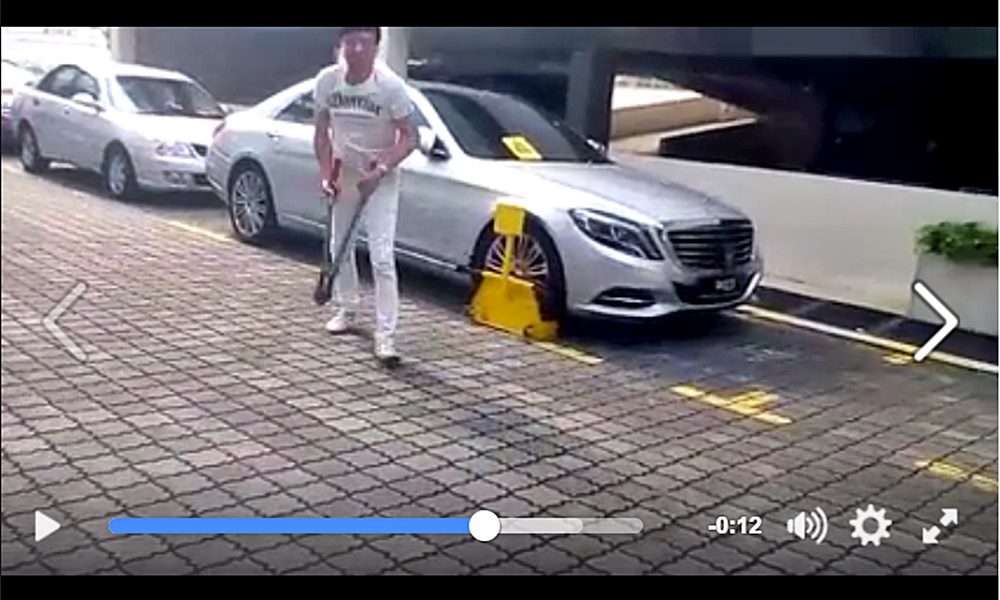
COMMENT | Picture this: You rush to visit a client for an important meeting in a private building.
In a hurry, you park your vehicle in a bay marked “Reserved”.
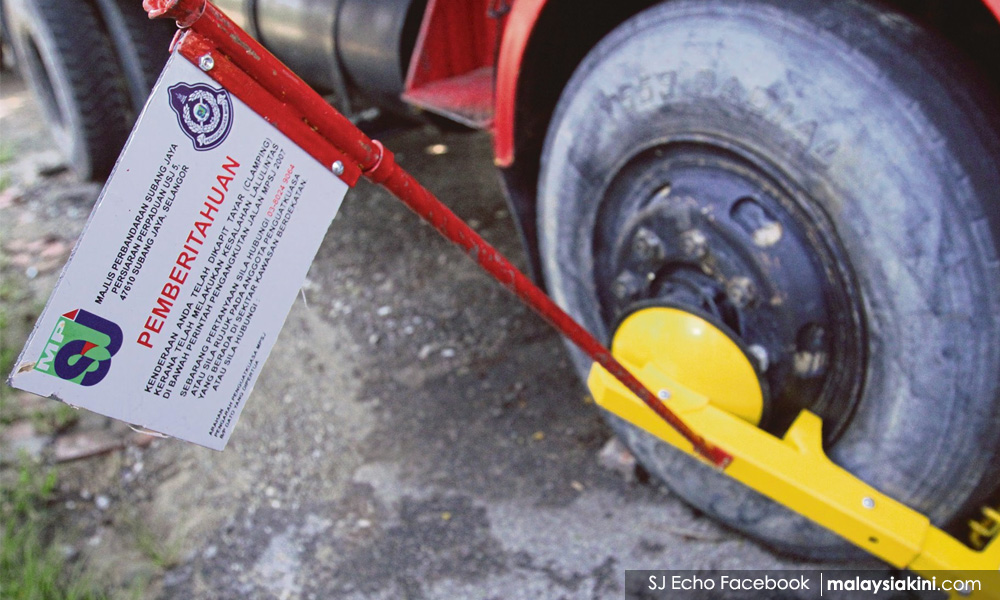
When you return, you are greeted by an infuriating sight: your car is trapped behind a cone, a heavy chain, or a solid metal wheel clamp.
The parking attendant politely tells you that because you parked in a reserved lot, you cannot leave unless you pay a “release fee” of RM100.
Feeling cornered, you...
COMMENT | Picture this: You rush to visit a client for an important meeting in a private building.
In a hurry, you park your vehicle in a bay marked “Reserved”.
When you return, you are greeted by an infuriating sight: your car is trapped behind a cone, a heavy chain, or a solid metal wheel clamp.
The parking attendant politely tells you that because you parked in a reserved lot, you cannot leave unless you pay a “release fee” of RM100.
Feeling cornered, you pay the money just to get your car back.
You may even write “under protest” or “without prejudice” on the receipt to show your deep dissatisfaction.
Is that the end of the story? In many common law countries, the answer is “No”, especially if this so-called release fee is really a private ransom dressed up as parking discipline.
Trespass to goods and conversion
If you sue the carpark owner or building owner, courts are often not very interested in your bad parking manners.
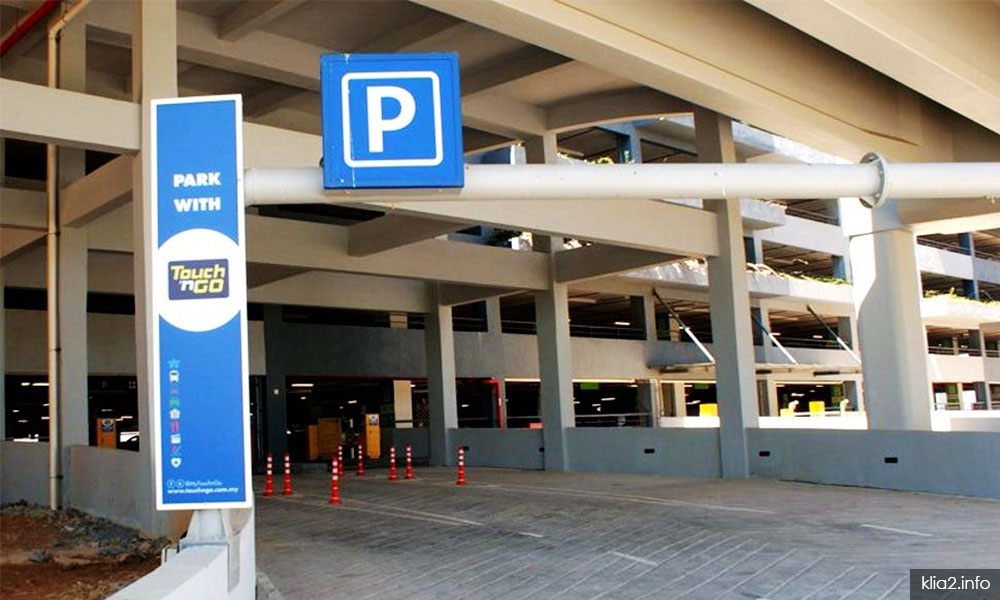
Parking in the wrong bay on private land is usually treated as a breach of contract or a simple trespass to land. It rarely justifies forcible interference with your vehicle, your chattel.
The law instead focuses on what the parking company did to your personal property. The court asks whether there was “wrongful interference with goods” rather than whether you broke parking etiquette.
If anyone deliberately interferes with your car without lawful authority, they commit trespass to goods.
If they then refuse to return it unless you pay, that often becomes conversion, meaning they are behaving as if your car were their own property.

A famous example of conversion arose after the invasion of Kuwait, when Iraqi Airways took and used Kuwait Airways’ planes.
The House of Lords held that deliberately exercising control over another person’s aircraft, in a way inconsistent with the true owner’s rights, is conversion and attracts strict liability. It does not matter if the wrongdoer thought they were acting in good faith or under a landowner’s instructions; that is not a defence.
So, when a parking operator clamps your car and declares “no money, no release”, they are not just enforcing internal rules.
They cross a serious legal line into trespass and conversion.
By detaining your car and refusing to release it without payment, they assert dominion inconsistent with your rights as the owner.
Money paid under pressure
The common law has an old name for this kind of pressure: duress of goods.
If someone wrongfully detains your property and demands money for its release, any payment you make is not a free bargain. It is money paid under illegitimate pressure.
Courts have long treated these payments as recoverable.
Classical cases involved traders forced to pay illegal market tolls under threats that their goods or stalls would be seized. The traders later sued and recovered their money as “money had and received”.
In the classic case Maskell vs Horner, a market operator demanded unlawful tolls and threatened to seize and sell a stallholder’s stock if he did not pay.
The stallholder paid over time to avoid seizure and then sued.
In Maskell, the plaintiff made repeated payments solely to avoid seizure of his stall goods and loss of trading position.
The Court of Appeal held that those tolls were recoverable precisely because they were paid under duress of goods and under the imminent threat of seizure.
Lord Reading CJ said that if a person pays money they are not legally bound to pay, under the compulsion of urgent necessity or seizure, they have an absolute right to recover it.
When you write “under protest” on your RM100 parking receipt, you are doing what those traders did.
You signal: “I do not agree, I owe this money; I am paying only because you are holding my property hostage.”

This is strong evidence of duress of goods. It supports your claim to recover the RM100 under the modern law of unjust enrichment.
Why clamper’s usual excuses fail
Parking contractors and building managers typically rely on a standard menu of excuses, such as:
“Our house rules allow this.”
“We have a lien over the car.”
“Our bylaws authorise clamping.”
“There were signs, so you agreed.”
“Everyone else pays; it is only RM100.”
They may sound confident.
They are wrong.
Case law and commentary show that these defences frequently fail when tested against orthodox principles of tort, contract, and administrative law.
Myth of ‘parking lien’
A lien is a legal right to detain someone else’s chattel. There is no automatic “parking lien” just because someone says parking charges are due, you parked in the wrong place, or you did not pay.
Liens fall into narrow, recognised categories. They arise only in specific situations, such as when a workshop holds your car after repairing it, or where a statute or contract clearly creates the right.
Courts are reluctant to recognise new liens.
British Commonwealth cases make clear that you cannot invent a new “parking lien” by putting up a warning sign and then clamping cars. The operator cannot create a legal right unilaterally by wording on signage or internal rules.
In Irving vs Keen, the court accepted that a repairer has a possessory lien for unpaid repair bills, but stressed that this depends on a narrow, specific relationship.

Even where statutes permit garage keepers’ liens, those laws spell out who may claim them and how and when they must be enforced.
A parking operator who merely oversees bays does not fit into any traditional lien category. In the Scottish case of Black vs Carmichael, unauthorised wheel clamping and demands for money were treated as conduct close to theft and extortion, not as a legitimate lien.
In England, private wheel clamping is a criminal offence under the Protection of Freedoms Act 2012, punishable by unlimited fines. Only statutory authorities can immobilise vehicles. Private landowners must now use parking charging notices instead.
Not a real lien
Calling something a “lien” on a sign does not make it a real lien.
Just because a parking operator claims a legal right does not mean it exists.
Do bylaws and house rules bind you? Nah…
Do bylaws and house rules help the clamper? No.
Such rules are always subordinate to national law. They cannot create drastic powers that the main statute does not clearly grant.
In Malaysia, the Court of Appeal struck down the Kota Bharu Municipal Council’s wheelclamping bylaw. The council had clamped cars and charged fees, but the court ruled those rules invalid because they conflicted with the Road Transport Act 1987.
If a municipal council cannot simply grant itself clamping powers, a private parking company relying on “self-drafted house rules” stands on very thin ice.
‘Distress damage feasant’
Some lawyers try to rely on an old property remedy called “distress damage feasant”. This allowed seizure of chattels that were found to be damaging land.
The theory is that your car is “damaging” the land by being in the way, so the operator can seize it until you pay. This concept has been largely confined, and courts disapprove of its use in modern parking disputes.
In Arthur vs Anker (1997), the English Court of Appeal doubted that distress damage feasant applied to simple parking trespasses and instead analysed the case using consent and contract principles.18
“You saw the signs, so you consented” - yeah, right…
Today, the main defence is consent: “There were signs, so you consented.”
In Arthur vs Anker (1997), the driver admitted he knew what the signs said, yet chose to park there repeatedly anyway. The court treated this as actual consent to clamping and a reasonable fee. Clampers used this “consent” argument to justify private clamping.
In 2012, this defence was made illegal under the Protection of Freedoms Act 2012. It criminalised the practice.
In Vine vs Waltham Forest LBC [2000], the driver was distressed and ill and did not see any warning signs.

The clampers argued that the mere presence of signs implied consent. The Court of Appeal rejected this, treating clamping as prima facie trespass to goods and holding that consent is only a defence where the motorist actually knew, or can fairly be taken to have known, of the specific warning.
Vine is a strong shield for motorists: there must be real, unfeigned consent.
Small, hidden, faded signs insufficient
The landmark contract case of Thornton vs Shoe Lane Parking underlines this. It holds that if management wishes to enforce harsh terms such as wheel clamping or RM100 fees, these terms must be made extremely clear to the driver before the contract is made, that is, before or at the moment of parking.
Small, hidden, or faded signs behind pillars will not suffice. But signs alone are not enough. Where did the clamper notify a motorist that if he “mis-parks” his car would be clamped? Was it displayed before the motorist had entered the parking lot?
A detailed paper by the RAC Foundation supports this view and criticises clamping schemes that rely on marginal signage and disproportionate fees.
Modern duress cases all warn that holding property hostage is very risky for the holder.
Who to sue, what to claim
If you are clamped, your legal options are stronger than you may think.
You can:
File a case in the consumer court to keep legal costs manageable.
Claim trespass to goods for the physical interference with your car.
Claim conversion if they unreasonably refused to release your car when you demanded it.
Claim unjust enrichment to recover the RM100 paid under duress of goods.
You may also seek damages for loss of use of your vehicle and any reasonably foreseeable consequential losses, such as missed business appointments or alternative transport costs.
Sue building owner too
In interference with goods claims, courts may award damages for loss of use and foreseeable consequential losses.
Do not stop at the parking contractor. They are often just the muscle. You can sue the building owner as well.
If the building owner or management corporation designed the clamping system, approved the signs, or instructed the contractor, they can be held jointly liable. The law of torts allows you to sue both the direct wrongdoer and the authorising principal.
This dual-target strategy is common in English clamping disputes, where landowners and clamping firms stand side by side in court.
Bringing it back to your RM100
In your “RM100 to free my car” scenario, the legal landscape generally favours the informed motorist.
Even if you parked in a reserved bay, if there is no clear evidence that you accepted a warning that your car could be detained for ransom, the clamper’s defence is weak.
There is no automatic parking lien. Any internal house rule that tries to create one is highly suspect and almost certainly invalid, with less value than a roll of toilet paper.
Medieval distress damage feasant will not rescue the management, especially where consent is absent.
Detaining your car and refusing to release it unless you pay an arbitrary fee fits the classic legal definitions of trespass to goods and conversion. The RM100 release fee is money extracted under duress of goods and is, in principle, recoverable.

Malaysian law accepts the unjust enrichment framework and allows recovery where someone is enriched at your expense without a legal basis.
By protesting this highhanded treatment, you are not being difficult. You are doing what the common law expects of principled citizens when private entities turn personal property into a bargaining chip. The common law has always offered remedies to those who yield to coercion to protect their property.
Your legal stance can be put in two short lines:
“You may own the building or manage the parking.”
“You may not lawfully hold my car to ransom.”
GK GANESAN is a lawyer and an international commercial arbitrator.
The author thanks Miss KN Geetha, Miss Lydia Jaynthi, Miss TP Vaani and Miss JN Lheela.
Malaysiakini has obtained permission to republish this article, which first appeared here.
The views expressed here are those of the author/contributor and do not necessarily represent the views of Malaysiakini.