




Thailand's triangular future
The death this past week of the Thai king’s elder sister Princess Galyani focussed the national mind on a much greater passing that seemed only too imminent as one watched the beloved but frail and puffy monarch approach his sister’s catafalque.
The death this past week of the Thai king’s elder sister Princess Galyani focussed the national mind on a much greater passing that seemed only too imminent as one watched the beloved but frail and puffy monarch approach his sister’s catafalque.
That would be a big enough transition for this wonderfully successful kingdom but alas it’s not all that’s going on. The greatest political crisis since the overthrow of the absolute monarchy in 1932 may be looming. The problem is three-fold.
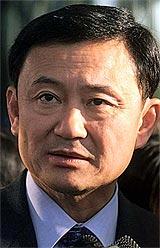 On the one hand democratic forces, not just those in the Democrat Party, have developed deep roots and if they are tolerant of intermittent military intervention - especially if they see it as a lesser evil than the growth of authoritarian impulses in government - they will fan any flames that will burn or even singe the wings of Thaksin Shinawatra. He is the second problem, and he meantime pines away in Hong Kong for a return to Government House in Bangkok. Democrats see him as a far greater danger to democracy than the military; because the latter can be counted on to get out soon after they come in.
Thaksin wants to return during the April Songkrah water festival, creating such turmoil and fuss that the arrest warrants awaiting him will be tossed out amid popular fervour and peasant demands.
The military have inserted a new clause in the 1997 popularly-grounded constitution that gives them the right to intervene legitimately, if the situation justifies it - to them.
The third issue is the monarchy. Until now the king has himself been the check on the system. When Thaksin got too saucy and pushed the king too much while aggregating still more power at the expense of the media and smaller parties, the king gave a green light to the First Army and they moved fast back in September 2006.
So there are two questions: what if this king is not there to checkmate Thaksin, once the latter has manoeuvred his return? Worse, if the loathed Crown Prince, long thought to be in Thaksin’s pay, in his ‘honeymoon’ days as new king, strews Thaksin’s path to dictatorship with flowers?
“Well,” a very top political analyst and sometime high player said, “There won’t be a honeymoon. The army will tell the Crown Prince his first mistake will be his last.”
Triangular tussle
So the kingdom is locked in a triangular tussle of power, not even counting the insurgency in the south that Thaksin all but caused: Democrats, Thaksin and his stand-ins, and the monarchy. Only the first force is a given and straightforward. There are too many variables regarding the other two for there to be certainty of the triangular outcome.
Thaksin may find it difficult to micro-manage his stand-in PPP party from outside; maybe the new designated premier, Samak, will show budding signs of independence; maybe the courts will succeed in preventing Thaksin’s return. Or look what happened when the popular Benazir Bhutto returned - in admittedly different circumstances. Thaksin is smart - but not all powerful, even with US$6billion of his own money.
And King Bhumipol has motivation to live. No politician ever defied him like Thaksin. Thaksin’s rise paralleled the king’s virtual deification. They don’t like each other. But Bhumipol is no1930s European monarch to be marginalised by Mussolini-like forces. Nor will his designated successor have a smooth path. The crown prince hankers after his father’s throne and power but he only inherits the former; the latter is earned. And as long as his private life’s heady tales undercut his stature and his persona, he won’t ever earn his father’s power—especially while there are vcds running all over Bangkok showing orgies in very high places. The present king languished for a dozen years as a young king before a clever dictator (Marshal Sarit) saw fit to use him and let him build his base.
Meantime the day-to-day tussle goes on, with Thaksin’s stand-ins trying to prevent the election commission from disqualifying their electoral winners with ‘red’ cards (meaning voting violations), and thus whittling down their ability to manoeuvre across the board but especially in Parliament.
It is impossible to predict the outcome, but several things are certain: while this monarch may be divine he is not immortal; and Thaksin’s enemies, including the military, are prepared to match power with power. The only thing that isn’t variable in timing is the determination of the country’s intellectual elite to ensure the march toward democracy.
W SCOTT THOMPSON, D.Phil. is a national security expert who served for American Presidents and is a professor emeritus at the Fletcher School of Law and Diplomacy. He is the author or editor of 13 books on world political issues and resides in Washington, Bali and Manila.


