


/file/publisher-c1a3f893382d2b2f8a9aa22a654d9c97/2024/11/d647d23f15d7ab0360403083f6160c99.jpg)

LETTER | How a dogma undermined the developing world
LETTER | For decades, the prescription for economic prosperity in the global south has been unwavering, delivered with the certainty of a religious creed: liberalise trade, open your markets, and growth will follow.
This doctrine, championed by powerful international financial institutions and Western governments, has been presented not as a policy choice but as an inevitability - the only path to “development”.
Yet, as economist Jomo Kwame Sundaram compellingly argues, this grand experiment has, for many nations, been a catastrophic failure.
The promise of trade liberalisation has often been a mirage, obscuring a reality of deindustrialisation, entrenched inequality, and the erosion of national sovereignty.
The central finding in Jomo’s critique is a historical amnesia that plagues the free trade evangelists. The narrative ignores the fact that every single major developed economy - from Britain and the United States to post-war Japan and South Korea - built its industrial base behind high tariff walls and strategic state intervention.
They practiced protectionism to nurture infant industries, only advocating for free trade after they had achieved a dominant competitive advantage.
Economic trap
To demand that developing countries skip this foundational stage is not just unfair; it is an economic trap. It forces them to permanently compete in a game where the rules were written by and for the established players.
The results, as Jomo outlines, are visible in the crippling of domestic manufacturing across Africa, Latin America, and parts of Asia.
Premature exposure to a flood of often-subsidised imports from industrial powerhouses has decimated local industries that could not compete from day one.
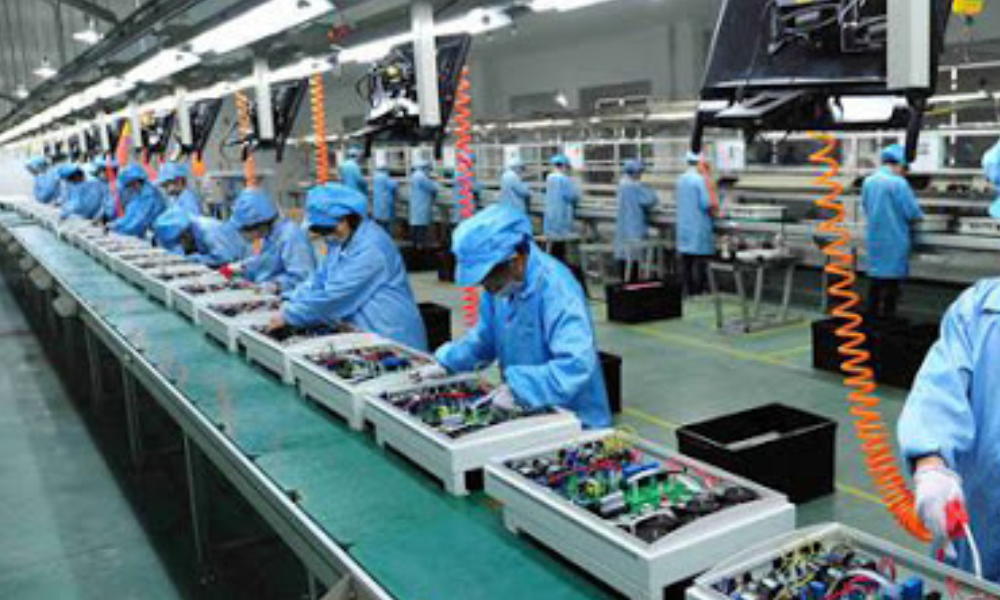
This has not led to a shift to more “efficient” sectors, but to a dangerous over-reliance on exporting raw commodities, a return to the colonial-era pattern that locks nations into volatile, low-value markets.
Instead of climbing the ladder of value-added production, they find the rungs have been sawn off in the name of liberalisation.
More power to foreign corporations
Furthermore, the mantra of liberalisation has been a Trojan horse for corporate power. Trade agreements negotiated under this paradigm have expanded far beyond tariffs to include stringent intellectual property rules that hike medicine prices, restrict technology transfer, and investor-state dispute settlement (ISDS) mechanisms.
These allow foreign corporations to sue governments for enacting public health or environmental regulations that might dent their profits.
In this light, liberalisation becomes less about “free trade” and more about tying the hands of democratic states, privileging corporate rights over national development goals and public welfare.
Perhaps, the most pernicious finding is how this ideological straitjacket has suffocated policy space. The development playbook of the 20th century required agility: the use of tariffs, subsidies, capital controls, and conditional industrial policies.
The modern liberalisation orthodoxy, enforced through loan conditionalities and trade deals, systematically strips this toolkit from governments.
They are left with one blunt instrument - macroeconomic austerity - and told that the market will magically provide what deliberate, strategic state action once could.
This is not a call for autarky or a blanket rejection of trade. Trade is indispensable. The argument, rather, is for smart, strategic, and sequenced trade policies subservient to a national development vision - not the other way around.
It is a call to recognise that the Washington Consensus model has delivered fragile, unequal growth at best, and hollowed-out economies at worst.
Rethink our strategies
The path forward requires a fundamental rethinking. Developing countries must reclaim the right to use the very tools that all rich nations used on their own ascent.
It means building regional markets and value chains for resilience, carefully managing exposure to global financial volatility, and placing food security, job creation, and technological learning at the heart of trade policy.
The era of treating free trade as a sacred doctrine must end. As Jomo’s analysis shows, development is not a passive process achieved by surrendering to global markets; it is an active, strategic project of national construction.
It is time to dismantle the dogma and restore to nations the freedom to write their own economic stories.
The analysis should provide us with a stark reminder that all trade agreements have a hidden agenda. This is where proper scrutiny is mandatory.
The views expressed here are those of the author/contributor and do not necessarily represent the views of Malaysiakini.
/file/publisher-c1a3f893382d2b2f8a9aa22a654d9c97/2021/10/a0b1643856ada3111b5c9aa72dab3e67.jpg)
/file/publisher-c1a3f893382d2b2f8a9aa22a654d9c97/2020/11/1b5816a9d0f4c612176411728b5792ef.jpg)
/file/publisher-c1a3f893382d2b2f8a9aa22a654d9c97/2023/02/2b3d7af2a62ffb00d595930291df71db.jpg)
/file/publisher-c1a3f893382d2b2f8a9aa22a654d9c97/2026/04/4a612918215aa0d36b8e59e2a2c29a1c.jpg)
/file/publisher-c1a3f893382d2b2f8a9aa22a654d9c97/2022/10/2a7233d3a013d651805f0271b305b9ec.jpg)
/file/publisher-c1a3f893382d2b2f8a9aa22a654d9c97/2021/08/663cd188c61b80e85d3e0be9d20f6def.jpg)


Are you sure you want to delete this comment?
This action cannot be undone.