


/file/publisher-c1a3f893382d2b2f8a9aa22a654d9c97/2024/09/acf1f693db6f5aa5b7dcd6c49f2cdc10.jpg)

LETTER | Education, identity, and the Malaysian compromise
LETTER | This article is written in response to Shafiq Sahruddin’s opinion piece in Malaysiakini on the Razak Report and Malaysia’s education system.
It seeks to further explain some of the historical nuances he highlighted, while also sharing this writer’s observations on the current situation.
The issue that confronted Malaysia immediately after independence was unity. Almost every major policy was centred on this question, especially education, which at the time was diverse and fragmented.
Malays who did not attend Malay schools, which mainly focused on basic literacy and religious instruction, could choose to go to English-medium schools attended by students of other races as well.
This was, of course, provided their families did not regard English schools as institutions that nurtured apostasy or produced “brown Englishmen”.
Successful students from these schools often reached great heights because they were English-educated and exposed to a modern, broad-based educational experience.
Malay students could also pursue education in sekolah pondok institutions in places such as Gunung Semanggol and Patani, with some eventually continuing their studies at institutions such as Al-Azhar University in Egypt.
Graduates of these religious schools were admired for their deep understanding of Islamic doctrine. They also tended to write and argue well because rhetoric and critical thinking - balaghah and mantiq - formed part of the traditional curriculum.
For the Chinese community, Chinese schools became the primary vehicle of cultural preservation. The People’s Republic of China already existed by then, but the period was also marked by political upheaval, economic hardship and, later, the Cultural Revolution.

To many overseas Chinese communities at the time, China hardly appeared to be a stable model for the future.
Meanwhile, independent Singapore gradually phased out vernacular-medium education in favour of an English-medium system combined with the Students’ Own Language policy.
Chinese Malaysians, therefore, felt an even stronger need to preserve their language and culture locally. It was within this broader context that the Unified Examination Certificate (UEC) system emerged.
Indian communities likewise developed their own educational systems. Tamil schools were established in estates and in areas with significant Indian populations, with some teachers brought from Tamil Nadu.
Institutions such as the Vivekananda schools became highly respected within the community. Among Sikh communities, schools such as SK Guru Nanak in Ipoh also played an important historical role.
Every school stream became a vehicle for preserving its respective culture. But where, then, was the unity?
The modern national education framework evolved through several stages. The Razak Report of 1956 laid the foundation for a national education system aimed at promoting unity while recognising linguistic diversity.
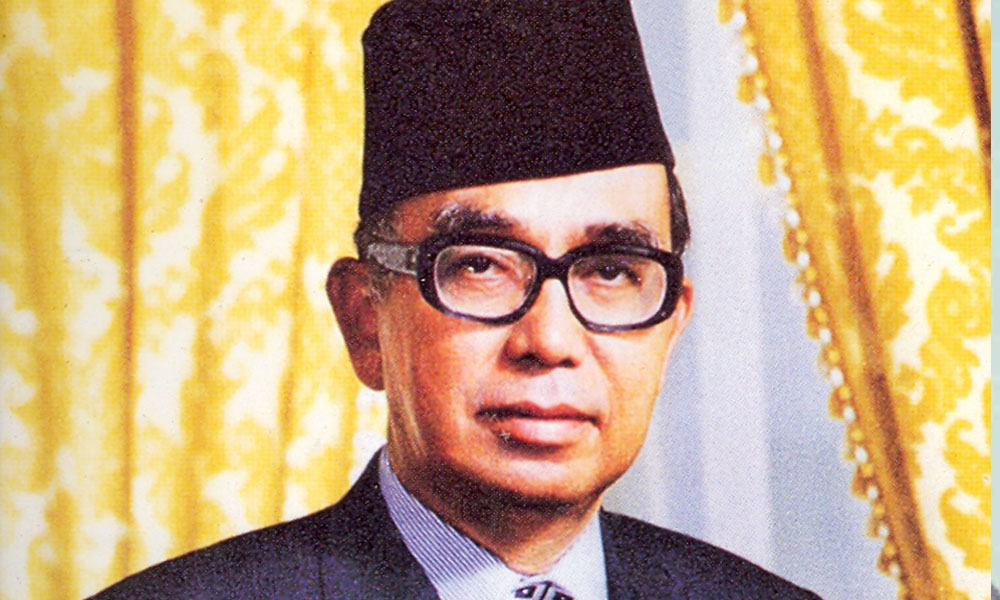
Later reforms, including those following the Rahman Talib Report of 1960, further strengthened the role of Bahasa Melayu as the national language in education.
These were presented to Parliament and debated vigorously in the chambers and in the newspapers. As a result, the Malay language is recognised and empowered as the national language, while also providing room for the preservation of vernacular schools.
After the May 13 incident in 1969, national integration became an even more urgent priority. The compromise holds as a way to preserve cultural heritage while building a common national identity.
The earlier aspiration of a single-stream education system, as envisioned by some proponents of the even earlier Barnes Report and the Razak Report, seemed unattainable.
Fast forward to the present day, and rural Chinese schools with a majority Malay student population are now a reality.
This would have been astonishing to parents in the 1960s. Even independent Chinese schools today are witnessing a growing number of non-Chinese students.
For comparison, Israel also operates multiple school streams, including Hebrew and Arabic-language schools, reflecting the country’s co-official languages.
Yet despite decades of statehood, educational segregation there has not necessarily translated into greater social harmony.
Malaysia’s experience, while imperfect, demonstrates a different trajectory. What would have been even more unbelievable to Malaysians of the 1960s is that students from all over the world now come to study in Malaysia.
Our relatively open and multilingual education ecosystem has unexpectedly become an advantage.
Students from various educational backgrounds enrol in Malaysian universities - from Africans with baccalaureate qualifications, to students from China, Japan, and elsewhere with their own national secondary qualifications.
Malaysia has become a regional hub for higher education conducted in English. Even Singaporeans pursue studies in Malaysian universities, particularly in fields such as Islamic finance and syariah.
The UEC is administered by Dong Zong, but the schools, teachers and students involved are Malaysians. They are not educated to hate the country of their birth; scarcely any education system in the world functions that way.
The UEC is already recognised for entry into many universities in places such as Singapore, China, Australia, and elsewhere, subject to the requirements of individual institutions and programmes.
Malaysian UEC holders who wish to enter local public universities must still fulfil national requirements, including passes in Bahasa Malaysia and History at the SPM level.
For those worried about ideological influence from abroad, one should also consider that thousands of students from China enrol in Malaysian institutions and pay premium international fees without controversy.
In that context, the argument that recognising UEC holders with SPM Bahasa Melayu and History qualifications would somehow legitimise anti-unity sentiments appears increasingly unconvincing.
Perhaps the greater value of education lies elsewhere: in the possibility of young Malaysians from different backgrounds meeting one another and their foreign friends, learning together and maturing into citizens who can coexist with confidence.
Right now, many of them are probably sitting together at the nearest mamak restaurant, drinking teh tarik and pulling each other’s legs in various accents of Malay. Is that not one of the best possible outcomes of education?
The views expressed here are those of the author/contributor and do not necessarily represent the views of Malaysiakini.
/file/1131/2450a77c5218892d4291e98c83c510ad.jpeg)
/file/publisher-c1a3f893382d2b2f8a9aa22a654d9c97/2026/02/6fc219e29f4d214be9687b3edf780d48.jpg)
/file/publisher-c1a3f893382d2b2f8a9aa22a654d9c97/2026/04/9a3fa54e1496be61c4fa0756613ac56c.jpg)
/file/publisher-c1a3f893382d2b2f8a9aa22a654d9c97/2025/05/64e0c01d48cd1ddccdb52bb8852a7e17.jpg)
/file/publisher-c1a3f893382d2b2f8a9aa22a654d9c97/2026/04/b41a74886b59ab812ae23a8bfec6a3b4.jpg)
/file/publisher-c1a3f893382d2b2f8a9aa22a654d9c97/2020/10/c5ce36274e24fa5afeab2500b0df3adb.jpg)


Are you sure you want to delete this comment?
This action cannot be undone.