


/file/publisher-c1a3f893382d2b2f8a9aa22a654d9c97/2021/06/31ba41e9728035f41ae5ef7436e2c3b5.jpg)

LETTER | Covid-19: Uncovering America's role in its origin
LETTER | Just as quickly as Covid-19 appeared and became the centre of public health and worldwide attention, it disappeared from the news coverage.
Sociologists, economists, political scientists, historians and other scholars studying the pandemic see its outbreak and spread as one of the most consequential geopolitical events of the past decade.
Not only did it result in an unprecedentedly high human mortality rate, but it disrupted everyday life and the socio-economy around the world like no other health phenomenon has during the last several hundred years. Everyone who has lost a loved one or a job or experienced any other negative impact during the pandemic remembers it for the fear, stress and anxiety it generated.
In retrospect, the pandemic acted as a powerful geopolitical accelerant, transforming global health into an arena of intense strategic competition.
Instead of generating scientific understanding and international cooperation to combat an unknown virus, the outbreak exposed profound fractures in global governance, fundamentally altering relationships and long-term policies.
The Chinese virus
Almost immediately, it began a fierce "battle of narratives" with Washington initiating blame-seeking and identifying China as the source of its origins and spread.
President Donald Trump famously renamed the virus as the “China” and “Chinese” virus, and led the US and some western allies, notably Australia, to critique China's crisis management and governance, with the most irresponsible critics seeing the virus as emerging from biological warfare by China directed against the West.
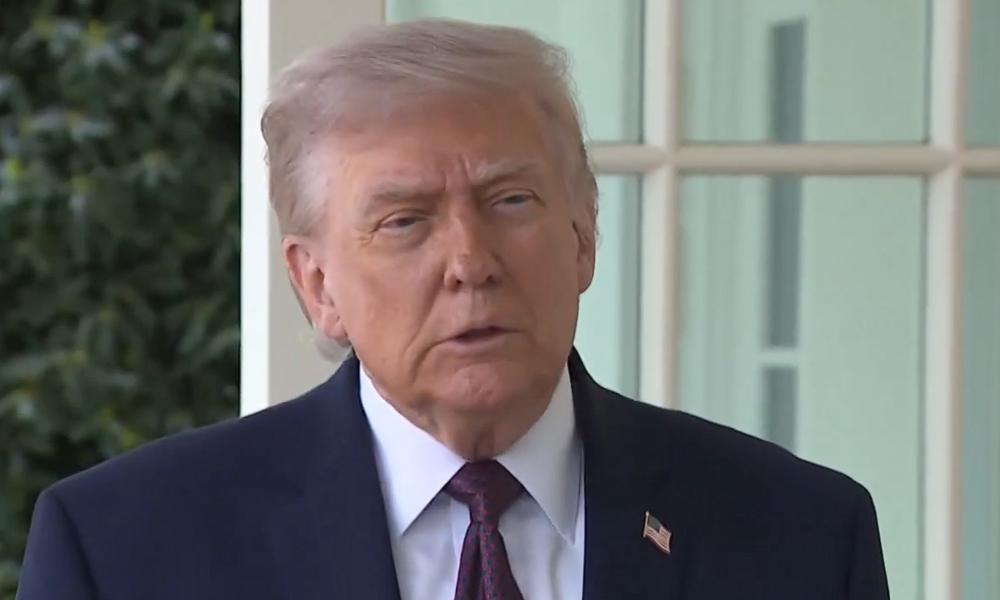
At the public level. Western information weaponisation against China during the pandemic amplified Sinophobic and xenophobic tropes, producing enduring misconceptions and antagonism against China and Asian looking people.
These narratives framed the virus’s origins and China’s response as a failure not only of its authoritarian government but also of its culture.
Why political and media attention has evaporated so quickly is partly because the virus has peaked from its initial devastating health and socio-economic impacts.
The pandemic, as a global public health emergency, officially ended in May 2023 when the World Health Organization declared the outbreak over. The virus is now managed globally as an endemic respiratory illness similar to the flu in its impact on lives, economy and society.
This disappearance from the headline news is also because Western political and media attention on China's alleged responsibility for the origins has significantly declined compared to the peak years of 2020–2022.
Key to the decline is that, despite intelligence and Western scientific reviews and investigative congressional hearings (notably in the US) aimed at targeting China as the principal villain in the pandemic outbreak, this attempt at weaponising the massive human casualty count resulting from the pandemic against a geopolitical enemy has hit a brick wall.
Without a smoking gun, the debate appeared to have reached a stage of scientific and political stalemate during the past three years.
Unravelling Covid-19 origins
Unexpectedly, on her final day in office as the United States director of National Intelligence in June 2026, Tulsi Gabbard released a series of declassified documents alleging that Dr Anthony Fauci used American taxpayer dollars to fund dangerous gain-of-function research at the Wuhan Institute of Virology. Her statement on her accessible X account reads:
“Yesterday was my final day as Director of National Intelligence. I declassified and released never-before-seen documents exposing the truth about Fauci directing millions of US taxpayer dollars to fund dangerous gain-of-function research at the Wuhan lab, working with the Intelligence Community to suppress the truth about his actions and hide the virus’ lab-leak origins, and lying to Congress while under oath in 2024. It’s time you know the truth. Go to ODNI.gov to see for yourself.”
Gabbard's accusation that the former chief medical adviser had lied under oath regarding the pandemic's origins has not been rebutted by Fauci, his supporters or by the agencies of the US government allegedly engaged in the cover-up.
Neither has it been subject to the same kind of attention by the elements of the Western mass media labelling themselves as progressive and engaged with truth-seeking reporting.
The fact that then-president Joe Biden granted Fauci a pre-emptive pardon hours before Biden left office is perhaps the strongest evidence that Fauci was guilty of the cover-up charge on the virus.
This unexpected and unprecedented pardon will unfortunately ensure that the truth regarding Fauci’s and the American state’s role in the pandemic will be much harder to uncover, even with Gabbard's expose.
Did the virus emerge from bat consumption?
There is another wrinkle in the Covid-19 origins mystery, away from the ongoing political cover-up but concerning its race and culture boxing, that needs unravelling. Early memes of the virus's origins on the internet linked it to wildlife consumption in China, specifically through the Wuhan wet market.
These viral memes on bat meat soup and bat meat consumption were largely based on a video of a travel vlogger eating bat meat in Palau that was filmed in 2016 for an online travel show. This quickly escalated into anti-China parodies and hate content that persists even today among well-informed people despite its debunking.
Some researchers have hypothesised that zoonotic spillovers from bats to intermediate hosts to humans could be responsible for the pandemic.
Although bat meat is not a common food item in Wuhan or Chinese cuisine, the notion that Covid-19 originated from bat meat soup or the Wuhan market was quickly and easily used as a racist trope that stigmatised Chinese and Asian foodways.
Consumption of fruit bats is a long-standing cultural practice in various parts of the world, particularly across the Asia-Pacific region, Africa, and several island nations.
For many indigenous cultures in the Pacific Islands and Southeast Asia, fruit bats have historically been a source of protein and a recognised "bushmeat." In these communities, the practice is often tied to traditional lifestyle, folklore, and local ecosystem knowledge.
While advocates of the lab-leak theory argue that the Wuhan Institute of Virology is the likely source of the virus because the facility houses the world's largest collection of bat coronaviruses, it would be important to study whether bat meat consumption and similar food practices may contribute to new pandemics.
Notes:
The US National Intelligence director is responsible for the oversight and direction of the 18 elements of the intelligence community.
This includes managing the allocation and expenditure of National Intelligence Programme funds authorised and appropriated by Congress; promoting collaboration among intelligence agencies, law enforcement, and international partners; and establishing priorities for the collection, analysis, and production of intelligence.
US intelligence declassified records detail "longstanding" United States funding for more than 120 biomedical research laboratories across over 30 countries, with roughly one-third located in Ukraine.
It is likely that research deemed hazardous, such as on “gain of function” pathogens, which are unacceptable by American standards, is mainly conducted outside the US in foreign institutes such as in Wuhan.
The author is an economic historian, analyst, and former senior official with the United Nations and World Bank.
The views expressed here are those of the author/contributor and do not necessarily represent the views of Malaysiakini.
/file/publisher-c1a3f893382d2b2f8a9aa22a654d9c97/2024/02/e5bd22cdf9c7b28c9e6955c72f353f4f.jpg)
/file/publisher-c1a3f893382d2b2f8a9aa22a654d9c97/2023/10/12474d65554532806d6d0ef9addb22ac.jpg)



Are you sure you want to delete this comment?
This action cannot be undone.