




Mini-budget falls short of expectations
The RM60 billion stimulus package unveiled yesterday does not go far enough to appease those in the manufacturing sector and political circles.
Deputy premier and Finance Minister Najib Abdul Razak had proposed that the sum be spent over the next two years, to help Malaysia ride out the impact of the global economic recession.
The breakdown in expenditure works out to:
- RM15 billion in fiscal injection
- RM25 billion in guarantee funds
- RM10 billion in equity investment
- RM7 billion for private finance initiative and off-budget projects
- RM3 billion in tax initiatives
Initial reactions were mixed, with some casting doubt on whether the package will be effectively implemented and if those who need the most aid will obtain it.
More reactions were received today in press statements:
Mustafa Mansur, president, Federation of Malaysian Manufacturers (FMM)
With respect to the promotion of exports, FMM is of the view that the export sector has not been given prominence in the stimulus package. Given that the demand for exports has declined significantly in recent months, FMM had hoped that the stimulus package would contain specific measures to boost exports.
Some of the incentives to boost exports that FMM had proposed to the government were export tax rebates, double tax deduction on freight charges, greater financial support for export promotion activities undertaken by government agencies, trade associations to assist exporters in retaining existing and securing new markets.
We also proposed that more incentives be given to encourage companies to brand and rebrand their products to enhance access to global markets. It was also proposed that interest rates for Export Credit Refinancing be reduced. It is hoped that these will be favourably considered in the near future.
The doubling of the (foreign workers) levy should be seriously reconsidered at this juncture given the difficult business environment. FMM reinforces the need to pre-announce and need to pre-announce and provide sufficient notice for industry to adjust accordingly.
Dr Teng Hock Nam, Penang Gerakan chief
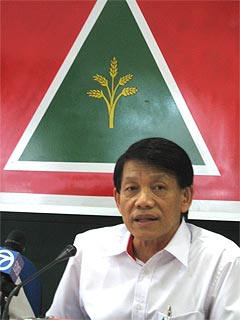 In view of the large (sum involved), we appeal to the federal government to immediately implement all the five angpow mega-projects promised by the prime minister during the 2006 Chinese New Year celebrations in Penang - namely, the Second Bridge, Outer Ring Road (Porr), monorail, expansion of the international airport and the building of Penang Sentral.
The Porr is a necessity and so is the monorail project. These projects will not only stimulate the construction sector, but provide the much-needed jobs to consultants, suppliers, architects, engineers, contractors, construction workers and others.
The multiplier effect will also be considerable and it will be direct. It will also be relatively cheaper if mega infrastructure projects like these are implemented during times of economic slowdown.
The construction of the Penang Sentral Project in Butterworth and the Second Bridge should be accelerated. These projects must be monitored closely by the relevant agencies so that they are completed in time or possibly before schedule.
Koh Tsu Koon, Gerakan president
The focus of the stimulus was more on fiscal expansionary policy than on increasing productivity. Over the long term, if our productivity is not improved, the expansionary policy may have implications on inflationary pressure.
 More importantly the challenge now is on delivering the promises and making sure that there is no wastage and leakage in the process of implementation, so that the people will reap the maximum benefits.
There are also questions on the need to increase subsidies for Proton and Perodua. Why not invest this public money in public transport, making it more accessible to the public like Singapore, Hong Kong and Australia? Why not invest in green energy?


