




State of emergency declared, tanks roll into Bangkok
Tanks and armoured vehicles rolled through the streets of Bangkok on Sunday as premier Abhisit Vejjajiva cracked down on anti-government protesters in the most serious crisis yet of his rule.
Tanks and armoured vehicles rolled through the streets of Bangkok on Sunday as premier Abhisit Vejjajiva cracked down on anti-government protesters in the most serious crisis yet of his rule.
One day after wrecking a summit of Asian leaders, demonstrators fired into the air and attacked Abhisit's car as he was being driven out of the interior ministry where he had imposed a state of emergency minutes earlier.
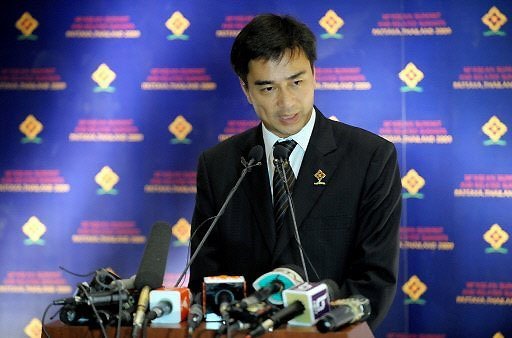
Abhisit said he was safe and unhurt after the incident, and called for calm while threatening the use of force to restore order.
In a day of fast-moving developments, his deputy Suthep Thaugsuban appealed to soldiers and police to enforce the state of emergency amid signs they were reluctant to intervene.
"Police and military - you must carry out your duty to your best ability and restore normalcy as soon as possible," said Suthep, who is responsible for implementing the measures.
"I... will take all responsibility for all your actions," he added. "These are not constitutional demonstrators. They have injured senior officials."
The latest escalation in the country's chronic political turmoil came after police arrested the leader of activists loyal to ousted former prime minister Thaksin Shinawatra who had targeted Saturday's summit.
"I want to tell protesters that you have no right to break the law, or to restrict other people's rights," Abhisit said. "Otherwise the government must implement further measures under the state of emergency."
Troops deployed to secure gov't buildings
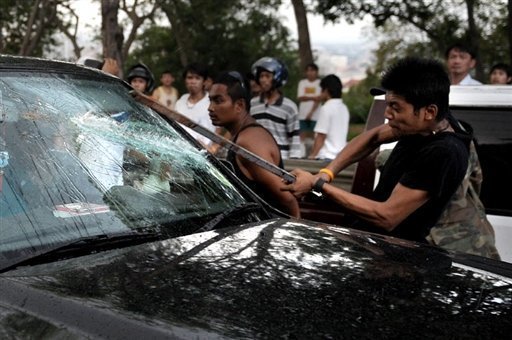 As tanks and soldiers fanned out, television showed red-shirted protesters armed with sticks and paving slabs smashing a car they mistakenly thought was carrying the prime minister and a separate vehicle carrying his deputy, Suthep Thaungsuban.
An army spokesman said troops had been deployed across the capital. An AFP reporter saw a tank and troops standing by on a road in central Bangkok close to government buildings.
"A combined force of army, navy, and air force has been deployed to secure public buildings, intersections and public transportation at 50 spots in Bangkok and its surroundings," Colonel Sunsern Kaewkumnerd told AFP .
"They are armed and we have also deployed armoured cars because protesters have used taxis to block the road," he said.
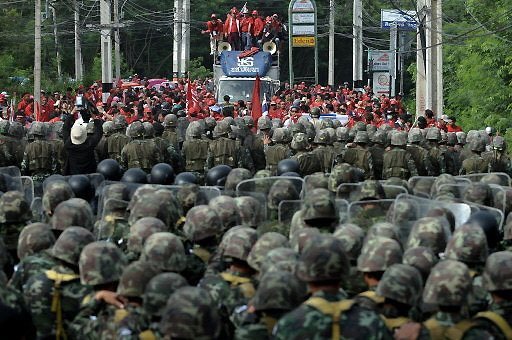 Pro-Thaksin protesters took to the streets two weeks ago to push Abhisit to quit but he has refused. They say he came to power illegitimately through a parliamentary vote in December after a court forced Thaksin's allies from government.
The chaos in Bangkok is a virtual replay of crises last year that ended up forcing out two prime ministers loyal to Thaksin - who was himself ousted in a military coup in 2006 - but on those occasions the army refused to act.
The army has traditionally shied away from confronting protesters since action against riots in 1992 left dozens dead, while police moves against anti-Thaksin protesters in October last year left two dead.
Wide powers under emergency
The emergency order allows police to clear protesters who regrouped in their thousands today outside Abhisit's office, the interior ministry, and a courtroom where a hearing on the protest leader's detention was due.
It is the third time in eight months that authorities have declared a state of emergency in Bangkok but on previous occasions under governments allied to Thaksin, the army refused to step in.
The emergency measure bans public gatherings of more than five people and empowers police and military to detain suspects for up to 30 days without charge. Authorities can also enforce strict controls on the media.
Police earlier said they had arrested protest leader Arisman Pongreungrong, a former pop singer, at his Bangkok home "on the charge of inciting protesters to kidnap the prime minister and cause unrest in the country."
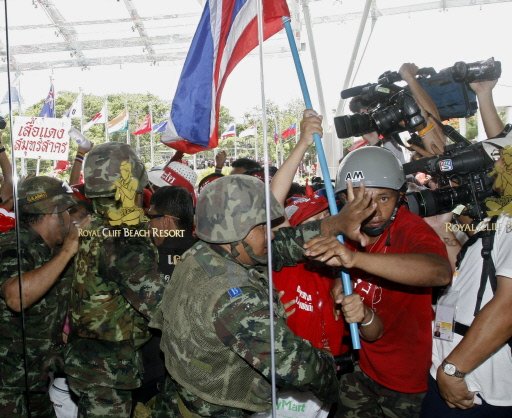 Leaders of the so-called "Red Shirts" quickly retorted by saying they would call nationwide rallies if Arisman was not freed.
Abhisit has come under pressure to curb the unrest after the humiliating cancellation of Saturday's Asian summit, after which authorities were forced to evacuate foreign leaders, some of them by helicopter from the hotel roof.
The weekend summit was supposed to discuss the global financial crisis and North Korea's rocket launch and included the leaders of China, Japan and South Korea plus 10 Southeast Asian nations.
Thaksin remains in exile to avoid a two-year jail term for corruption, but has rallied supporters - and incensed the government - with almost nightly video and telephone speeches from an unidentified foreign hideout.


Are you sure you want to delete this comment?
This action cannot be undone.