




Sri Lanka envoy denies violation of human rights
Sri Lankan High Commissioner to Malaysia Don D Ranasinghe and his deputy Major-General Uday Perera rejected claims that victims of civil war in the country were subjected to violations of human rights and had been placed in detention centres.
Sri Lankan High Commissioner to Malaysia Don D Ranasinghe and his deputy Major-General Uday Perera rejected claims that victims of civil war in the country were subjected to violations of human rights and had been placed in detention centres.
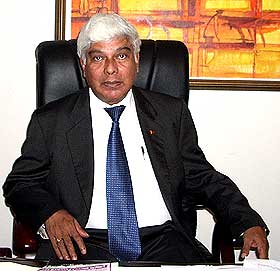 They said that these people were also citizens of the country and were treated just as equal as everyone else.
Ranasinghe said that the government of Sri Lankan was doing its best in the interest of its people, including the minority Tamils from the war-ravaged areas of the country.
Perera meanwhile urged the Malaysian media to visit Sri Lanka to see for themselves the "true conditions of these people."
However he urged the media representatives to visit in small numbers as the people living in the internally displaced persons (IDP) camps are not ‘exhibits'.
"They need their privacy too," he said, adding,"We want you to go there for yourselves."
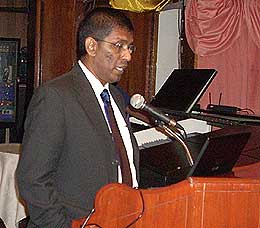 Ranasinghe and Perera (
left
) were speaking at a function in Kuala Lumpur yesterday where three Malaysians highlighted their findings from their visit to Sri Lanka in July.
Ranasinghe and Perera (
left
) were speaking at a function in Kuala Lumpur yesterday where three Malaysians highlighted their findings from their visit to Sri Lanka in July.
The three Malaysians - Dr W Shermal Perera, Gnanachandran S Ayadurai, and Dr Veronica Shanti Chelliah – had visited the Vavuniya area in the northern part of the country.
This place was one of the worst hit in the war between the government and rebel Liberation Tigers of Tamil Eelam (LTTE).
Shermal said that the idea of the visit began when he realised that there was a need for an orphanage in the war torn zone.
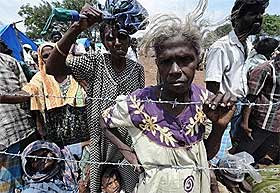 He told the audience that the Sri Lankan Buddhist temple in Sentul is currently building an orphanage in Sri Lanka for the Tamil orphans, hence the need for the visit.
Gnanachandran, in relating his experience, called upon the audience to have an open mind about conflict issues.
He spoke about his talks with the children at the IDP camps. "I asked the children what they had for meals and they told me that they had rice and fish."
"They also told me that they are looking forward to receiving footballs," he said.
Seven deaths a day
Veronica highlighted the fact that most of the IDPs were suffering from diabetes. She also added that the IDP camps should be renamed as welfare centres.
"There is a still room for improvement but it is better than the conditions that had been painted here," she said.
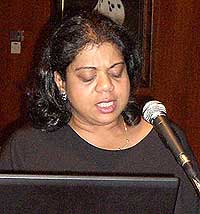 On health conditions, she said that that an average of seven deaths take place on a daily basis.
The main causes of deaths were myorcardial infarction, cerebrovascular accidents, typhoid, hepatitis A, diabetes and septicimia.
Meanwhile Ranasinghe also touched on the issue of movement restrictions and delay in resettling the civilians.
He blamed the the rainy season and de-mining activities as a major causes for the delay.
Quizzed on the recent arrest of key LTTE leader Selvarasa Pathmanathan, Perera said he was "safe in Sri Lanka."
Selvarasa, who succeeded LTTE founder Velupillai Prabakaran, was said to have been arrested either in Kuala Lumpur or Bangkok.
There are currently 270,000 people at the IDP camps as a result of war between the LTTE and the Sri Lankan army that begun in the 1980s.
The LTTE was waging a war for a separate Tamil state. It ended with the death of Prabakaran.


Are you sure you want to delete this comment?
This action cannot be undone.