




Japan centre-left sweeps to power in landslide win
Yukio Hatoyama, who led his opposition party to a landslide win in Japan's weekend elections promised to build consensus and avoid "arrogance" in pursuing his party's political programme.
Media projections show that Hatoyama's centre-left Democratic Party of Japan won 308 seats in the powerful 480-member lower house of parliament in the Sunday poll, ending more than 50 years of almost unbroken conservative rule.
Yukio Hatoyama, who led his opposition party to a landslide win in Japan's weekend elections promised to build consensus and avoid "arrogance" in pursuing his party's political programme.
Media projections show that Hatoyama's centre-left Democratic Party of Japan won 308 seats in the powerful 480-member lower house of parliament in the Sunday poll, ending more than 50 years of almost unbroken conservative rule.
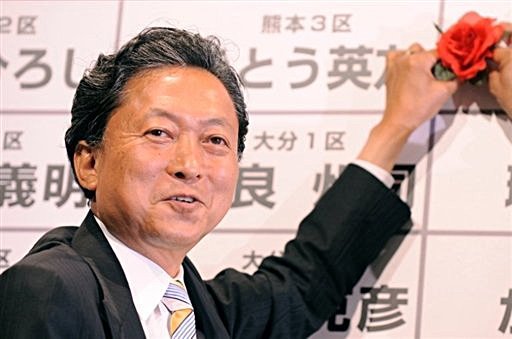 "It is an incredible number," Hatoyama told a live televised interview with public broadcaster NHK.
"We will not just bulldoze our policies. We must exercise patience and seek people's understanding because we are given such latitude," said Hatoyama, who is expected to replace Prime Minister Taro Aso by mid-September.
"We must shed ourselves of arrogance that might come from such a number," said the 62-year-old US-trained engineering scholar.
Hatoyama is set to lead Japan as the world's number two economy emerges from its worst recession in recent decades.
Hatoyama campaigned on a promise of change and people-centred politics against the business-friendly Liberal Democratic Party (LDP), headed by Aso.
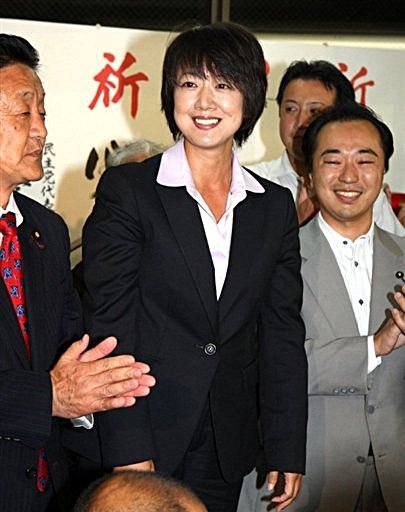 Aso told reporters on Sunday night that he would step down as LDP president to take responsibility for the huge defeat.
In the NHK interview, Hatoyama also confirmed he would form a coalition with smaller partners such as the Social Democratic Party and the People's New Party, despite policy differences on security and other issues.
The LDP was ousted from government for 10 months in the early 1990s, as smaller parties formed a fragile coalition to take power. But even then, the LDP, as a single party, held the most seats in parliament.
Hatoyama promises capitalism-lite
Hatoyama has vowed "a shift from old politics to new politics - that is, a new government that centres on the people".
And he reiterated calls for a gentler form of capitalism, saying: "We should not treat market fundamentalism as the answer to everything."
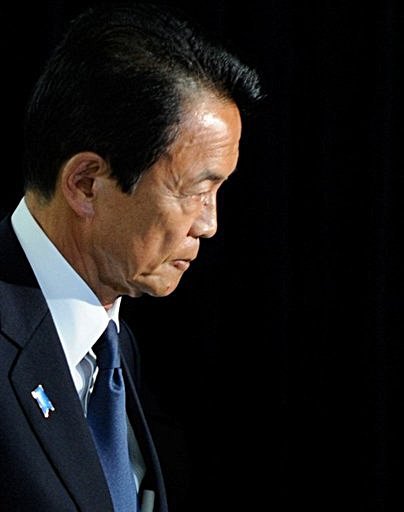 Aso, the outgoing premier, said he was resigning as head of the LDP to "take the responsibility" for his party's crushing defeat. "We have to make a fresh start swiftly by holding a (party) presidential election," he added.
The DPJ already controlled the upper house with the support of smaller parties. Now, it looks set to take the lower house too with the numbers to push through legislation, ending the deadlock in the previous Diet.
The DPJ has promised better social welfare, which it says would help recession-hit families, boost domestic demand and raise the birth rate to reverse a projected decline of Japan's fast-greying population.
In foreign policy, it has signalled a solid but less subservient partnership with traditional ally Washington and a desire to boost its regional ties, promoting a European Union-style Asian community and common currency.
Referring to US ties, Hatoyama said that "President Obama has steered the country greatly toward dialogue and harmonisation" in world affairs.
Hatoyama also said he would seek to resolve a decades-old territorial dispute over an island chain with Russia, a row which has prevented the two countries from signing a post-World War II peace treaty.
As premier, Hatoyama would be expected to attend next month's UN general assembly in New York and a G20 summit in Pittsburgh, and quickly seek talks with Obama, Chinese President Hu Jintao and other world leaders.
LDP swamped by political tsunami
The LDP is credited with guiding Japan through its "economic miracle" but is also blamed for the malaise that set in during the 1990s and for free-market policies seen by many to have widened social inequality.
Aso had portrayed the LDP as the safe choice to guard Japan's security and prosperity, and pointed to the recent end of the country's recession.
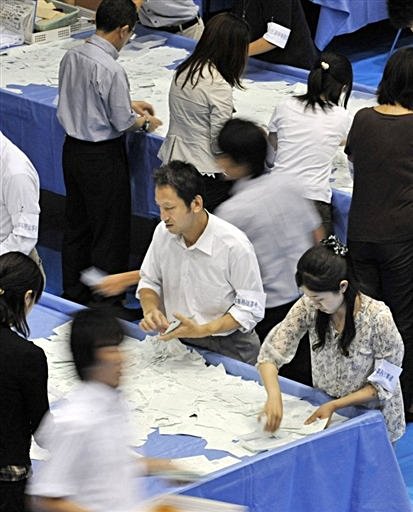 But in the end his party was swamped by changing political tides. The prime minister, 68, had dismayed voters with a series of gaffes and policy turnarounds as divisions widened within his party.
Updated media projections confirmed a strong victory for the DPJ.
TV Asahi said the DPJ would take 308 seats in the 480-seat lower house against 119 seats for the LDP, while public broadcaster NHK predicted the DPJ would take 306 seats, against 119 for the LDP.
The LDP - which since 1955 had been out of power for only 10 months, in the early 1990s - had 303 seats in the outgoing parliament to the DPJ's 112.
Total voter turnout was just over 69 percent, higher than in polls four years ago, the Jiji Press news agency reported.
- AFP


Are you sure you want to delete this comment?
This action cannot be undone.