




TI-M report: Corruption the norm in M'sia
Corruption is becoming a way of life in Malaysia where even elected representatives (and their close supporters) believe that they are there to make money for themselves.
Corruption is becoming a way of life in Malaysia, said Transparen
 cy International - Malaysia (TI-M) president Paul Low, where even elected representatives (and their close supporters) believe that they are there to make money for themselves.
He added that the Malaysian public feel helpless and are mostly resigned with the rampant corruption in the country due to the Malaysian Anti Corruption Commission's (MACC) inaction in the light of serious corruption allegations.
"Society believes that nothing can be done (a sense of hopelessness) and the people entrusted with the authority and power to change things are not committed or are unable to do so," he said.
Because dishonesty, corruption and self-indulgence become values that are tolerated and admired, he said that corruption is an accepted if not, condoned, way of life in Malaysia.
He further revealed that institutions and enforcement agencies are ineffective and their independence are compromised.
"It also does not help that the anti-graft body have time and again failed to catch the 'big fish' who are said to be the real culprits behind graft cases," he said.
Low said that MACC and other reforms undertaken by the government have yet to produce desired results.
"There is a strong sense of being fed-up with the status quo," he said this at the unveiling of the 'Global Corruption Report 2009: Corruption and the Private Sector' press conference.
While commenting that Indonesia's corruption index is much lower than Malaysia's, Low added that Malaysia's annual Corruption Perceptions Index (CPI) due to be out in November will probably not go up but will either straddle a narrow range on the current rating or decline.
Facing hurdles in combating graft
He said that Malaysia has the relevant rules, policies and institutions to fight corruption but the efforts to combat graft face hurdles put in place by the political system.
"Inter-relationships between the government, civil service and private sector negates the concept of check and balance," he explained.
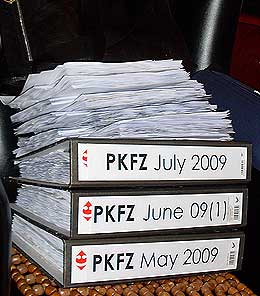 "The Port Klang Free Zone (PKFZ) case substantiate weak oversight of public-private relationships. Until drastic action is taken to separate the cosy relationship between government, business and politics, the anti corruption effort will remain no more than a token gesture," he added.
In the PKFZ scandal, the complexity of the relationships between politics and the public and private sectors come into play.
He also added that the issue of political patronage and party funding by the private sector was another point of contention.
"There is always a payback time for parties who receive such funds. This is where closed tender as opposed to open procurement in businesses come in," he said.
On the VK Lingam's controversial video on judicial fixing, Low said that the issue pertaining to the tampering of the appointment of judges remained unresolved since 2007.
"Influence on the judiciary is evident and revamping of the judiciary has been carried out but one wonders why nothing else is being done," he added.
On the latest development on PKFZ, he said that PKA has put in place recommendations and are now in the midst of the implementation stage.
"Port Klang Authority (PKA) is in the process of recruiting governance and chief internal audit officers. We have also set up a governance and integrity supervisory committee," said Low who is also a PKA board member.


Are you sure you want to delete this comment?
This action cannot be undone.