




Suhakam: Don't stop at ISA review
All 15 human rights commissioners are keeping their fingers crossed that the proposed review of the Internal Security Act (ISA) will take into account their recommendations submitted in 2003.
All 15 human rights commissioners are keeping their fingers crossed that the proposed review of the Internal Security Act (ISA) will take into account their recommendations submitted in 2003.
As they are all in their final term of office, they are anxious to see progress in this area before they step down in April next year.
“This is our last big opportunity to make a really big difference for human rights. I hope that they are not going to merely review the ISA and stop there,” said Suhakam vice-chairperson Simon Sipaun.
Section 4(1)(b) of the Human Rights Commission of Malaysia Act 1999 empowers Suhakam to advise and assist the government, but its proposals have generally been ignored over the years.
As one result, Suhakam is in imminent danger of being downgraded from its‘A’ rating by the United Nations for not complying with the Paris Declaration which sets minimum standards for national human rights bodies to uphold.
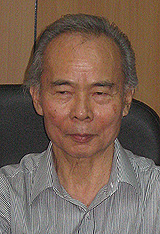 According to Sipaun
(right)
, Suhakam’s main recommendation is that the ISA be repealed, not merely reviewed, since it has been irrelevant to the question of national security since the end of the communist terrorism in 1960.
According to Sipaun
(right)
, Suhakam’s main recommendation is that the ISA be repealed, not merely reviewed, since it has been irrelevant to the question of national security since the end of the communist terrorism in 1960.
Instead, Suhakam wants the ISA to be replaced with a law which will address the question of national security with particular reference to global terrorism and its implications for the economy of the nation “in all its manifestations”.
By way of specific references, Suhakam cites the US Patriot Act 2001, Canada’s Anti-Terrorism Act 2001 and the UK Terrorism Act 2000 and the UK Anti-Terrorism, Crime and Security Act 2001.
“The real motive of the international terrorists is not to seize political power or governments but solely to create doubts in the marketplace, among consumers and investors in the ability of the security forces and nation-states to ensure security of life and limb, property, wealth and jobs,” said Sipaun.
“The result of unchecked international terrorism will be that insurance costs would go up, the costs of doing business would increase and values would drop, if not yo-yo, as the confidence of the marketplace, consumers and investors is affected.”
By values, he was referring to the worth of national currencies, credit-ratings and worthiness of nations and companies, and the value of shares, bonds and a wide range of money-market instruments and investments including properties.
Suhakam’s stand is that international terrorism poses the biggest threat to national security and this has not been adequately addressed “while the focus of the ISA has been virtually on non-existent or debatable internal threats”.
State’s absolute powers
Sipaun agreed that race relations remains a particularly sensitive area of national security concern but advocated that this be addressed by the courts under the federal constitution and existing legislation, or even new legislation.
“If people break the laws on race relations, they must be held accountable in a court of law and public opinion and not locked away without being put on trial,” he said.
“Not only doesn’t this address the problem, but it is an abuse of human rights. The state cannot take upon itself the exercise of absolute powers which it doesn’t have and should not have in any circumstances.”
Sipaun said the ISA is particularly an affront to all the civilised values since it carries ouster clauses which shut out the courts. This leaves anyone targeted under the ISA under the unchecked mercy of the police, the home minister and the prime minister.
Suhakam’s main concerns are that the ISA violates the principle of human rights; and that citizens and non-citizens alike are subjected to arbitrary detention and inhuman or degrading treatment.
There is merit in both concerns, according to Sipaun, “since the right of a person not to be subjected to inhuman or degrading treatment or punishment is enshrined in Article 5 of the Universal Declaration of Human Rights”.
 “Abuses can and do take place as proven by many personal testimonies of ISA detainees. We cannot brush them all aside as a pack of lies. When the doors at the Kamunting Detention Centre close behind an ISA detainee, anything can happen.
“There is nothing that can protect such a person once he or she is locked up. He or she will be completely at the mercy of the people who run the camp.”
Sipaun said those who run such camps and even the interrogation rooms of police stations are obviously “not normal people with empathy for their charges”.
This is where the abuse, torture and humiliation comes in, he noted, causing “an affront to human dignity and human rights”.
Sipaun’s greatest fear is that the proposed parliamentary review of the ISA next month will merely see cosmetic changes on the duration of detention, while leaving the rest of the Act untouched.
“If that happens, the government would only be compromising its credibility in the matter and declaring to the whole world again that human rights is the least of its concerns,” said Sipaun.
“As it is, we have already been stating this openly for quite some time now but the UN has not been impressed so far by our stand on the ISA. They want to see action.”


Are you sure you want to delete this comment?
This action cannot be undone.