




Muhyiddin's three principles for new economic model
Deputy Prime Minister Muhyiddin Yassin today outlined three key principles for policy initiators and formulators to consider when developing and formulating the new economic model for a more lasting and equitable prosperity.
Deputy Prime Minister Muhyiddin Yassin today outlined three key principles for policy initiators and formulators to consider when developing and formulating the new economic model for a more lasting and equitable prosperity.
The principles were broad-based growth, broad-based economic empowerment and bottom-up growth, Muhyiddin told civil servants attending the 14th Civil Service Conference at the National Institute of Public Administration (Intan).
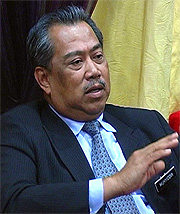 "I strongly believe that a new economic model has to be premised on the philosophy of balanced growth and distributive justice.
"The economic model that we want to develop must satisfy and fulfil the hope of all Malaysians. It must unite the different ethnic Malaysians of varied social and cultural values and backgrounds into a cohesive society," he said in his address, themed "Transforming The Nation: Constructing The Future, Investing in Prosperity".
Muhyiddin said that the principle of broad-based growth, among others, emphasised that all sectors of the economy should be given equal, fair emphasis and should not necessarily accord less importance to rural development.
Rural development entailed enhancing the competitiveness of rural areas, providing opportunities for rural people to enjoy a higher standard of living and at the same time preserving the natural heritage, he said.
"Policy initiators and formulators must rethink rural development not as traditional sector-based but as an integral development of the national economy.
"This is because rural areas comprise a large percentage of land area of Malaysia. It represents a large share of the national economy and thus is economically viable and environmentally a feasible component of a balanced national development," he said.
Bitter lesson from food crisis
Muhyiddin said new ways must be found to support the rural mechanism and nourish its dynamism to remain profitable and competitive.
"This in turn will motivate the rural community to engage in rewarding, market-driven activities, enterprises and employment. Ultimately the activities will contribute to the economic growth of the areas."
He said another important aspect of the broad-based growth principle lay in the production of food because food economy was an important agenda of a country.
"We have learnt a bitter lesson from the global food crisis of 2008. It alerts us to the fragility of food supplies in Malaysia when a number of rice-exporting countries imposed curbs on their exports," he said.
He said Malaysia responded to the food crisis by importing rice at higher prices and at the same time revising the rice self-sufficiency policy from 70 percent to 90 percent by 2010.
"The aftermath of the crisis, foods prices particularly rice did not return to the prices before the crisis while international food prices continue to rise," he said.
On broad-based economic empowerment, Muhyiddin said the approach avoided the misguided philosophy of dependency which was built upon differences of education, regional origins, languages, religions, income inequalities or social class of families which led them to rely on continuous government assistance.
"The families are trapped in a dependency culture and live a life of non-productive labour.
"Economic empowerment advocators link the dependency attitude to the lack of economic opportunity that de-motivates the deprived and disadvantaged community from being involved in the mainstream economy," he said.
Muhyiddin said empowerment aimed at expanding economic and socio-economic opportunities which supported the access of individuals and families to enterprise and self-reliance.
- Bernama


Are you sure you want to delete this comment?
This action cannot be undone.