




2010 budget and urban poor agenda
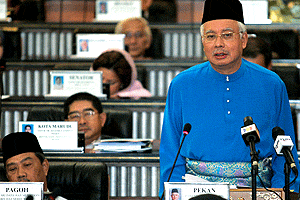
Prime Minister Najib Abdul Razak in his 2010 budget speech establishes a new public policy initiative to address the often neglected concerns of low income families residing in urban centers.
While Malaysia has had an outstanding track record in addressing rural poverty, it has not, however, developed appropriate urban development policies and agencies to address the rising income inequalities in towns and cities.
COMMENT Prime Minister Najib Abdul Razak in his 2010 budget speech establishes a new public policy initiative to address the often neglected concerns of low income families residing in urban centers.
 While Malaysia has had an outstanding track record in addressing rural poverty, it has not, however, developed appropriate urban development policies and agencies to address the rising income inequalities in towns and cities.
The prime minister has rightly noted that there has been rapid urbanization with 63% of the Malaysian population now live at urban centres.
This, therefore, means many of the rural poor, especially from kampongs and estates, have over the past 20 years migrated to the urban areas.
This rural-urban shift has made a tremendous impact on public services required especially in highly populated areas.
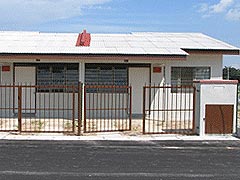
With appropriate public housing schemes in the Klang valley much of the squatter colonies have be transformed into low cost and high rise living neighborhoods.
We must recognize that a majority of urban neighborhoods, especially among the urban poor, face many challenges such as inadequate public facilities, inadequate and affordable housing,lack implementing agencies to address urban concerns such as needs of single mothers, micro business loans and places to undertake micro business.
Litany of urban woes
Many of these places are high risk crime areas with high levels of anti- social behavior among youths, while a majority of the children underperform in education with many families in conflict.
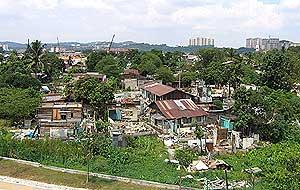 In addition, a much of these neighborhoods also face inter-ethnic conflicts and tensions born out of socio-economic disadvantage.
What was most difficult in the past was defining the poor in urban areas as the Poverty Line Income (PLI) used as the measurement was an ineffective benchmark to recognize and meet their needs.
This was largely because the income levels were determined by the notion of a basic basket of goods.
The income level indicated by the prime minister in his budget speech is, therefore, revolutionary, families with below RM3,000 monthly income will be included.
This was a matter advocated by numerous civil society and academics working among the urban poor.
Malaysia will have to change its measurements as we are going to be a developed nation within the next 10 to 15 years.
Our benchmarks must be comparable with the richest countries of the world with a high income level and high quality of life and human development index rather than that of the benchmarks of poverty groups among the poorest nations of the world.
Saviour riding on new label
The prime minister also took a very bold step in renaming the Ministry of Federal Territories to now take on this new portfolio of Urban Wellbeing.
Over the Ninth Malaysian Plan the Ministry of Housing and Local Government was named the lead ministry in addressing urban poverty.
 However, they have not been effective and therefore the shift is really welcomed.
The new ministry must ensure that it has a dedicated coordinating and delivery team which can make lasting impact through effective delivery of services.
One matter which the Treasury must take into account is the funds allocated in the 2010 Budget is very very low namely RM48 million.
This must be reviewed in the Tenth Malaysia Plan to provide greater resources for addressing urban poverty which impact largely on low income Malay families from the kampungs and Indians displaced from plantations.
What is most critical for the Economic Planning Unit and agencies concerned is to utlise the new agenda set by the prime minister as the guiding framework for the formulation of the Tenth Malaysia plan and make some policy and institutional changes to enhance the delivery of services to the urban poor and low income families.
In this context may I offer a number of suggestions to the Ministry of Federal Territory and Urban Wellbeing.
- First, the ministry should establish a National Taskforce to review the agenda, needs and directions for addressing urban poor and low income families concerns and issues; the ministry could invite representatives of all the relevant agencies, civil society organizations, academics and private sector who are undertaking CSR projects among urban poor communities to participate in this review;
- Second, the ministry should commission an in-depth study to review all the academic work done on urban poor in Malaysia and formulate an action plan for effective delivery;
- Third, the ministry should establish a Coordinating Task Force at the parliamentary levels in urban areas to serve as a coordination centre/team to ensure all the relevant agencies and civil society organizations work together in addressing the concerns in an effective way;
- Fourth, the ministry to establish a social dialogue process with grassroots organization from the urban poor neighborhoods. A participatory process must be introduced for ensuring partnership in development and defining the community needs;
- Fifth, at the cabinet level to establish a Cabinet Committee on Urban Wellbeing chaired by the prime minister to ensure national strategic focus and planning is possible across the most critical ministers such as education, welfare, housing, labour and business development.
He has set a new agenda and therefore it is imperative that all parties concered ensure that the urban poor and low income families also share the fruits of our development and quality of life. This, therefore ,is not only our joint vision but also our goal.
Denison Jayasooria is the Principal Research fellow at the Institute Ethnic Studies, Universiti Kebangsaan Malaysia and Human Rights Commissioner with Suhakam.


Are you sure you want to delete this comment?
This action cannot be undone.