




Judiciary ends year with more byte for swifter justice
The country's judiciary went electronic and adopted a stricter work system in 2009, to promise swifter justice and flow of cases.
With the e-court system which integrates e-filing, case management system (CMS), queue management system (QMS) and court recording and transcription system (CRT), judges can dispose off cases three to four times faster.
The country's judiciary went electronic and adopted a stricter work system in 2009, to promise swifter justice and flow of cases.
With the e-court system which integrates e-filing, case management system (CMS), queue management system (QMS) and court recording and transcription system (CRT), judges can dispose off cases three to four times faster.
 The CRT provides electronic recording of witnesses' testimonies in criminal and civil cases, without judges having to write notes as in the old days, thus allowing judges to concentrate fully on the witnesses.
Two new commercial courts (NCC) were outfitted with computer systems for electronic filing, tracking of cases, video recording, monitoring of trials and SMS text alerts for interlocutory hearings.
Meanwhile, 181 courtrooms throughout the peninsula will be similarly equipped in stages.
At the click of the mouse, lawyers managing interlocutory applications can check their cases and the system also alerts them via the short messaging service (SMS) when the application is due to be heard by the court.
Apart from reducing delays and waiting time, the system costing RM69 million also allows Chief Judge of Malaya Arifin Zakaria to scrutinise the performance of judges in hearing trials from his Putrajaya office.
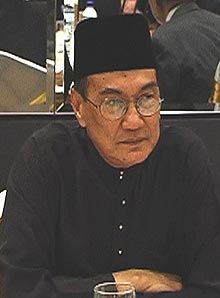 At the launch of the NCC on Sept 1, the nation's top judge, Zaki Azmi, said the computerised system would gradually reduce the number of judges and save taxpayers' money by between RM60,000 and RM70,OOO a month.
Zaki, who took over as Chief Justice of the Federal Court in October last year, also set out to change the work pace among judges to clear the backlog of cases by using key performance indicators (KPI), and judges were told to be strict on case postponements.
Court working hours were also seen to be changing as judges sacrificed their lunch breaks and continued hearings until 7pm, upon the agreement of all parties involved in the case.
Lawyers unhappy with the rush job
But, this has caused disgruntlement in the legal fraternity which is unhappy with the manner in which the courts fixed and rushed through hearings.
It prompted the Malaysian Bar to hold an extraordinary general meeting (EGM) last week to voice its opposition and ask Zaki to review the implementation.
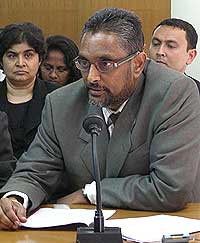 Its president, K Ragunath, said fairness and overall quality of justice had been sacrified due to the obssession for speedy disposal of cases and reliance on KPIs.
In an interview with former Malaysian Bar president Yeo Yang Poh on Nov 19, published in the Malaysian Bar website, Zaki said there had been some misunderstanding and the KPI target was not five hearings daily.
He said the judges' performance was not measured solely by KPIs but also in other aspects, including quality of judgments and judicial temperament.
The achievement of KPIs and the clearing of backlogged cases would not be done at the expense of justice, Zaki stressed.
During the year, several new judges were elevated to the Federal Court and Court of Appeal.
Among them was Justice Gopal Sri Ram who moved up to the Federal Court after 15 years in the Court of Appeal. He made history as the first lawyer in private practice to be appointed straight to the Court of Appeal when it was set up in 1994.
Other judges appointed to the Federal Court included former solicitor-general Heliliah Mohd Yusof, Md Raus Sharif, Abdull Hamid Embong, James Foong Cheng Yuen and Ghazali Mohd Yusof.
The Court of Appeal also received new judges, among them, TS Nathan, Tee Ah Sing, Syed Ahmad Helmy Syed Ahmad, Mohd Hishamuddin Mohd Yunus, Kang Hwee Gee, Jeffrey Tan, Azhar Maah and Ramly Ali.
- Bernama


Are you sure you want to delete this comment?
This action cannot be undone.