




Copenhagen letdown: Here's what YOU can do
I think we were putting too much emphasis on what the authorities “want” to do about global warming. The COP15 United Nations Climate Change Conference in Copenhagen was a disappointment to say the least. Instead of dwelling and waiting for Mexico 2010, I think we need to take the matter into our own responsible hands.
Even though COP15 is said to be “a good start” or “the first step down a long road”, global leaders seem to have left Copenhagen with little in hand. It seems the only thing decided is that Mexico 2010 will be the time and place to decide things.
Is this position global action or global procrastination?
I think we were putting too much emphasis on what the authorities “want” to do about global warming. The COP15 United Nations Climate Change Conference in Copenhagen was a disappointment to say the least. Instead of dwelling and waiting for Mexico 2010, I think we need to take the matter into our own responsible hands.
Even though COP15 is said to be “a good start” or “the first step down a long road”, global leaders seem to have left Copenhagen with little in hand. It seems the only thing decided is that Mexico 2010 will be the time and place to decide things. Is this position global action or global procrastination?
Should we be worried? Yes.
Should we do something about it? Yes.
Does it need to be government that tells us what to do? No.
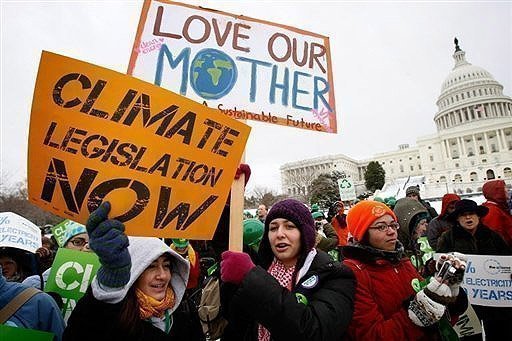 I think we are putting too much emphasis on decisions of the elite; not thinking enough about what average people can do. We seem to be passively waiting for those at the top to resolve a situation that affects (or will soon affect) us all. Besides, are we always happy with what government’s decide?
Recently emails were leaked from the climate unit at the University of East Anglia that show some questionable behaviour on the part of certain climate change authorities. This revelation does not change the scientific consensus that global warming is real. After all, cross-disciplinary evidence is overwhelming. Unfortunately, these leaked emails have provided the fog of doubt longed sought after by global warming deniers.
Who are global warming deniers? Often they are not displaced residents of the sinking Tuvalu Island; residents of hurricane-torn New Orleans; hikers witnessing the annual disappearance of glaciers on the Himalayas; or Indian farmers fighting drought to feed their families.
These deniers use outlying events like this email scandal to show how we can continue business as usual since all the data we are getting from these dishonest scientists is “hand-picked”, “misleading”, “biased”. Many of these deniers have interests of their own – interests that usually involve money.
11 steps for this eleventh hour
Here in Malaysia, the outlook for climate action is not promising. Most people are complacent at best. On the International Day for Climate Action (Oct 24), I spent the day with students collecting recyclables (a symbolic gesture) and promoting this important day leading up to Copenhagen.
 Driving by in their cars, people looked at us in fear, locked their cars, rolled up their windows, not really sure why we were carrying placards, and not really sure why we would be standing in the hot sun smiling at the side of the road.
Ironically a hummer (giant-gas-guzzling-oversized-ready-for-battle-SUV) was parked across the street from our little team of activists, idling all day while the driver slept.
This was Malaysia’s day of climate action. Malls were full, air conditioner sales were brisk, traffic were jammed and some random ‘weird’ non-conformist environmentalists did try to raise the issue of global warming.
It doesn’t have to be this way.
Here are local actions that everyone can do to create a more concentrated and effective Malaysian version of COP15. Here are 11 steps for this eleventh hour.
1. Stop idling and sleeping in cars.
2. Pressure the government representatives regarding public transportation and the efficiency of it.
3. Start refusing plastic bags. If we don’t need them, we shouldn’t use them.
4. Leave some trees up. They provide shade and naturally cool the surroundings. We will have more oxygen and less need for air con.
5. If the air con has to be on, close the doors.
6. If someone doesn’t need a receipt, don’t print it.
7. Relax with the pesticides. Between fogging and guys with pesticide backpacks, I think there can be a reduction here. What is in that stuff anyway? If it kills a mosquito or a weed, it definitely isn’t nutritious for humans.
8. Pressure your representatives to strike a balance between palm oil production and the preservation of Malaysia’s biodiversity and globally crucial rainforests.
9. Preserve the mangroves and coral reefs, pressuring local governments and donating/volunteering to work with NGOs that are involved.
10. Get over the “sweep your own step” mentality and start “sweeping your own neighborhood”.
11. Eat a local diet of less meat and less seafood. Avoid the rare delicacies and enjoy whatever substitute is available. The average North American food item has travelled 2,000 kilometers before it reaches our plate.
It would have been nice for a binding global consensus on climate action to come from the COP15 conference. However, ultimately we all need to change our behaviour, norms, culture, expectations, etc, to fit a new sustainable paradigm. We don’t need to wait for big brother to tell us what to do.
Whether global warming is real or not (think about the overwhelming scientific consensus not one email scandal), living in a more sustainable way can only benefit everyone.
Preserving forests, reducing our energy usage at home, using water conservatively, eating local foods, not drinking bottled water, driving less and walking more, reducing our usage of plastic bags and turning off the air con will benefit the earth and all the earthlings on it.
COLIN BOYD SHAFER is an expatriate teacher.


Are you sure you want to delete this comment?
This action cannot be undone.