




Sabah power woes fix too little, too late
Sabah is fighting a losing battle to redress increasingly crippling power shortages in the state.
Sabah is fighting a losing battle to redress increasingly crippling power shortages in the state.
Peak hours power usage at present tops 720 MW according to Sabah Electricity Sdn Bhd (SESB) figures . But this demand level is very much higher than the installed capacity of 600 MW which has to cope with more frequent maintenance of aging equipment, outages and blackouts.
 Meanwhile, the state's demand for power is estimated to double to 1,500 MW by as early as 2018 in line with the normal growth pattern alone.
The state government anticipates acceleration in economic growth and development as well under the Sabah Economic Corridor.
This is the desperate power picture that emerges from a seminar on energy efficiency over the weekend in Kota Kinabalu.
Fingers point blame at former prime minister Mahathir Mohamad who tried to cripple the Parti Bersatu Sabah (PBS) administration during its four terms in office from 1985 to 1994.
The power industry was one of the first casualties.
"Power is a federal matter under the Constitution," said a senior SESB power engineer.
According to him, former chief minister Harris Salleh handed over SESB to Tenaga Nasional Berhad (TNB) instead of improving the power situation first.
In comparison, the Sarawak Electricity Supply Corporation (Sesco) is still a state-owned utility. The Sarawak government is hesitating about handing it over to the federal government without due compensation.
Putrajaya pleads it cannot afford to take over Sesco under the terms set by Kuching.
SESB would have been in a similar situation, said the senior power engineer, had not the Berjaya government hurriedly handed over the state utility to TNB virtually free.
Federal government a disappointment
The engineer claims that the federal government has so far been ‘a big letdown' when it came to managing the state's power.
Senior officials of SESB cite the technical reasons for the utility's shoddy performance as its old generator sets which are inefficient and costly to maintain. Already, the federal government has spent RM 1 billion in recent years to fix the problem but with little to show for the money.
SESB has no choice but to switch from the old system of diesel fuel to gas or possibly coal. Green lobbyists have objected to the latter, however.
Energy, Green Technology and Water Minister Peter Chin Fah Kui said that the government proposed coal as it is more efficient and less costly. He warned that without proper investments into energy, there would be major blackouts in the state as had happened last year.
Sabah gas meanwhile is being
 shipped to Bintulu in Sarawak for the LNG plant there. TNB has promised to build a 100 MW gas power plant in Kimanis along the Sabah west coast with residue gas from the state.
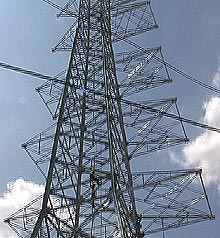
Chin blames the power supply situation in Sabah as caused by problems with generation, transfer and distribution of power especially from the west coast to the east coast.
The federal government subsidised SESB to the tune of RM 1.72 billion from 2006 until last year for diesel and medium fuel oil, claims Chin.
The federal government, disclosed Chin, had approved several gas-based power generation projects like the 190 MW Ranhill Powertron 11 and 100 MW SPR Energy besides the proposed Kimanis plant.
TNB has also proposed a 300 MW coal-fired power plant in Lahad Datu subject to an Environment Impact Assessment (EIA) being completed.
As a stopgap measure, SESB has announced that it will purchase 60 MW generator sets with 20 MW placed in the west coast and the rest in the east coast.
‘Talk is cheap'
This hinges on the release of RM 78 million from the federal government to SESB. It will also provide RM48 million in financial assistance to SESB for the maintenance of the mobile generator sets and for their operations.
This comes on the top of RM 803 million in easy federal loans to SESB under the 9th Malaysia Plan (2005-2009) for the construction of transfer and distribution of power projects in Sabah.
 "The short-term measures are not adequate," admitted Chin. "SESB has been ordered to speed up repairs on the present generator sets including the use of air transport to deliver its components and spare parts."
The growing consensus in the state is that SESB would be much better run if the federal government hands it back to the state. Local experts, it is said, can empathise with the state unlike the Tenaga Nasional personnel parachuted in from Peninsular Malaysia.
As a sop, the federal government doesn't propose to increase the electricity tariff in Sabah until the power situation has stabilised and supply disruptions are overcome.
"This is a federal cabinet decision to stay the electricity tariff at the current level until the problem is rectified," said Chin.
Already, SESB is facing lawsuits from consumers running into millions for losses caused to businesses as a result of supply disruptions and damage to equipment.


Are you sure you want to delete this comment?
This action cannot be undone.