




GST: Wrong remedy for now
The government's argument that the implementation of Goods and Services Tax (GST) would not burden or lead to price increases from abolishing the sales and services tax, was sunk by Anti-GST forum panellists yesterday.
The government's argument that the implementation of Goods and Services Tax (GST) would not burden or lead to price increases from abolishing the sales and services tax, was sunk by Anti-GST forum panellists yesterday.
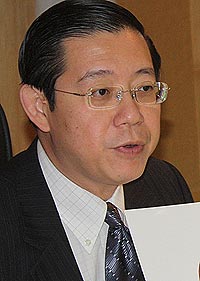 "It will cost people nearly RM550 more a year as they have to pay for the RM5.4b tax exemption given the manufacturers and exporters and the RM1.3b that the government gains will be from the people," said Penang Chief Minister Lim Guan Eng (
left
) who is an accountant by qualification.
"It will cost people nearly RM550 more a year as they have to pay for the RM5.4b tax exemption given the manufacturers and exporters and the RM1.3b that the government gains will be from the people," said Penang Chief Minister Lim Guan Eng (
left
) who is an accountant by qualification.
Sharing his views at a forum organised by the state government in Shah Alam, Lim said GST cannot be accepted as 85% of workforce who are not taxable will have to pay 4% for every item they purchase.
Other panellists were Selangor MB Khalid Ibrahim, PJ Utara parliamentarian Tony Pua, Kuala Selangor parliamentarian Dzulkifli Ahmad and Selangor Chief Executive Economic Advisor Rafizi Ramli.
Value-added concept
Predicting that the implementation of GST will prove to be the last nail in the coffin for the BN-led government, Pua said Pakatan Rakyat may go to Putrajaya sooner than expected if the tax is implemented.
"Under the concept of a value-added tax such as the GST, exporters and businesses would transfer the burden of the tax to consumers, resulting in a loss for the medium and low income groups," said the Oxford trained economist.
 Both Pua (
left
) and Rafizi agreed that a reduction in income tax would reward high income earners instead of helping low-income workers.
Both Pua (
left
) and Rafizi agreed that a reduction in income tax would reward high income earners instead of helping low-income workers.
Dismissing the notion that the GST tax could create high-income, on the contrary, Rafizi said, it could result in price rises and skyrocketing inflation within two to three years of implementation.
Additional cost
"The people need to bear RM5b in additional cost together with the RM550 mentioned earlier if the tax is implemented. And this is just a rough figure," he added.
"The amount of money needed to accommodate the implementation of GST will slowly grow, and it will result in higher percentage of GST," he added.
Both Pua and Rafizi clarified that they are not totally against the GST.
"Maybe in 15 to 20 years after Malaysia becomes a high-income economy, than implementing GST make sense," said Pua.
Describing the whole GST issue as the ‘right diagnosis, with the wrong treatment and the wrong dosage', Dzulkifli suggested that the government implement a new economic model benefitting the low and medium range income people first, before considering the GST option.


Are you sure you want to delete this comment?
This action cannot be undone.