




What Pakatan could learn from Ku Li-Musa rivalry?
When Musa Hitam ended his reticence by coming out in support of Tengku Razaleigh Hamzah’s stance on oil royalty payments to Kelantan, observers could not help but speculate on the what-might-have-been had the two sublimated their rivalry by collaborating for their party, Umno, and the nation’s benefit.
On an issue of huge importance to the concept of federal-state relations, both party veterans have risen above personal expediency to prioritise the interests of a democracy.
With that gesture, they each have helped resist the pull of self-interest...
When Musa Hitam ended his reticence by coming out in support of Tengku Razaleigh Hamzah’s stance on oil royalty payments to Kelantan, observers could not help but speculate on the what-might-have-been had the two sublimated their rivalry by collaborating for their party, Umno, and the nation’s benefit.
On an issue of huge importance to the concept of federal-state relations, both party veterans have risen above personal expediency to prioritise the interests of a democracy.
 With that gesture, they each have helped resist the pull of self-interest that these days hold the Malaysian body politic in stifling thrall.
Razaleigh ( right ) is endangering an already precarious position in Umno and Musa is imperiling a lucrative corporate sinecure by siding with PAS on the issue of oil royalties to Kelantan.
The PAS position happens to be the legally correct one.
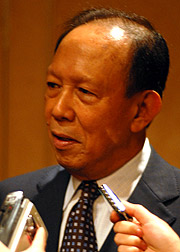 Perhaps it’s an unrealistic expectation, but similar and sustained collaboration between Razaleigh and Musa (
right
) earlier in their careers would have delayed Umno’s decline.
Perhaps it’s an unrealistic expectation, but similar and sustained collaboration between Razaleigh and Musa (
right
) earlier in their careers would have delayed Umno’s decline.
The party would probably have avoided the descent - terminal, in all likelihood - to the plutocracy it has become.
In the event, their intense rivalry afforded Dr Mahathir Mohamad the opportunity to manipulate it, to keep both unbalanced and ultimately insignificant to the party’s health and future.
As a consequence, Umno and the country were the losers.
Today both Umno and the nation are struggling to regain their footing on turf infested with shrapnel from Mahathir’s insidious and protracted turn as CEO of the nation.
Rivalry among the second echelon
Democratic political parties do not have a good record at managing the rivalry between capable, contending aspirants in their second echelon.
Because talent is not exactly bountiful and the leader at the stern may be bland about how to deal with ambition throbbing below, the parties tend to lose the services of the more able.
In the gap left between the top leader’s blandness or manipulation, and that of chafing rivalry in the tier below, the parties can count themselves fortunate if only the merely banal come through.
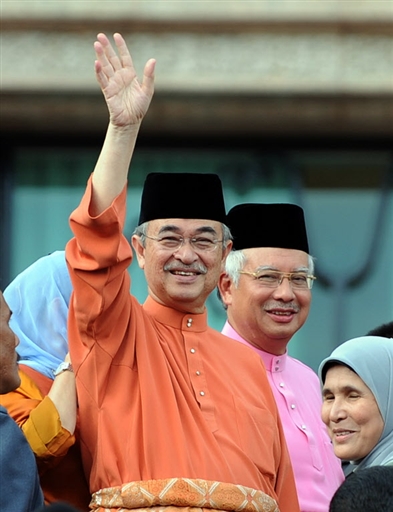 Abdullah Ahmad Badawi was a good demonstration of this possibility, while Jacob Zuma of South Africa offers a vivid example of the dreaded outcome of deficient capability tied to defective morals in someone a major party allows through to the top when negligent about the gap.
The history of the last half-century of competing political parties in the mature democracies of Europe and the evolving ones of Asia supply striking evidence of attrition to party and country caused by maladroitly managed, or deviously exploited, rivalry in the second tier of leadership.
Some of the better known examples were the rivalry between Aneurin Bevan and Hugh Gaitskell which was damaging to Britain’s Labour Party, as was that between Rab Butler and his competitors among the Conservatives striving to succeed Winston Churchill.
Certainly, the competition between Yigal Allon and Moshe Dayan was detrimental to the dominance of Labour - the party more capable of conceding territory for peace - in Israel’s politics before annexation-happy Likud’s ascendancy in the late 1970s.
More examples can be cited of losses - in terms of intellectual and moral qualities - suffered by pivotal parties on account of unmanaged rivalry at the aspirants’ level, but one case in the opposite direction needs to be dwelt on to demonstrate the huge benefits from constructive collaboration between what would otherwise have been contenders for power.
This was that of Lal Krishna Advani and Atal Behari Vajpayee, who could have easily been divisive rivals for power within India’s Bharatiya Janata Party (BJP) but chose not to - the former wisely allowing his superior organisational skills to play second fiddle to the latter’s supple political ones.
The upshot: A period of BJP ascendancy in Indian politics in the 1990s that was propitious to economic growth and – this was its unexpectedly fruitful byproduct – the rejuvenation of an ailing Congress Party which discovered renewed vitality from BJP’s threat to India’s hallowed secularist ideals, gifted to the nation by Congress’ progenitors.
Rise of the schemers
Admittedly, all this is lengthy prologue to the point that the three component parties of Pakatan Rakyat must, given the looming possibility of their takeover of the federal government, study the annals of succession in the pivotal political parties of the modern era for insights on how to prevent rivalry from being divisive in the middle echelons of their parties.
Wholly damaging to their parties would be an ethos that would make the life of politics the territory of the professional, the whole of his or her life, vocation and home.
This is a recipe for the conversion of the party into a form of social mobility so that eventually the protection of the party’s bureaucratic structures – the machine – becomes more important than the interests of the people the parties are supposed to represent.
That would set the stage for the rise of schemers who, driven by self-seeking cunning, emerge through the gap left when the more talented weary or waver in the quest for the ‘top of the greasy pole”, in the pithy words of Disraeli.


Are you sure you want to delete this comment?
This action cannot be undone.