




Be confident, be open, Petronas told
Opposition stalwarts Lim Kit Siang and Jeffrey Kitingan have called on Petronas to be more transparent and inclusive.
Opposition stalwarts Lim Kit Siang and Jeffrey Kitingan have called on Petronas to be more transparent and inclusive.
After having been in existence nearly four decades, Petronas must be confident enough by now to be more open, they said.
 For starters, both want the national oil corporation to reveal the extent of its oil and gas reserves worldwide. They also want an upward revision in the paltry 5 percent oil royalty being paid - when not withheld - to the oil-producing states, Sabah and Sarawak in particular.
Lim also commented on former Petronas chairperson Tengku Razaleigh Hamzah’s startling disclosure last week of the discovering of a new oil field - the “find of the century by Petronas”.
Razaleigh had implied that the find was in local waters - speculated to be either in Sarawak waters near Natuna Island or Sabah waters in Labuan fringing the Spratly islands.
 “The government would have gone bankrupt without the oil money. There must be proper accountability on how Petronas money is being spent,” said Lim.
“At present, Petronas accounts are not even tabled in Parliament neither is it answerable to Parliament. There is no need to shield Petronas accounts from public scrutiny since that would further indicate a lack of public accountability.
“I think this is not only a very serious issue but also reflects part of a bigger problem of the federal-state relationship. The federal government is taking away more and more of the rights of state governments. This is a departure from the concept of Malaysia being a federation.”
He cited the oil royalty payments for Kelantan and Terengganu being termed wang ehsan (goodwill payment) as a case in point of state rights being eroded despite the three-tier power-sharing structure of the federation under the constitution.
‘No less than 20 percent’
Jeffrey said he wants a review and increase of the 5 percent oil royalty for Sabah but stressed that it should be no less than 20 percent, “so that the state government will have more money to develop the state”.
 He said that it was not right that Petronas is acting as if it is above the law, as if it is “owned by a secretive clique” rather than being a national oil corporation.
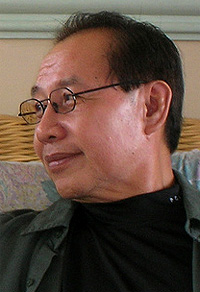
The problem, said Jeffrey (right) , is rooted in the fact that Petronas is a secretive organisation. The federal government should explain why the Petronas agreement with the oil-producing states have been classified a secret.
“It would be interesting to know what are the specific clauses in the Petronas agreement with the (respective) states that make it so secret,” he said.
“The agreement is so secret that even the Sabah government, supposedly a party to the agreement, does not have a copy.”
Apparently, Joseph Pairin Kitingan had tried to get hold of a copy when he was Sabah Chief Minister from 1985-1994 but was rebuffed by Petronas and the federal government.
Jeffery said he is uncertain if even Petronas has a copy of its agreement with Sabah.
“It has come to my knowledge that 80 percent of the oil and gas produced by Petronas is not sold directly to the world market,” charged Jeffrey, not for the first time.
He claimed that Petronas oil and gas is channelled through six ‘option holders’ who obtain the supply at below world market prices.
The implication is that Petronas only benefits during oil price hikes from its 20 percent share of oil that it is free to sell on the open market.


Are you sure you want to delete this comment?
This action cannot be undone.