




'Suhakam should have power to prosecute'
Outgoing Suhakam chairman Abu Talib Othman admitted that last year's amendments to the Human Rights Commission of Malaysia Act 1999 (Suhakam Act) had failed to addressed core issues.
Outgoing Suhakam chairman Abu Talib Othman admitted that last year's amendments to the Human Rights Commission of Malaysia Act 1999 (Suhakam Act) had failed to addressed core issues.
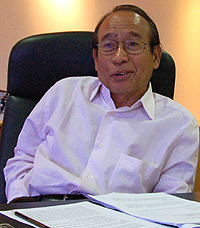 In an exclusive interview with
Malaysiakini
, Abu Talib (
right
) who had served Suhakam for the past eight years, shared his thoughts on the inadequacy of the law to adhere to human rights principles.
In an exclusive interview with
Malaysiakini
, Abu Talib (
right
) who had served Suhakam for the past eight years, shared his thoughts on the inadequacy of the law to adhere to human rights principles.
"The amendments does not say very much except to disqualify a number of people as commissioners. And to me that is not relevant," he reflected.
The chairman who will complete his term this Friday, stressed that the government should give more power to the commission to implement its own recommendations.
For example, he emphasised the importance for Suhakam to be able to take cases to court when there is a clear violation of human rights.
"But now if the AG says ‘no case', you cannot question him and that is the end of the matter. He does not answer to anybody. And unfettered power is dangerous," he continued.
Abu Talib however is baffled by the lack of definition of ‘civil society' as provided in the Suhakam act that a member of the selection committee must be from.
"It's good to have a select committee to ensure transparency of the appointment of the commissioners. But by virtue of law a member of the select committee must be from a ‘civil society'. As yet the attorney-general has refused to give us an interpretation of what that is," he explained.
Excerpts of the interview follow. The content has been edited for language and clarity.
Malaysiakini : What improvements have you seen in Suhakam's quasi-judiciary powers?
Abu Talib Othman : The amendments does not say very much, apart from disqualifying a number of people, which was not our recommendation.
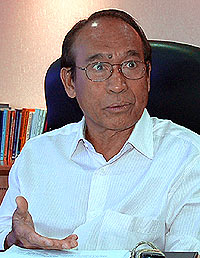 Instead of the amendments giving more power to Suhakam especially on the issue of conducting public inquiries and to bring cases of violation of human rights to court, they are more interested in legislating everybody out, and to me that is irrelevant.
Should Suhakam's scope of power be widened?
Our power is wide enough but unfortunately our recommendations to the government have not been addressed.
Suhakam is not an executive body so we cannot do anything if the government agencies choose to ignore our recommendations. This does not help the people and does not reflect (1Malaysia slogan) ‘people first and performance now'. The time has passed to sweep things under the carpet.
The government had set up Suhakam for the promotion and protection of human rights and the government agencies should work with the government to achieve this. Not to look at us as an adversarial body. This is the frustrating part.
We are not against anybody. It is our duty to see the rights of the individuals, which are guaranteed by the constitution, to be truly protected.
After the amendments to the Suhakam act, who appoints the selection committee?
It is clearly the PM.
But how does he do it?
I don't know. You can ask the chief secretary as he is the chairman. I am not in the government. I am a member by virtue of law.
Do you think that these amendments are to deflect criticism on the appointment of the commissioners? Even now, the appointments made by the select committee is shrouded - nobody seems to knows how it is done.
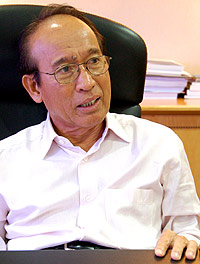 That is what I raised. As a member of the select committee, I would like to be advised on the meaning of ‘civil society' in the context of this section. But the attorney general whose chambers is responsible for drafting the law, has failed to let us know what it means, so we have to rely on our wisdom.
Surely you do not want to appoint a member of the ‘civil society' whose function is to manage some sort of fund, or an old boys association of a school!
But what can we do when the AG had refused to give his advice?
I do not know if he had advised the PM in the case of appointing members of the select committee.
That person might have experience and knowledge of human rights but he might not be in that segment of ‘civil society' whose function is in the promotion and protection of human rights.
Why is there so much secrecy in the appointment of the commissioner?
There is no secrecy.
But even the nominees do not know how the selection works.
I was advised, and we have agreed that we should invite nominations from ‘civil society'.
The government too can submit names for consideration of the committee. So there is no secrecy.
But we don't know how many are vying for the positions, how the selections are done, or even the criteria.
The criteria is there; he must have knowledge or practical experience in human rights. That is the requirement of the Paris principle. So the criteria are spelled quite clearly in the law.
But we do not know the people who are being nominated.
Why make it public?
Why not, since it is a public office?
To me this is a voluntary job, someone offers to serve (the commission). In the context of Malaysian culture, if the submission is rejected, then there would be speculation on why he is rejected.
We cannot accommodate everybody since the law provides that the maximum number of commissioners is 20 and there are more names than that have been submitted. So we take the view that it would not be fair to the individual who sincerely wants to serve in the commission.
Do you think that the amendments to the Suhakam Act had increased the level of transparency when it comes to the appointment of the commissioners?
 Transparency in the sense that there is a selection committee to look into the competency and the qualification of the members who will serve in the committee. We can do our best to examine each and every person recommended.
So do you see any improvement?
Improvement is that now we have a select committee, but in the past it was entirely up to the prime minister.
Tomorrow: Suhakam: Gov't often deaf to its advice


Are you sure you want to delete this comment?
This action cannot be undone.