




Open police's 'secret' document to public scrutiny
The Inspector General's Standing Orders (IGSO) has come under scrutiny after a law professor had explained that the manual, which is classified under the Official Secrets Act, is restricted to police officers with the rank of district chief and above.
The Inspector-General's Standing Orders (IGSO) has come under scrutiny after a law professor had explained that the manual, which is classified under the Official Secrets Act, is restricted to police officers with the rank of district chief and above.
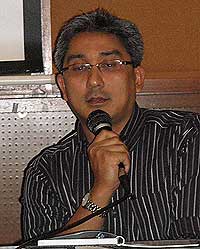 The IGSO contains not just guidelines on administrative and organisational procedures but also on the permissible use of firearms, said Raja Badrol Hisham Raja Mohd Ali, who lectures at the Universiti Islam Antarabangsa (UIA).
The rationale behind the restricted nature of the IGSO, is that it also details operating procedures, for example, the placement and transportation of prisoners and the number of escorts. These are issues of security, explained Badrol Hisham ( right ).
"The conscience says that it should be made public as some parts of it concerns the people, but at the same time we cannot compromise security and other legal concerns."
In the case of Aminulrasyid, who took a bullet to his head allegedly for acting suspiciously and disregarding police orders to stop, the professor said from the information derived, the police "did not exercise prudence".
Badrol Hisham had pointed out the CPC only allowed the police to shoot to kill in circumstances where a person is involved in a crime punishable by death and involved in a crime punishable by life imprisonment.
Hiding wrongdoing
Meanwhile, criminal lawyer V Sithambaram suggested that the IGSO be divided into two parts.
"The guidelines that affect the people at large should be made public. The standard operation procedures can be kept restricted," he said.
Aminulrasyid's family counsel Latheefa Koya said restricting the manual for security purposes was questionable as it could also hide wrongdoing.
"They probably don't want to be seen breaking the rules they set for themselves," she said.
The police has come under fire in recent times. The shooting of teenager Aminulrasyid Amzah in Shah Alam last month and Norizan Salleh mistakenly shot five times by police officers last year, has also raised queries on the standard and implications of the Criminal Procedure Code (CPC) and the Police Act.
Prior to this, the suspicious deaths of prisoner A Kugan and political aide Teoh Beng Hock while in the hands of crime and anti-graft busters has left many apprehensive on the procedures and conduct of enforcement officers.


Are you sure you want to delete this comment?
This action cannot be undone.