




What kings are for
COMMENT We all know that there has been a crisis facing the Kelantan royal household. The details are sketchy, and briefly: a palace guard was shot, the sultan confined to a hospital bed, a plane specially chartered to take him out from the state for medical attention elsewhere was refused permission to land. Then came the finger-pointing accusations made by Tengku A against Tengku B.
All the same, we have been told that this is a private matter and we as the subjects are not to speculate and to amplify the matter out of proportion.
So, Ibrahim Ali the self-appointed sentinel of the royalty and Malay culture (via Perkasa) has not mentioned it. Rais Yatim the sagely minister in his wisdom has also stated that we are not to magnify the case and making it into a national embarrassment. The prime minister too has intimated...
COMMENT We all know that there has been a crisis facing the Kelantan royal household. The details are sketchy, and briefly: a palace guard was shot, the sultan confined to a hospital bed, a plane specially chartered to take him out from the state for medical attention elsewhere was refused permission to land. Then came the finger-pointing accusations made by Tengku A against Tengku B.
All the same, we have been told that this is a private matter and we as the subjects are not to speculate and to amplify the matter out of proportion.
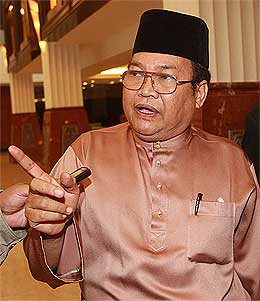 So, Ibrahim Ali (
right
) the self-appointed sentinel of the royalty and Malay culture (via Perkasa) has not mentioned it. Rais Yatim the sagely minister in his wisdom has also stated that we are not to magnify the case and making it into a national embarrassment. The prime minister too has intimated that this matter will be resolved by the Kelantan household itself and the federal government will not interfere.
So, Ibrahim Ali (
right
) the self-appointed sentinel of the royalty and Malay culture (via Perkasa) has not mentioned it. Rais Yatim the sagely minister in his wisdom has also stated that we are not to magnify the case and making it into a national embarrassment. The prime minister too has intimated that this matter will be resolved by the Kelantan household itself and the federal government will not interfere.
If this is not enough, there is the Sedition Act that prevents ordinary mortals from discussing matters such as this. The ISA is also ready and waiting to pounce on those still frivolous or confused (or both) over these tight and specific rules and guidelines.
So this writing is not about the royal household in Kelantan or elsewhere in Malaysia. It is more about how other cultures and civilisations in human cultural history have taken the concept of the king and what they do to him.
A king is a man-god
In past primitive tribes, a king is taken as an incarnate of a deity and more or less in control of nature. He is thus in control of the climate or weather, and by extension of the crops the society grows. He brings rain when crops are planted, protects the safety and security of his people. He cures the sick. He is the protector and provider of the people. A king is a man-god.
This being so, the people take care of the king. They give him the lion’s share of the wealth and asset of the community. They protect him from usurpers with their life. They are most aware that their general welfare depends on the state of health of the king. They would ensure he has the physical and mental capacity and prowess to do his job properly.
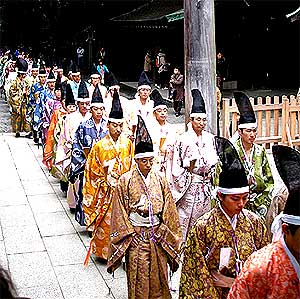 Such is the case of the Mikado or Dairi, the monarch of Japan, described by Japanese history as ‘the incarnate god who governs the universe.’
To surmise, many primitive tribes believe that their good welfare has direct co-relation with the king’s state of health. But kings are in reality ordinary mortals, and like everyone else they fall sick, grow old and die.
What will happen to the welfare of the people when the king falls sick, or grow old and die? Primitive societies believe as a community they will meet with all sorts of problems: drought perhaps, or enemy tribes mauling them all over.
So all over the world, they have their own way of solving this inevitable development.
The death of the king
In some societies, the king is simply killed when his strength fails. The Chitome of Congo deem that if their king were to die a natural death there would be famine and the people will perish. So they choose a man as his successor. His job is to enter the palace of the king at night and either strangle or club him to death.
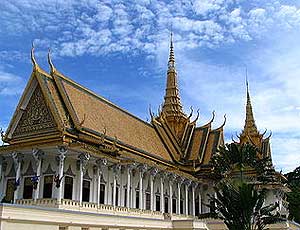
The kings of Fire and Water in Cambodia are likewise not allowed a natural death. When they fall seriously ill, the people just stab him to death. Also, in the Central African kingdom of Bunyoro, an ailing king would kill himself by drinking poison. If he has no will or energy to do it, his wife will do it for him.
 Some cultures found it unsafe to wait until a king shows signs of infirmity. So they appoint kings for a fixed period. At the end of it, they are killed. For example, the king of Calicut on the Malabar coast is appointed only for 12 years. He is known as a Samorin. At the end of the 12 years, he decently cuts his own throat.
Then there are temporary kings. For example in the month of Meac (February), the king of Cambodia annually abdicates for three days. On these days, he would not perform any kingly duty, including getting the state revenue. Another person is chosen to fill this vacuum.
In another case, students in Fez, Morocco are allowed to appoint a sultan of their own who reigns for a few weeks. The sultan is known as Sultan t-tulba the ‘Sultan of the Scribes’.
In Jambi, Sumatra, it is the custom that at the beginning of a new reign a man of the people should occupy the throne and exercise the royal prerogative for a single day, while in Bilaspur a Brahman would eat from the hands of a king who has just died. The Brahman will then rule for a year. After that, he is banished from the area, never to come back.
The Malay mind
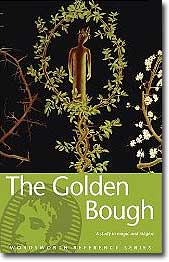 I came across these cases when reading Sir James Frazer’s The Golden Bough a History of Myth and Religion. And this book by the way is old, being first printed in 1900. So if the book banning department and the morality gurus want it banned, forget it for I do not think it is in the bookshops anymore.
What can we postulate from all this and still (hopefully) not be pulled in by the nets of the Sedition Act and or the ISA?
It is that the Malay mind should be given free rein to begin to think that in life there are alternatives to truth. And what is ‘truth’ in this case? It is that the people create a king to perform the role of protecting their welfare.
But this role changes from people to people, from time to time, from place to place. The Malay should be made aware of this evolutionary concept and role of kingship, and be able to manage this change.
One very good way of doing this is to be open about it, and have an equally open public discussion on the matter. Rais Yatim, perhaps you may wish to lead this discussion on Twitter?
AB SULAIMAN is an observer of human traits and foibles, especially within the context of religion and culture. As a liberal, he marvels at the way orthodoxy fights to maintain its credibility in a devilishly fast-changing world. He hopes to provide some understanding to the issues at hand and wherever possible, suggest some solutions. He holds a Bachelor in Social Sciences (Leicester, UK) and a Diploma in Public Administration, Universiti Malaya.


Are you sure you want to delete this comment?
This action cannot be undone.