




NGOs slap down Putrajaya bid for UN body re-election
Is Malaysia truly fit to be re-elected to the United Nation Human Rights Council in Geneva, Switzerland, for a second time?
Is Malaysia truly fit to be re-elected to the United Nation Human Rights Council in Geneva, Switzerland, for a second time?
Not so, according to a 40-member NGO coalition for an Effective Human Rights Council.
It has submitted a letter to the United Nations expressing ‘serious concerns' over Malaysia's candidacy to the global human rights body.
The coalition, claimed to represent NGOs from all regions of the world.
It also pointed to Malaysia's failure to fully cooperate with the Human Rights Council's human rights mechanism based in Geneva, by refusing to allow independent experts on various issues to visit the country.
T
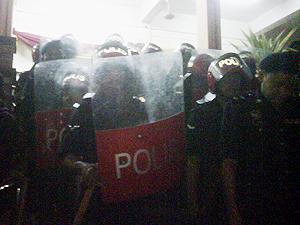 hey included the special rapporteurs on human rights defenders (requested in 2002); indigenous people (2005); freedom of religion (2006); migrants (2006); human rights and counterterrorism (2005); racism (2008); independence of judges and lawyers (2009); and the independent expert on minority issues (2007, 2009).
On the offensive with letters
"We would like your government to consider these concerns before it decides how to cast its vote," said the letter issued on May 5, addressed to member states of the UN General Assembly.
"We hope you will seek specific commitments regarding Malaysia's record and inadequate esponse to human rights mechanisms before granting your vote to Malaysia for election to the council," the letter added.
"We hope that you will encourage Malaysia to adopt these measures when you meet with its diplomats and representatives," the letter said.
Malaysia is vying to rejoin the Council, and has offered herself as a candidate to fill one of the four places reserved for Asia that are up for election for the 2010-2013 term today.
The other Asian countries in the running are Iran, Maldives, Qatar and Thailand.
Iran dropped out of the race on April 23 in the face of mounting global opposition based on its record of severe human rights abuses, rather than face likely defeat at the General Assembly
If successful, this will be the second time for Malaysia to serve on the 47-member Human Rights Council. She was a member from 2006 to 2009.
The NGOs, many of which are from Asia, proposed a number of concrete steps that Malaysia can take in order to conform to the council's membership provisions.
These steps included the ratification of several international covenants and conventions related to civil and political rights , economic, social and cultural rights, torture, and racial discrimination.
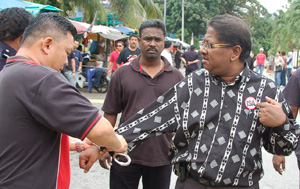 They have also demanded that Malaysia immediately cease use of all preventive detention, and commit to the prompt repeal of the Internal Security Act (1960), and provisions allowing detention under the Public Order and Prevention of Crime) Ordinance (1969), the Dangerous Drugs (Special Preventive Measures) Act (1985), and the Restricted Residency Act (1933).
"Detainees being held under these laws should immediately be charged with a cognisable offence in a court of law or released," urged the NGOs.
The NGOs also demanded the repeal of the Printing Presses and Publications Act (1984), which requires annual licensing of publications as these have been used to effectively penalise responsible media outlets covering controversial stories.
"Malaysia should immediately end the use of all preventive detention laws, and repeal laws that restrict freedom of expression and academic freedom," said the Bangkok-based Asian Forum for Human Rights and Development executive director Yap Swee Seng, citing two of the specific concerns expressed by the coalition in its letter regarding Malaysia.


Are you sure you want to delete this comment?
This action cannot be undone.