




Choo Keong's exit plays to script
COMMENT Wangsa Maju MP Wee Choo Keong’s announcement that he had quit PKR smacks of life imitating a pre-written script despite a strenuous attempt by him to portray it as motivated by principle.
Announced a couple of days before voters in the Sibu by-election make their choice tomorrow, the timing of Wee’s quit decision...
COMMENT Wangsa Maju MP Wee Choo Keong’s announcement that he had quit PKR smacks of life imitating a pre-written script despite a strenuous attempt by him to portray it as motivated by principle.
Announced a couple of days before voters in the Sibu by-election make their choice tomorrow, the timing of Wee’s quit decision appears calculated to do damage to the chances of his old nemesis, DAP, pulling off an upset win for the opposition Pakatan Rakyat coalition.
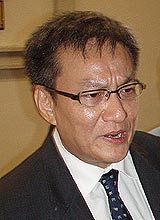 PKR supporters, aware of fissiparous factors in the party but unwilling to concede that these warranted a scuttle, were hoping for the better part of a year that the disgruntled Wee would continue to opt for opposition from within, rather than hurling broadsides from without.
Yesterday’s quit announcement suggested that Wee had lost his faith in the efficacy of internal dissent and his taste for the crests and troughs of intramural battles.
The question inevitably arises: what good would it do him to opt for a situation where his critics are furnished further proof to claim that he is a perennial malcontent and hence good riddance?
Though Wee has long been privately predicting that unattended weaknesses in PKR would prove fatal over time - to a certain extent, the withdrawals of PKR state assemblypersons and MPs in recent months bear him out on this - he declines to see that the party is young, only 11 years old, and very much a work in progress.
It’s been very much a party that needed to take in just about anyone willing to sign up and, after the electoral tsunami of March 2008, appoint to positions of power from its stock of available talent, even though assorted appointees’ fidelity to PKR ideals may only be simulated rather than sincere.
To expect the party’s top leadership to be surgical in response to the discovery of weak links in its chain would be reasonable if it were a tested and matured entity.
In the event, the party is still at a larval stage of development so action against duplicitous stalwarts would necessarily have to be calculated and slow, even Machiavellian.
Furthermore, party supremo Anwar Ibrahim is like Gulliver enmeshed in Lilliputian problems which subtract from his ability to view the broader party picture and act decisively to stanch nosebleeds.
The upside to this is that to the extent that the public views those problems as flagrantly repressive of Anwar’s human rights, he and his party become more electable by reason of voters’ desire to compensate them their travails.
The former DAP rebel
Of course, there is speculation that Anwar defers acting against duplicitous territorial barons within the party to the time when he becomes prime minister; presumably then, pulling the rug from under them would be easier.
The argument of Wee and his ilk to this speculation is that by then it would be too late and the entrenched ‘baddies’ would only be exorcised at the cost of internal schisms.
Still, Wee ought to remember that when he first tried to join PKR shortly after its formation in 1999, he was barred by Dr Chandra Muzaffar, then the party’s leading light, on the grounds that as a former DAP rebel he was not welcome to an allied opposition party’s fold.
Anwar overlooked that stricture - and without requiring Wee to join the PKR and dissolve the party he had formed, Malaysian Democratic Party, as his vehicle in his battles against the DAP - allowed him to stand on a PKR ticket in Wangsa Maju in 2008.
Wee won in the tsunami largely worked by Anwar and aided by the exertions of Hindraf. A 2004 attempt by Wee to contest and win on a MDP ticket was fruitless.
It helps to keep the not-so-long-ago past in sight in straits like this when what Wee has done in quitting PKR is help his critics to say ‘I told you so.’
TERENCE NETTO has been a journalist for close on four decades. He likes the occupation because it puts him in contact with the eminent without being under the necessity to admire them.


Are you sure you want to delete this comment?
This action cannot be undone.