




When multiracialism died in Sabah
Former Berjaya Party strongman Mohd Noor Mansoor is seeing red that Umno is not practicing the genuine multiracialism that the state of Sabah, albeit intermittently, has been singularly noted for in Malaysia since independence. Instead, the party is more into lip service like its predecessors, he charges.
Former Berjaya party strongman Mohd Noor Mansoor is seeing red that Umno is not practicing the genuine multiracialism that the state of Sabah, albeit intermittently, has been singularly noted for in Malaysia since independence. Instead, the party is more into lip service like its predecessors, he charges.
He cites the simmering unhappiness of several Barisan Nasional component parties with Umno as a case in point. This also stems from BN Sabah leaders being discouraged from being "great heroes of the people," he added. "Everything is decided in Putrajaya."
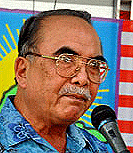 "It doesn't matter who is the chief minister as long as he or she genuinely looks after the people without fear or favour," elaborates the former finance minister, the most powerful in his day in the Harris Salleh administration. "No one must be left out."
He was raising in particular the recent sacking of vocal Liberal Democratic Party (LDP) deputy president Chin Su Phin from the state government as head of the state housing authority.
He sees Chin's sacking as a return to "the excesses of the past", when multiracialism degenerated from genuine practice to lip service, and which led to the downfall of the Usno, Berjaya and PBS (Parti Bersatu Sabah) administrations.
"This is like going back to the bad old days," said Mohd Noor. "You talk and you get sacked."
 He recalled that it was the sackings, mass arrests and conversions during the Usno era that led to the rise of Berjaya in 1976.
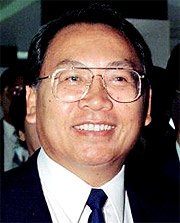
In turn, Berjaya moved away from democracy and multiracialism back to the dark ages of Usno and paved the way for the emergence of PBS under Joseph Pairin Kitingan (left) , pointed out Mohd Nor.
Pairin moved full circle without the excesses of his predecessors, the Berjaya veteran opines, and provided the pretext for Umno to enter Sabah when he "forgot his multiracial and democratic roots".
Ironically, it is Pairin that Mohd Noor faults as well for propping up Umno in Sabah through PBS, as the Peninsular-based party "drops all pretence of multiracialism, power sharing and democracy".
Fabricating Malays
Mohd Noor belabours the point that in the current political scenario, the "transplanted" party (Umno) is "naively" beating the drums of war on its signature tune of ketuanan Melayu (Malay supremacy) a la Peninsular Malaysia, "while advocating narrow race-based political platforms".
This is an anomaly, notes Mohd Noor, "in a state where there are no Malays."
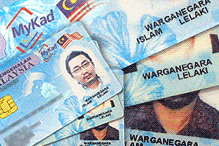 This is a reference to widespread allegations that illegal immigrants are being given the MyKad and listed as Malays before being entered into the electoral rolls.
This is reckoned as an artificial political solution that is "unsustainable and unworkable", and imposed on Sabah from Putrajaya.
"Everyone knows that there are no Malays in Sabah," said Mohd Noor, a member of the 50,000-strong Barunai community. "We are actually a composite of all races except the Malay."
The veteran politician sees Sabah's imminent return to genuine multiracialism as Umno is eventually taken out of the political equation in the state. He expects the cycle to be complete when Sabahans come out in full force (against the illegals) and capture the initial spirit of genuine multiracialism that underpinned PBS and previous easly administrations.
This is also the constant theme from Mohd Noor, once a man of few words, as a star performer on Sapp's (Sabah Progressive Party) current series of roadshows.
He's one of a handful of aging political veterans in the state who have since returned to centre stage, vowing to help "make a difference for the next generation". He joined Sapp recently as an ordinary member.
Removing Umno ‘an easy task'
Mohd Noor has no illusions that ousting Umno from power in Sabah will be an easy task, and he sees no reason why it can't be done.
Delving into his experience as a founder of Berjaya, he recalled that Sabah was a police state in the early 1970s under the late Mustapha Harun when "Syed Kechik of Kedah was causing havoc in the state as the chief minister's political secretary".
"The Kepayan Police Headquarters in Kota Kinabalu was then cynically referred to as Universiti Kepayan," said Mohd Noor on the years following the searing May 13 riots in Kuala Lumpur. "The chief minister was given special powers to arrest under the ISA (Internal Security Act)."
 So many graduates and undergraduates were locked up there, on the instructions of Syed Kechik who was de facto chief minister during Mustapha's long absences from the state, added Mohd Noor.
"It was around that time that I was sacked from the Usno government as Establishment Director for coming to the defence of my fellow graduates."
Charting the path ahead, Mohd Noor doesn't see anything in the emerging political scenario for himself. He has seen it all and does not want to be in the thick of things again, except as an advisor if needed.
He's firm that political change will come to Sabah if Pairin re-examines his conscience and moves away from Umno in Sabah "for the sake of the future generations".
"I would like to invite Pairin to learn from our history and join with Sapp to work for political change in Sabah," said Mohd Noor in a cautiously optimistic note.
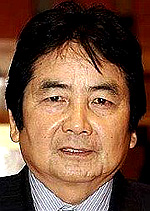
"The others - Bernard Giluk Dompok (Upko), Joseph Kurup (above) (PBRS) and VL Liew (LDP) - should follow closely as well for a democratic, multiracial Sabah run by local parties."


Are you sure you want to delete this comment?
This action cannot be undone.