




Corruption: How much is too much?
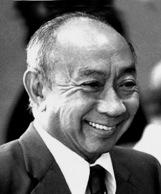
COMMENT Reading the encomiums to Dr Goh Keng Swee, the man his eulogists say was principally responsible for the templates that undergird modern Singapore, one is prompted to recall a discussion in the now defunct, Far Eastern Economic Review , on corruption.
The focus on corruption in a mid-1983 edition of the respected weekly stirred interest because several countries in East Asia were, at that juncture, on the cusp of taking the path towards economic development via infusions of foreign direct investment.
The issue of corruption – what attitude to take towards it, what degree of it to tolerate – was mulled over in the intellectual debate on what paths to the quest for economic development of the region...
COMMENT Reading the encomiums to Dr Goh Keng Swee, the man his eulogists say was principally responsible for the templates that undergird modern Singapore, one is prompted to recall a discussion in the now defunct, Far Eastern Economic Review , on corruption.
The focus on corruption in a mid-1983 edition of the respected weekly stirred interest because several countries in East Asia were, at that juncture, on the cusp of taking the path towards economic development via infusions of foreign direct investment.
The issue of corruption – what attitude to take towards it, what degree of it to tolerate – was mulled over in the intellectual debate on what paths to take in the quest for economic development of the region.
 The
Review
, as befit its status then as the must-read journal of governing circles in the region, rounded in on the topic in its highly regarded section, Fifth Column, whose editorial gravitas was equivalent to that of op-ed pages in stellar dailies in western capitals.
The
Review
, as befit its status then as the must-read journal of governing circles in the region, rounded in on the topic in its highly regarded section, Fifth Column, whose editorial gravitas was equivalent to that of op-ed pages in stellar dailies in western capitals.
In its focus on corruption, the Review adverted to Goh’s arguments on the subject.
The Singapore polymath had counseled zero tolerance. His arguments were espoused in the Harry G Johnson Memorial Lecture he gave to the Royal Society, London, in July 1983 on ‘Public Administration and Economic Development in LDCs (least developed countries)’.
The nub of Goh’s arguments, cited by the Review , was that corruption would add to costs, make national economies less competitive, and erode the moral and intellectual fiber of the civil service that must conceive, implement and monitor development policies.
Goh also argued that top civil servants ought to be remunerated at rates that were near to the levels enjoyed by captains of industry and top performers in the professions.
His rationale: that was the only way to retain talent in the civil service and prevent a drain to the private sector.
Huntington: Corruption inevitable
The arguments arrayed against Goh’s rather puritanical stance were variations on the theme propounded by Samuel Huntington in his book ‘Political Order’, although the author was not cited in the article in Fifth Column.
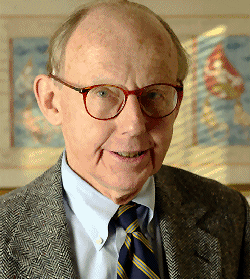 Huntington is more renowned for his controversial clash of civilisations theory which saw conflict between cultures as the driving force of history following the fall of communism in 1989.
That thesis had diverted attention away from Huntington’s other, more compelling if less controversial theories, like the one on corruption as being inevitable in societies that are newly modernising.
The views in the Review article that were contrary to Goh’s essentially rehashed the ones advanced by Huntington in ‘Political Order’: in societies that have just begun to modernise, corruption in moderate doses can overcome unresponsive bureaucracy and be an instrument for progress.
Huntington pointed to 18th century England, at the onset of the Industrial Revolution, as a time when there were high levels of corruption, as was the case in 19th century America when the forces spurring economic growth – utilities, railway companies and new corporations – were the same ones that were handing out bribes to city councils to lubricate paths to huge profits and expansion.
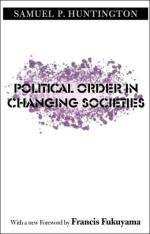 Huntington held that corruption at this stage of development was useful in providing new groups with the means to be assimilated into the system.
Corruption, Huntington noted, was a less extreme form of alienation than violence: “He who corrupts a system’s police officers was more likely to identify with the system than he who storms the system’s police stations.”
The high-minded would find it easy to disparage arguments that held corruption to be a tolerable and passing phase in the process of economic modernisation of underdeveloped societies.
But, said Huntington, the seamy tradeoffs for spurring growth and stability are necessary in conditions where people’s loyalties are focused on groups and tribes rather than on institutions and processes.
Loyalty and faith in institutions and their processes are a mark of societies that have arrived at some level of maturation in its constitutional forms.
Zero tolerance
This recall of a near three-decade old shakedown of arguments about corruption - its causes and what attitude to take towards it - is useful not just for proof of the validity of Goh’s counsel of zero tolerance, but also of the pitfalls when, as in Malaysia’s case, we opted for some tolerance of it that was not guarded enough.
The slack we allowed corruption has eventuated in an broad infection of the body politic by a bacillus that now sees low-cost houses built for the poor being appropriated by the well-heeled, to the phenomenon of gigantic commissions paid out of arms procurement contracts to local brokers.
In other words, no sphere is too low an opportunity to be exploited by some and no upper limit is recognised by others.
Once the hand is inserted in the cookie jar, there’s no telling when a halt can be called to the temptation towards serial behaviour.
Dr Goh Keng Swee served as Singapore’s deputy prime minister between 1973 and 1984. He passed away on May 14, 2010 at the age of 91.
TERENCE NETTO has been a journalist for close on four decades. He likes the occupation because it puts him in contact with the eminent without being under the necessity to admire them.


Are you sure you want to delete this comment?
This action cannot be undone.