




Blogging leaders miff muktamar delegates
The sensitive topic of online blogs dogged PAS' heels at it's 56th muktamar after causing much ruckus in recent months over wild allegations in the blogosphere against the Islamic party and its leaders.
The sensitive topic of online blogs dogged PAS' heels at it's 56th muktamar after causing much ruckus in recent months over wild allegations in the blogosphere against the Islamic party and its leaders.
Internal bickering as well as criticisms of the party leadership became the hot topic of blogs, including those operated by the party hierarchy and those once thought of as 'friendly' bloggers, forcing the party to take a hard line against them.
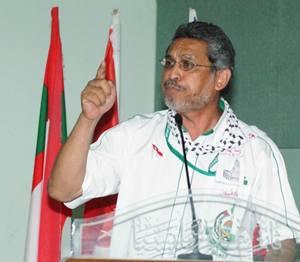 At least one top PAS leader and blogger has been brought up on charges before the disciplinary body over his postings. Shah Alam parliamentarian Khalid Samad (
right
) was suspended for 6 months from his party post for his outright criticism of Selangor commissioner Hassan Ali over the 'Allah' and alcohol controversies.
At least one top PAS leader and blogger has been brought up on charges before the disciplinary body over his postings. Shah Alam parliamentarian Khalid Samad (
right
) was suspended for 6 months from his party post for his outright criticism of Selangor commissioner Hassan Ali over the 'Allah' and alcohol controversies.
The delegate from Negeri Sembilan first broached the issue, commenting generally on "leaders who shoot their mouths off" during his turn at debating the motion of thanks on the president's policy speech at the Islamic Tarbiyah Centre in Pengkalan Chepa Kelantan.
"The president should look over the parliamentarians who make statements without thinking, especially those who often meet reporters," he said.
He singled out the hullabaloo surrounding the Kelantan's Menteri Besar Incorporated (PMBK) which saw PAS spiritual leader Nik Abdul Aziz Nik Mat's son-in-law Abdul Arif Fahmi (the CEO of PMBK) being accused of bribery. Abdul Fahmi's case was brought to the public eye by allegations posted on blogs.
Grassroots' struggle with info age
"Despite the allegations, when it was investigated, there was no bribery," added the delegate.
This sentiment was echoed by Penang delegate Rosidi Hussin who bemoaned the 'problematic' statements that are posted on blogs operated by party leaders.
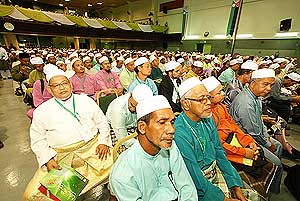 "I hope that there will be a decision to shut down or control the blogs operated by PAS leaders. This is because it is difficult for us in the grassroots to answer or explain some of these statements," he said.
Concurring with Rosidi, the delegate from Perlis, Wan Kharizal Wan Hazim said that such conflicting statements from the leaders can sow confusion among the rank and file.
Sabah delegate Nasir Ali on the other hand, pointed to the fact that blogs have become the tool of choice not only to settle internal party strife but also as weapons to attack each other during party elections.
"The blogs are silent for now, but that may be because there is no party elections." In future, the blogs will start to be the arena for party members to assault each other. The place to stab each other in the back, he said.
"If these attacks are from the enemy we can understand, but these are from our own members. I hope that the leadership and all party members will take note of this," added Nasir.
Meanwhile Pahang delegate Hassan Norddin Salim reminded the delegate that blogs are the most effective media in reaching out to the youth, and as such is too important to be ignored.
However, instead of shutting them down, he wants the leadership involved in operating blogs to be more proactive and responsible in what they are doing.
"The leaders with blogs, please update them, so that we in the grassroots will be able to understand current issues. Especially complicated issues which many members may not have the (background) information to understand," added Hassan.
'Don't regress'
The concerns of the delegate are legitimate, if the example of what happened of late when errant leaders freely aired internal party matters, is any indication. However, this demand for control or even the abolition of blogging altogether may hobble the Islamic party in today's online-medium dominated world.
Furthermore, PAS being a highly disciplined party may see itself bereft of an important outreach tool if it were to adopt such moves because any such directive will most likely be followed down to the letter.
But that will surely put PAS at odds with the principles of democratic freedom being promoted by Pakatan coalition members, including the party.
 These concerns are shared by ex-PAS vice president Ahmad Awang (
left
) who urged members not to blame the blogs or technology for the party's recent spate of very public airing of its dirty linen.
These concerns are shared by ex-PAS vice president Ahmad Awang (
left
) who urged members not to blame the blogs or technology for the party's recent spate of very public airing of its dirty linen.
"Leaders know what are party secrets and what are not. If the things written in a blog causes dissent, the blog is not the issue. Don't say that this is caused by blogs, it is from the (poor) discretion and judgment of the leaders."
He added that the party should not be going backwards in its policy in regard to the issue, since from the beginning it has engaged the online world via portals and other means.
"While the delegates might say so, I think that we must think about it rationally," Ahmad concluded.


Are you sure you want to delete this comment?
This action cannot be undone.