




Ban on Chin Peng's return a political decision: ex-soldiers
Former soldiers of the now defunct Communist Party of Malaya (CPM) have condemned the Malaysian government ban on Chin Peng’s appeal to return home as a “political decision”.
Former soldiers of the now defunct Communist Party of Malaya (CPM) have condemned the Malaysian government ban on Chin Peng’s appeal to return home as a “political decision”.
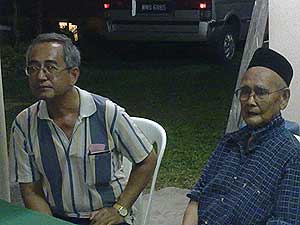 Anas Indrajaya Abdullah (
left in pic
), an ex-soldier of CPM’s Regiment 10, said the once CPM secretary-general Chin Peng’s 20-year struggle to return to Malaysia, which included tussles with local courts, was justified.
Anas Indrajaya Abdullah (
left in pic
), an ex-soldier of CPM’s Regiment 10, said the once CPM secretary-general Chin Peng’s 20-year struggle to return to Malaysia, which included tussles with local courts, was justified.
"Chin Peng was exercising a legitimate right enshrined in the 1989 peace accord was inked by the Malaysian government and the CPM in Haadyai, Southern Thailand.
“It is stated in the agreement that we could all return home. Most were allowed to return but not Chin Peng ( left ),” Anas, 53, told the 50-odd participants at a meeting organised by local publishing house Gerakbudaya SIRD in Petaling Jaya last night.
He was speaking at a two-hour event themed ‘ Apa Khabar Orang Kampung ’ (How are our village friends?).
Anas, who currently resides in Ban Chulaborn 12, Narathiwat, a friendship village granted by the Thai monarchy to former soldiers of the Communist regime, also questioned why the issue of Chin Peng’s citizenship became a factor to support barring him from returning home.
“During the 1955 Baling talks, Tunku Abdul Rahman had already sorted out the issue of his citizenship, that there was no problem in it. It should not have been brought up again,” added Anas, who is the son-in-law of former CPM chairperson Abdullah CD and his spouse, Suriani Abdullah, also a former soldier.
 “We felt all these were not fair at all. The decision on Chin Peng by the Malaysian government was really a political decision,” he added.
Gerakbudaya SIRD executive director Chong Tong Sin ( right ) chaired the meeting, which included a discussion among friends from the friendship village in Sukhirin, off Golok, the southern gateway to Kelantan.
He was accompanied by two other former soldiers – deputy village head, 51-year old Sanya Bonked and Hassan Salleh, 83, who came for the launch of the three-part memoir by Abdullah CD at the Kuala Lumpur Selangor Chinese Town Hall on Saturday.
Chin Peng ( left ), 85, kicked up a storm in the country, when he challenged the government to allow him to return home to visit his mother’s grave.
But the Malaysian government rejected his wish, claiming that the secretary-general of the disbanded Communist Party of Malaya cannot be forgiven for his atrocities.
Later, Chin Peng, who lives in Bangkok, was asked to prove his nationality but he was unable to produce any documents, saying that his birth records may have been destroyed.
Still sore about controversial agreement
Meanwhile, the former CPM soldiers were still sore about the controversial agreement, mooted by former prime minister Mahathir Mohammad, which saw the CPM honouring its part of the bargain – to give up its armed struggle.
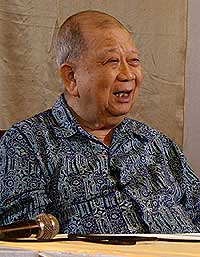 They felt the government’s rejection of Chin Peng’s (
left
) bid to return home challenged the legality and credibility of the agreement , as well as dishonouring it.
They felt the government’s rejection of Chin Peng’s (
left
) bid to return home challenged the legality and credibility of the agreement , as well as dishonouring it.
Anas said that the agreement had many flaws as the Malaysian government continues to disseminate negative propaganda against the party, where the party had no choice but to sue the latter for defamation.
The former leaders felt they had been cheated of their rights, for example, to return home and rejoin Malaysia as citizens to continue their struggle. Indeed, under the agreement, they have been permitted to set up a legal political party, sans the word “Communist”.
“Many ex-soldiers applied to go home (from Thailand to Malaysia) because the agreement said we could but what they did not tell us is that the government could also reject our applications,” said Anas.
“I (Anas), myself has made an application to come home, right after the 1989 agreement, and so did my wife (Abdullah and Suriani’s daughter).
“They rejected our applications because they said we were not Malaysians,” he added.
Anas said this was partly true – that they were born in Thailand and did not have Malaysian citizenships.
However, the agreement stated that “ex-soldiers of the CPM” could apply to return home.
“But they also rejected my wife’s application because they said both her parents (Abdullah and Suriani) did not apply to come home,” he said.
“I believe as a government, Malaysia is equipped in all ways when making agreements. They were very clever in doing so. The CPM, on the other, had many disadvantages in this aspect because we do not have the expertise.
‘Many loopholes in pact’
“In the end, there were many loopholes in the agreement, and these were used to trap us,” he stressed.
In an exclusive interview with Malaysiakini last year, former inspector-general of police Abdul Rahim Noor said the agreement, which covers all levels of CPM members, permitted those born in then Malaya to return home if they chose to, provided they indicated their choice within 12 months from the date of signing the peace accord.
Subsequently, 339 former CPM members returned in 13 groups to Malaysia from the Thailand-Malaysia border between August 1991 and December 1992 while some settled down in several peace villages established by the Thai government in Yala and Narathiwat provinces
Those who were eventually granted Thai citizenship as they had chosen to stay in the kingdom, were still allowed home on social visits, but not to settle down for good in this country.
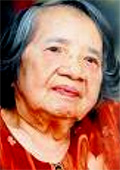 Abdullah and Suriani had previously been allowed to enter the country on a social visit pass, and had even been granted an audience by the Perak sultan.
Many other ex-CPM Malay leaders, including Musa Ahmad, Samsiah Fakeh ( left ) and Rashid Maidin have also been allowed to return home to settle down or for family visits and tours.
No conditions were imposed on them, such as to provide documents to prove they were born in Malaya, like in Chin Peng’s case, and no apology whatsoever was needed.


