




Gates of 'racism' slam shut on Chin Peng's return
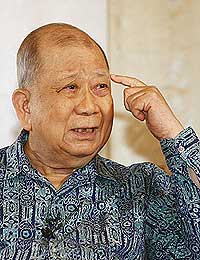
Once, the very mention of his 'nom de guerre' had struck fear and reverence in the hearts of many. Now, Chin Peng is an 85-year-old grandfather, yearning to return to his homeland.
Once, the very mention of his 'nom de guerre' had struck fear and reverence in the hearts of many. Now, Chin Peng is an 85-year-old grandfather, yearning to return to his homeland.
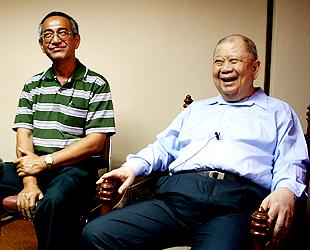 Hailing from Perak's quiet hamlet of Sitiawan, the once rifle-bearing rebel, whose real name is Ong Boon Hua, wants to visit the graves of his parents and reunite with his family.
But the Malaysian government is unrelenting in rejecting his wish, its leaders proclaim that the secretary-general of the disbanded Communist Party of Malaya cannot be forgiven for its atrocities.
Chin Peng, who now lives in Thailand, does not rule out the possibility that race is a factor behind him being the only CPM member barred from returning to Malaysia.
Asked why the Malaysian government opposed his return, the father of two at first replied that it was a hard question to answer.
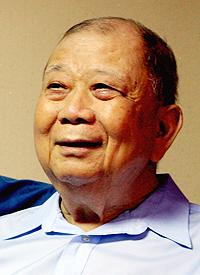 But when Abdullah CD's case was mentioned, where the ex-CPM chairperson was allowed to return and even given an audience by the Perak sultan, Chin Peng acknowledged that racial discrimination could be a factor.
"Perhaps (it is because) I am not a Malay," he told Malaysiakini after attending the Hatyai Peace Accord's 20th anniversary commemorative event in Hatyai on Nov 30.
Asked if he thought his return might have an impact on the political realignment in the country had he returned a long time ago, he said: "Yes, I would have been involved in political activities and lead the opposition."
However, he conceded that the political situation has changed immensely and most probably, he no longer has a role to play.
'Try me in a neutral court'
Chin Peng also expressed willingness to face a war crimes tribunal, but only if it was neutral.
"If it is a neutral court, I will go. But (neutrality) is impossible. If the judges are appointed by the Malaysian government, I would not go."
Asked whether his other CPM comrades should also be subjected to trial, he answered, "That's the problem, (I am discriminated against) just because I'm not a Malay."
Army and police veteran associations have vehemently protested against allowing Chin Peng's return, bringing up CPM's "past atrocities" committed during the Emergency.
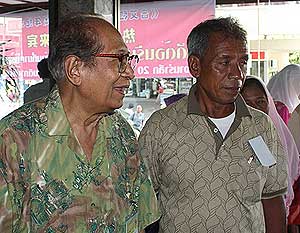 When pointed out that Abdullah CD (
left
) had previously in his memoirs admitted to an attack on a police station in Pahang, Chin Peng said to his memory, he has never killed any civilian.
When pointed out that Abdullah CD (
left
) had previously in his memoirs admitted to an attack on a police station in Pahang, Chin Peng said to his memory, he has never killed any civilian.
During the Emergency, he said, the army and police also killed many people. "But why is it only me that has to face all kinds of accusations?"
During the Emergency, Chin Peng opined, the British were fighting only to retain colonial power while the CPM members were genuine patriots fighting for national liberty and independence.
To the assertion that he did not apply to return to Malaysia during the one-year grace period after the Hatyai Accord, Chin Peng said he did apply but was given the runaround by Malaysian officials.
"They told me to meet (them) at the border, but after three hours of rushing between different locations, I didn't meet any official representative. Despite long waits, no official turned up,” he added.
Disappointed, Chin Peng gave up, claiming that he had been "fooled" and did not make any more attempts.
He said there was no use for him to publicly protest his mistreatment as the media was government-controlled.
Birth records destroyed?
When queried about his inability to produce birth records to prove his Malaysian nationality, Chin Peng said he never thought his nationality would be questioned.
"I was born in Malaya, so of course I am included in those (of) 'Malaysian origin' mentioned in the Hatyai Peace Accord," he said.
He added that if the authorities had asked for proof of his citizenship during the treaty negotiations, he would have asked his family to produce the necessary evidence.
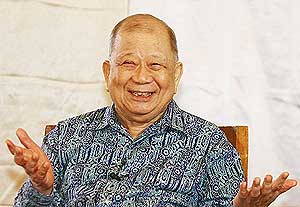 On why the government did not just check the national registration archives, Chin Peng suspects that his birth records have been destroyed.
Chin Peng also insisted that he would not seek help from Thailand to settle the dispute between him and the Malaysian government.
He said that his problem was with the Malaysian government and asking other countries to intervene would not be right.
Besides, he added, the current leadership of Thailand would not likely help him. He added that the leadership of Thailand has changed hands. "If Chavalit (was) still in power, I could try."
Former commander-in-chief of Thailand Chavalit Yongchaiyudh was a signatory to the Hatyai Peace Accord. A former prime minister, he is no longer as influential and is a known supporter of exiled ex-prime minister Thaksin Shinawatra.
The current Thai government had banned Chavalit from attending the 20th anniversary commemorative event of the Hatyai Peace Accord.
 Chin Peng also declined to take his case to the International Court of Justice in the Hague, saying that his health prevented him from travelling there.
Previously, the CPM leader said he might even consider smuggling himself into Malaysia, and face the consequences.
"I have no other choice, but to take the risk," he added.
When told that he could announce his return the way Mahatma Gandhi did when returning to India, attracting attention and putting pressure on the British colonialists, Chin Peng said, "This is good advice, thank you. I will consider it."


Report this comment
Are you sure you want to delete this comment?
This action cannot be undone.