




10MP: Developing local industries is key, not FDI
The 10th Malaysia Plan (2010-2015) posits the economy to grow by 6 percent annually in order to achieve a high income and developed nation status. The key driver of this task will be the private sector underpinned by the services sector.
COMMENT The 10th Malaysia Plan (2010-2015) posits the economy to grow by 6 percent annually in order to achieve a high income and developed nation status. The key driver of this task will be the private sector underpinned by the services sector.
In order to meet this target, private investments need to grow by 12.8 percent yearly. Translated in real terms the economy needs to attract new investments (local or foreign) worth RM115 billion annually.
 And the services sector needs to grow by 7.2 percent per annum. In order to facilitate the growth in the sector, a further 128 sub-sectors will be liberalised.
The private sector is envisaged as a key player. And the role of government will be reduced during the tenth plan period.
The government says the key to greater private sector investment is Foreign Direct Investment (FDI).
The questions in the mind of Malaysians are this: Is this a highly ambitious but doable plan or highly bold strategy bordering on ridiculousness and devoid of reality?
The reality
Malaysia's economic growth in the last decade was largely state-led. Public sector investment increased by 6.2 percent annually during the 9th Malaysia Plan.
Meanwhile, the important role of the private sector, as envisaged in previous Malaysia Plans, never materialised. Growth of private sector investments was about 3.8 percent annually between 2000 and 2009.
And in the context of the Ninth Malaysia plan, private investments grew only by two percent. It totalled RM356 billion of which 72 percent were from domestic investment and 28 percent from FDI.
The goal of getting more FDI never materialised.
Moreover, it is clear that in terms of overall sources of investment, domestic investment is nearly three times more significant than foreign investment.
The government should not ignore this clear signal by retreating to the outdated belief that FDI is the best form of investment.
Furthermore, FDI suffers from the disadvantage that a greater or lesser proportion of returns will always be repatriated to the home country.
The United Nations Conference on Trade and Development (Unctad) estimates that Malaysia's FDI inflows in 2009 totalled US$2.7 billion compared with US$8.1 billion the country attracted in 2008.
In 2009, Malaysian Industrial Development Authority (MIDA) approval for total manufacturing capital investment fell 48 percent to RM32.6 billion. Of the total amount approved in 2009, foreign investors accounted for 68 percent or RM22.1 billion, a 52 percent drop from the previous year.
In the context of Asean, Malaysia's share of inward FDI into the region remains unchanged at 12 percent for the two five-year periods of 1999-2003 and 2004-2008.
In contrast, regional powerhouse Singapore managed to capture a sizeable 58 percent and 45 percent for the two respective periods. Even politically embattled Thailand managed to secure 20 percent and 17 percent FDI for the same period.
Losing the race
Clearly, we have lost out in the race for FDI in the last 12 years. And thus the focus on FDI as the basis of greater private sector participation needs to be reviewed.
The country recorded an outflow of local funds amounting to RM50 billion between 2007 and 2009. In fact, domestic-owned investment approvals fell to RM10.5 billion or a 37.1 percent decline from 2008.
The outflow of domestic investments appears to be a recent trend. This could suggest, inter-alia , that the country is unable to develop new industries or sustain existing industries to prevent local funds from leaving the country. Also, it could suggest local business' loss of confidence in the economy and politics in the country.
Unctad notes that the Malaysian economy has experienced a net outflow in FDI since 2006 as state investment agency Khazanah Nasional Bhd and other local corporations have expanded abroad due to a smaller market and lower profit margins at home.
An unprecedented brain drain has lead to a loss in human capital required to boost the economy. Specifically, about 700,000 professionals, managers, academics, innovators and scientists have left the county for greener pastures.
This works out to about three percent of the population. This is a colossal loss of badly-needed human capital, especially the managerial and professional class required to boost the economy.
The Global Competitiveness Report of the World Economic Forum (WEF) for 2009-2010 shows that Malaysia dropped three rungs, from 21st placing between 2008-2009 to 24th in 2009-2010. In the same period, Singapore's performance increased from fifth placing to third.
Malaysia dropped two rungs in the Enabling Trade Index 2010 from 28th position in 2009 to 30th place currently. This report of the WEF examines market access, border administration, transport and communication infrastructure and business environment of countries that are being studied.
These reports underscore an important point - that as a nation we are losing competiveness. Needless to emphasis, high levels of corruption and leakages in the economy has also contributed to Malaysia's lack of attractiveness.
Collectively, Malaysia is no longer perceived as a country of choice by both local and foreign investors, including the country's intelligentsia. The country is no longer attractive.
All these critical points were outlined in the NEM report but sadly the recommendations are not reflected in the 10th Plan. And thus the usefulness of the 10th Malaysia Plan as an overarching document to boost the ailing economy is highly questionable.
The way forward
The 10th Malaysia Plan should have focused on a domestic-led growth as a way forward for the economy. This would involve transforming the industrial -based economy to a low-carbon green economy, including renewable energy as a key strategy for the next five years.
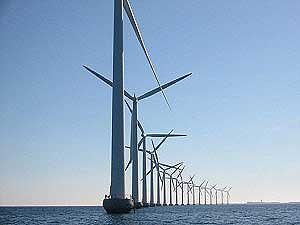 Such a strategy will be able to attract - local and foreign - wind, hydro, solar and green technology players and money to the country. Malaysia's abundant raw materials, ample land including low energy cost can play a complimentary role to the capital intensive nature of these industries.
Low-carbon green industries represent a global growth industry for the 21st century. Many rich, middle-income, and top-tier developing economies have realised that the green industry is a strategic sector in the light of concerns over climate change and energy security.
Some of these countries, such as Germany, Denmark and China, have become major producers. Most of the rest are buyers. This means there is a market opportunity for more suppliers.
Portugal, one of the ‘poor men' of Europe, is going for 60 percent electricity from renewables by 2020. Two years ago they had already surpassed their 2010 targets. In 2008, Portugal's GDP was only 10 percent larger than Malaysia's, but their renewables target is nearly 11 times greater.
If the Prime Minister is committed towards aiming for a high-income economy, shouldn't we be aiming for a higher renewable energy target?
When Portugal invited tenders from wind, solar and wave-power companies it also demanded they work with local manufacturing companies to establish cluster industries. This has stimulated both industrialisation and employment. We can do the same in Malaysia.
Already a leader
Malaysia is already a leader in affordable renewable energy manufacturing. First Solar, a US company, has its Asian factory in Kedah. They have achieved some of the lowest production costs world-wide for solar panels. But it is exported to other nations.
Last year First Solar signed a deal with the Chinese government to construct a 2,000MW solar plant for less than US$5 billion, or just over US$2 billion per 1,000MW. This is cost competitive with the federal government's estimate of the cost of a nuclear power plant (1,000MW for US$3.1 billion) and this comes without the environmental headaches of nuclear energy.
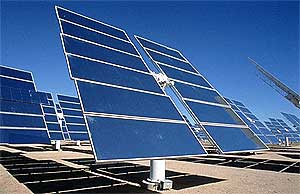 If an American solar company can use Malaysian manufacturing talent to become a major global player, why can't we aim for Malaysian companies to do the same?
A feed-in tariff fund is good, but it is not enough to strengthen our human resources and manufacturing capacity for this sector. The basic fiscal incentives offered in the Green Technology Policy are also useful but insufficient for more ambitious growth. A more comprehensive industrialisation policy is required.
Infant industry protection should be exercised until our domestic capacity matures, following which competitive pressure can be increased. Any incentives we offer should be exchanged for meeting performance targets, such as cost reduction and quality improvements.
More affordable
One goal should be to make renewable energy technologies more affordable and competitive in Malaysia.
Next, we should set export targets for penetration into international markets.
This will stimulate a cluster of industries: from manufacturing to services, to construction and beyond. Replacing the old, polluting and inefficient infrastructure of the fossil fuel economy is a tremendous growth opportunity and one that rewards innovation and creativity.
We should use the development of this future-oriented sector to combat the brain drain we have been facing. Top talents should be recruited from Malaysia and abroad in order to produce world-class results in the field of renewable energies.
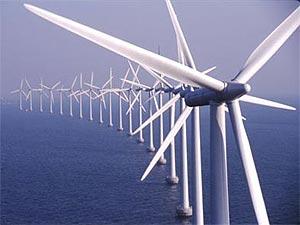 Greater support for home-grown innovation should be put in place in order to reduce the costs of technology transfer. Graduates from our universities can be channelled into rewarding jobs in all these sectors.
By putting in place a proper industrial policy for renewable energy we can create green jobs, establish globally competitive manufacturing capacity and provide these services to the region.
The Malaysian developers of the Green Building Index have plans to market it in other tropical countries.
We have a chance to make ourselves a leading provider of green technology solutions and renewable energy in Asia. Malaysia has the capacity to develop highly-skilled and innovative sectors but the right institutional and policy environment and mix needs to be created for them.
Those of you who have been watching the World Cup may have noticed a Chinese company called Yingli advertising there. Yingli is the first company from China to sponsor the World Cup. It is also a leading solar power manufacturer.
Malaysia has had longer experience in the field of manufacturing sophisticated electronics than China. But because of our neglect of emerging sectors like renewable energy, Chinese companies are pulling ahead. We need to close the gap before we are stuck as a manufacturer of 20th century products in the century of renewables.
Thus, it is imperative that Malaysian economy is transformed to be domestic driven.
Race is on
Hong Kong-based Sun Bear Solar Ltd, a global player in the solar energy industry, will be investing RM5.2 billion in a solar glass manufacturing plant in Kota Kinabalu Industrial Park, Sabah. The plant will be fully operational by the first quarter of 2012.
In South Korea, for example, steelmakers will invest more than 18.7 trillion Won in facilities and equipment over the next three years, much of it focused on reducing greenhouse gas emissions and boosting energy efficiency (RM1=368 Won).
The global economy continues to be vulnerable. The international business media are reporting a slowdown in the second-half of this year as the impact of the government rescue package begins to lessen. Sovereign debt default and austerity drive in Europe could lead to slower growth.
A double dip recession has not been entirely ruled out.
Countries such as China and Japan could face economic vulnerabilities as a result and this has implications for investments, including FDI for Malaysia.
Thus depending on FDI is an exercise in futility and it is imperative that we transform strategically from a FDI dependent nation to a domestic led green economy.
The writer is Member of Parliament, Klang.


Are you sure you want to delete this comment?
This action cannot be undone.