




Zamihan defends himself over JI special briefing
Amidst claims of Jemaah Islamiah and its links to Wahhabism, the man at the centre of the allegations argued that he only mentioned one name during a special government briefing on the terror group.
Amidst claims of Jemaah Islamiah and its links to Wahhabism, the man at the centre of the allegations argued that he only mentioned one name during a special government briefing on the terror group.
Zamihan Mat Zain, a deputy director in Jakim’s Institut Latihan Islam Malaysia (Ilim), said that he had stated former Perlis mufti Mohd Asri Zainul Abidin as the one involved in the puritanical hardline school of thought.
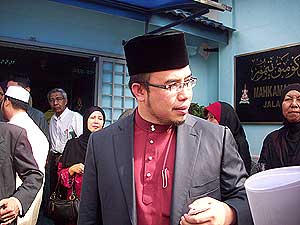
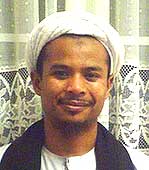 Zamihan (l
eft
) denied a
Malaysiakini’s
exclusive report
on Tuesday which said he had also named PAS president Abdul Hadi Awang, former Perlis MB Shahidan Kassim and current Perlis mufti Juanda Jaya as those with “Wahhabi leanings” in the special briefing on JI.
Zamihan (l
eft
) denied a
Malaysiakini’s
exclusive report
on Tuesday which said he had also named PAS president Abdul Hadi Awang, former Perlis MB Shahidan Kassim and current Perlis mufti Juanda Jaya as those with “Wahhabi leanings” in the special briefing on JI.
“These reports are untrue, dishonest and a lie,” he said when contacted close to midnight yesterday.
He described the reports as a deliberate and concerted effort by certain parties to “cause a strain” among different groups.
When asked about his charges against Mohd Asri in the briefing attended by roughly 100 senior police officials and top public university administrators on Monday night, Zamihan said he had stated that “Dr Asri shares the same thoughts as a Wahhabist” at the meeting.
Threats of lawsuits
Zamihan added that he came to this conclusion through Mohd Asri’s book ‘Bid’ah: Istilah Yang Disalahfahami’ published years ago.
“I merely copy and pasted his views which drew parallels between the ‘Maulidur Rasul’ (Prophet Muhammad’s birthday) celebrations to the Christian culture,” he explained.
He also added that such “hardline” views, if not reined in, will lead to the “radicalisation” of Islam in the country.
 When asked if it was other speakers at the briefing who made the link between Abdul Hadi, Shahidan and Juanda to Wahhabism, Zamihan said that he did not want to “interfere” with the presentation of other individuals.
He also stressed that he does not want to “argue” with anyone amidst threats of legal action and defamation suits against him, adding that this does not benefit any party.
Shahidan, who is also an Umno supreme council member, had previously told Malaysiakini that he was contemplating suing Zamihan over his remarks.
“As a responsible civil servant, I am ready to meet them and explain this (confusion) to them.
“If they cannot meet me at my place, I am willing to go to their office,” said Zamihan.
Not banned but frowned upon
It was previously reported that the special briefing, held at a hotel in Sepang, saw several speakers explaining the threat of JI, especially in institutions of higher learning.
It is understood that Zamihan had claimed that JI originated from Wahhabism, and then later accused several notable religious personalities in the country of being Wahhabists.
All of those purportedly named by Zamihan had vehemently denied the charges.
Wahhabism - a conservative and literalist school of Islamic thought originating in the Arabian peninsula in the 18th century - is not banned in Malaysia.
However, it is “not encouraged” as it advocates purging Islamic practices that did not exist during the time of Prophet Muhammad from Malaysia's mainly Shafii school.
The alert on JI heightened when inspector-general of police Musa Hassan announced that the 10 alleged foreign militants, who have been arrested and deported early this year, had also been on a recruitment drive for impressionable university students.
It was also reported that the group had plotted to blow up Kek Lok Si Temple in Penang and the Sri Subramaniar Swamy Devasthanam temple at Batu Caves.


Are you sure you want to delete this comment?
This action cannot be undone.