




Will old Kedah findings rewrite Southeast Asian history?
The history of Southeast Asia may need a rewrite with the new findings on the Bujang Valley civilisation in Kedah, a well-known Oxford University professor in genetic pre-history said today.
Prof Stephen James Oppenheimer of the university's School of Anthropology said the recent findings by a team of researchers from Universiti Sains Malaysia (USM) "are very important not just for Malaysia but also for the Southeast Asian region".
The history of Southeast Asia may need a rewrite with the new findings on the Bujang Valley civilisation in Kedah, a well-known Oxford University professor in genetic pre-history said today.
Prof Stephen James Oppenheimer of the university's School of Anthropology said the recent findings by a team of researchers from Universiti Sains Malaysia (USM) "are very important not just for Malaysia but also for the Southeast Asian region".
"Based on the discovery, we have to rewrite history because for the last 2,000 years the history told was that Indonesia was predominant with its Srivijaya and Majapahit (civilisations), and also Vietnam and Thailand.
"But now the history is changing," he told reporters on the sidelines of the first day of the International Conference on the Bujang Valley and Early Civilisations in Southeast Asia in Kuala Lumpur.
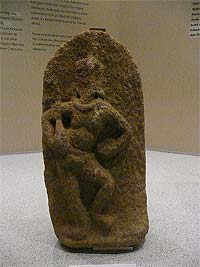 He said the new findings by USM on the iron industry site in the Bujang Valley, which is believed to have been built during the era of Kedah Tua (Government of Old Kedah), "is of national importance which shows that the Malaysian civilisation in the Bujang Valley was earlier than it looks".
Oppenheimer was asked to comment on the USM findings which showed not only proof that Malaysia's early population was economically advanced and had ventured into the iron industry, but was also a bigger Bujang Valley civilisation which encompassed about 1,000 sq km - three times the size of Penang island - and not 400 sq km as thought before.
Systematic exploitation of iron ore
Oppenheimer said the findings were also very important not only for Malaysia but also for the region since they showed evidence of monumental structures and a civilisation which included the systematic exploitation of iron ore from the local mountains and the smelting and ritual structures.
He said excavation of the area would produce a lot of works and significant findings in the future since currently only 10 per cent of the area had been excavated.
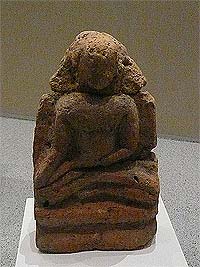 Meanwhile, Dr Susan Jane Allen of the United States' International Archaeological Research Institute in Honolulu, Hawaii, a non-profit cultural research management company, was excited with the new findings at the Bujang Valley, especially the recently unearthed prehistoric buildings in Sungai Batu.
Dr Allen, who had been involved in the excavation of sites 71, 72 and 73 in Sungai Batu three decades ago, had speculated that there was something about the site.
"I was working on my PhD project. I knew there was something under the mound and very curious about it. At that time, the area was a rubber estate, and Site 71 was a mound about 75cm above the ground in a mangrove area of the estate.
Getting international recognition
She said that with the area being developed into an oil palm plantation, which involved the removal of large amounts of soil, the prehistoric buildings were unearthed.
USM's Centre of Global Archaeological Research director Mokhtar Saidin said a scientific article would be sent for publication in an international journal within the next three months to get international recognition for the new findings at the Bujang Valley.
The article would be aimed at securing confirmation from international archeologists on the new findings so that there would be no disputes on the findings, he said.
He said the ongoing conference was to inform Southeast Asian archeologists of the findings.
The three-day conference, organised by USM's Centre of Global Archeological Research and the National Heritage Department, is being attended by 100 participants from 11 countries including India, the United States, Vietnam, the Philippines, Thailand, Laos, Cambodia, Indonesia, China, Myanmar and the United Kingdom.
- Bernama


Are you sure you want to delete this comment?
This action cannot be undone.