




Investing in hope for children living with HIV
Outgoing 13-year-old Aina is determined to be a filmmaker when she grows up. She knows she's talented and isn't too shy to talk about it.
"Women can make good filmmakers. As for me, I'm going to make feel-good films because sad stories are simply too tiresome," she said.
Aina (not her real name) is a secondary school student living at Rumah Solehah, an orphanage for children living with HIV and AIDS. Rumah Solehah is home to thirteen children, twelve of them HIV-positive - including Aina's 15-year-old brother, Anwar.
Outgoing 13-year-old Aina is determined to be a filmmaker when she grows up. She knows she's talented and isn't too shy to talk about it.
"Women can make good filmmakers. As for me, I'm going to make feel-good films because sad stories are simply too tiresome," she said.
 Aina (not her real name) is a secondary school student living at Rumah Solehah, an orphanage for children living with HIV and AIDS.
Rumah Solehah is home to thirteen children, twelve of them HIV-positive - including Aina's 15-year-old brother, Anwar.
Aina is the only HIV-negative child living there but faces no discrimination for being different. She was previously enrolled at a boarding school for orphans but moved into Rumah Solehah upon her brother's request.
Her brother discovered she was being harassed by her peers because she was related to him, an HIV-positive person. He knew too well the discrimination she was facing in school despite being HIV-negative. To protect her, he insisted she move in with him at Rumah Solehah.
Stigma starts at home
Anwar himself was the home's first HIV-positive child when he arrived as a five-year-old with his mother in 2000. While his sister lived for a few years with other family members, he and his mother sought refuge at Rumah Solehah.
The children's mother was ostracised by the family when they found out about her illness. She was abandoned by her husband who was actually the one who had infected her. "She had nowhere to go so she stayed here until the day she died," said Wan Hava Wan Hussin, or Mak Wan, the Home Supervisor of Rumah Solehah.
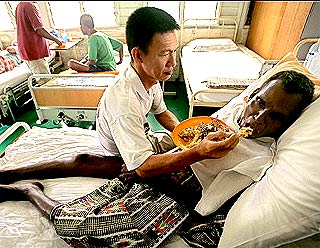 Unicef Representative to Malaysia, Hans Olsen, said the HIV and AIDS stigma usually manifests as ostracism or avoidance of persons believed to have practised a "shameful" lifestyle. As in the case of Aina, the stigma also applies to those who are themselves not infected but are associated with infected persons.
"For children, stigma strikes hard at their self-esteem and psychological well-being. Put simply, stigma kills their spirit," he added. But this is all caused by ignorance, fear and judgmental attitudes, even sometimes among family members themselves. As a result, Olsen said, some of these children are denied their basic right to belong to a family. Unfortunately, the stigma can also affect a child's access to education and health care.
Homes like Rumah Solehah play a critical role in protecting children like Aina and Anwar in an environment stained by stigma.
In 2010, the home as well as two other organisations, namely Rumah Wake and Prihatin, will receive financial support from Unicef for their continued effort in supporting children living with HIV and AIDS. The funds will be disbursed through the Malaysian AIDS Council (MAC).
Providing safety and solace
Besides providing a safe home for the children, the caretakers at these homes also strive to give the children a sense of family and responsibility.
Wan Hava Wan Hussin, home supervisor of Rumah Solehah, acts as a mother figure for the children living under her care. She monitors their progress at school and makes sure they complete their assignments. She also counsels them when they are down and encourages them to look to each other as siblings.
Wan Hava recalls a time when Anwar fell into depression and almost gave up on his HIV treatment. He grew tired of having to take medicines daily but decided to continue with his treatment for his sister's sake. Wan Hava said Anwar knew the only way for him to be there for his sister was to be alive and well.
Anwar and Aina are lucky to have each other, and to be part of the Rumah Solehah family.
According to data released by the Ministry of Health, the percentage of children aged 13-19 increased from 0.85 percent in 2004 to 2 percent in 2008.
For those aged 13 and below, the percentage rose from 1.2% in 2004 to 1.3 percent in 2008. While HIV is predominantly affecting injecting drug users in Malaysia, the feminisation of the epidemic, particularly among housewives, increases the risk of infection for children.
Possibly the most important direct consequence of AIDS for children and young people is the loss of their family unit, and with it, their natural economic, social and emotional safety net.
Newborns may be abandoned by their HIV-positive mothers out of despair, while older children in families affected by HIV and AIDS may be placed in a foster home or in state institutions. Many of these children also suffer psycho-emotional consequences from the loss of their parents to AIDS.
Furthermore, they may also be discriminated against. There are cases where community members try to force schools to expel children affected by HIV and AIDS. Just as children's rights should be protected regardless of their race, ethnicity, religion, language or disability, these rights must remain intact if they are HIV-positive.
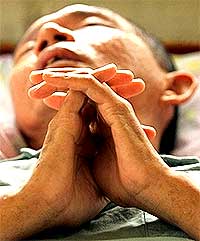 Unicef is working with the Government of Malaysia to contain and reverse the spread of HIV. Among the ongoing projects is the Preliminary Assessment of Children Affected by AIDS, conducted by Unicef, Ministry of Women, Family and Community Development, Ministry of Health, Ministry of Education, Malaysian AIDS Council and University Putra Malaysia.
The programme seeks to compile data on the socio-economic impact of AIDS on children and make recommendations for strengthening policies to ensure that children and their families receive the optimum care, support and treatment.
Unicef is also working with the government through the Taskforce on Women, Girls and HIV which is intended to provide a platform for government and non-government stakeholders to discuss and share their findings, concerns and challenges on this issue.
The role of the taskforce is to discuss and share findings, concerns and challenges on this issue of HIV and AIDS in order to give clear recommendations for policies and programmes under frameworks such as Dasar Wanita, the National Strategic Plan on HIV/AIDS and the 10th Malaysia Plan.
Article courtesy of Unicef.


Are you sure you want to delete this comment?
This action cannot be undone.