




Letting in sunshine on weapons deals
SPECIAL REPORT Defence procurements rate as a top secret in every country. Yet, progressive governments have taken the step of striking a balance between the competing needs of national security and transparency in handling transactions.
SPECIAL REPORT Defence procurements rate as a top secret in every country. Yet, progressive governments have taken the step of striking a balance between the competing needs of national security and transparency in handling transactions.
 Their measures have enabled at least limited discussion and audit of arms purchases, in the interest of protecting tax dollars.
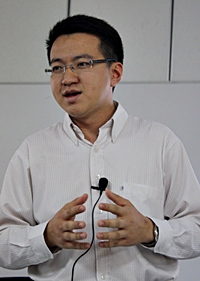
In Malaysia, however, suggestions to bring in similar policies have thus far fallen on deaf ears, said DAP Bukit Bendera MP Liew Chin Tong (right) who outlined two approaches.
First is the regular release of a Defence White Paper by the government to explain defence policy and general strategy.
Liew said all MPs need to understand the defence direction and priorities in order to arrive at a consensus on policy . Such consensus would further enable them to scrutinise and debate procurements, as to whether these are in line with the policy.
The second suggestion is to set up a parliamentary bipartisan select committee on defence. This could train a group of MPs to specialise on defence issues.
Some countries like Australia regularly brief lawmakers on defence issues, even providing classified information on condition they sign a non-disclosure agreement.
“Such measures are useful as they allow for indirect accountability to the people. After all, Parliament represents the people,” he explained.
 Liew said he had privately suggested to Defence Ministry that it holds briefings for lawmakers, while the parliamentary Public Account Committee had proposed that the government sets up an independent review panel to monitor big-ticket purchases. There have been no takers.
Defence researcher Lam Choong Wah said the US - which has the world’s largest defence budget - offers two versions of its defence policy report.
One is accessible to the public but the other restricted to members of the bipartisan Armed Service Committee, which oversees almost all matters related to defence policy in the House of Representatives and the senate respectively.
The influential committees are empowered to hold public inquiries into alleged irregularities and to summon government officials to testify.
They also have power to approve candidates for senior posts, including that of secretary of defence and commander-in-chief, upon nomination by the president.
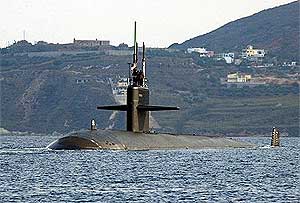 South Korea is another country that allocates a huge part of its budget to defence. Following a series of allegations about purchases, the government made a bold decision in 2006 to merge eight government agencies, including the Defence Ministry’s acquisition offices.
A single organisation named the Defence Acquisition Programme Administration was created to reduce corruption and improve transparency in weapons deals. This introduced integrity-building measures such as an Ombudsman’s Office to oversee purchases.
The office is led by three ombudsmen recommended by civil society and has the power to investigate complaints and instigate audit on defence contracts, should defects be discovered.
The Ombudsman received 41 civil complaints from 2006 to October 2008, of which 29 have been investigated and 12 are pending investigation. An audit was requested into one case.
Civil society role
Apart from creating mechanisms at legislative and executive level, there is a key role for civil society involvement in monitoring procurements.
Lam noted that there are more than 2,000 non-government military analysis institutions in the US that publish reports regularly and monitor defence purchases.
He is of the view that specialised NGOs or think-tanks could do a lot to simplify and disseminate information to Malaysians, so that public discussion is stimulated.
 Lam
(left)
himself started up defence portal
KL Security Review
for this purpose. And his first book tentatively titled 'Uncovering Malaysia's Defence' is intended to decipher complex issues for the layperson.
Lam
(left)
himself started up defence portal
KL Security Review
for this purpose. And his first book tentatively titled 'Uncovering Malaysia's Defence' is intended to decipher complex issues for the layperson.
Transparency International (TI) has published a handbook, ‘Building Integrity and Reducing Corruption Risk in Defence Establishments’.
It suggests that, apart from voluntarily disclosure of defence information, the government and Defence Ministry should engage civil society in drafting defence policy and procurements.
This will not only reduce corruption and increase transparency, but also enhance public confidence in the Defence Ministry.
In 2007, TI had hosted a roundtable event in Zagreb, Croatia, with participation of senior defence and government officials, members of international organisations including Nato and the European Union, and representatives of defence companies, academia, civil society and the media.
The meeting initially focused on a major procurement of armoured vehicles, but ended up publishing Croatia's defence procurement needs and the full defence budget for the next 10 years.
Another example cited in the handbook is the South African defence policy, which was reformulated when the apartheid system collapsed.
"South Africa quickly embraced the concept of civil society participation in the development of security policy, developing White Papers on various facets of defence policy," the handbook says.
The consultation was done with interest groups and NGOs on issues like transparency and freedom of information, military professionalism, regional security, budgetary considerations, control of movement of defence equipment, and the defence industry.
Structural reform ‘not necessary’
On the home front, though, auditor-general Ambrin Buang maintained that Malaysia does not need structural reform to reduce irregularities and mismanagement in government.
This is because there are sufficient laws and regulations to enable the government to act against wrongdoers, he argued.
 "The government has set up a task force headed by Chief Secretary Mohd Sidek Hassan
(right)
to review the 2008 Auditor-General’s Report and take action against those responsible for the financial irregularities revealed therein," Ambrin said in an email interview.
"The government has set up a task force headed by Chief Secretary Mohd Sidek Hassan
(right)
to review the 2008 Auditor-General’s Report and take action against those responsible for the financial irregularities revealed therein," Ambrin said in an email interview.
He revealed that the government has acted against at least 70 officers, including those who have retired, officers from government-linked companies, police personnel and several companies found to be involved in financial irregularities and malpractices.
"Among actions (against individuals) are termination of employment, a fine equivalent to two or four days’ emolument, surcharge, warning and civil action. For companies, actions include blacklisting them or suspending membership in their professions,” he said.
Ambrin is also of the view that any system or mechanism is only as good as the people running it.
 "It is very important for everyone involved in procurements to exhibit competency, diligence and integrity when making decisions...,” he said.
“Also there must be stern action by the respective secretaries-general against those who flout the law and really enforce the penalty provisions in contracts."
He conceded that public procurement is often vulnerable to conflicts of interest and corruption but is confident that the government is committed to improving this aspect.
"The government’s stance is reflected in the inclusion of (ways to reduce) leakage of funds in procurements as one of the focus areas of the National Key Result Areas on fighting corruption," he added.
Given the lucrative returns to be derived from defence procurements in a ‘close-one-eye’ environment, cynical taxpayers are likely to counter that ‘improvements’ will only drive malpractice deeper underground.
Related stories


Are you sure you want to delete this comment?
This action cannot be undone.