




PKR No 2 fight: Let them debate
COMMENT Now that a contest for the No 2 post has become well-nigh inevitable, it would help if DemocracyWatch, the body PKR MP Yusmadi Yusof has set up to monitor the party elections, also organises debates between the candidates for the post.
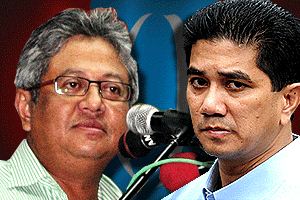
The contest is shaping up to be a two-cornered fight between Azmin Ali and Zaid Ibrahim.
COMMENT Now that a contest for the No 2 post has become well-nigh inevitable, it would help if DemocracyWatch, the body PKR MP Yusmadi Yusof has set up to monitor the party elections, also organises debates between the candidates for the post.
The contest is shaping up to be a two-cornered fight between Azmin Ali and Zaid Ibrahim.
Would it be an exaggeration to say that both are not as well known as the incumbent deputy president Dr Syed Husin Ali?
 One thinks not, in the sense that Syed’s strengths – personal integrity and predictability – are well known and his weaknesses are regarded as not menacing enough to undermine his strengths. In him, what we see is what we get.
Unfortunately, that is not what we can easily say about the two anticipated candidates for the post.
Some would argue that this approach is disingenuous because few can predict with certainty how a putative leader will really turn out once power is acquired and invested.
Unfortunately, the answers to questions like what capacity for leadership and talent for organisation an aspirant possesses are only known in retrospect rather than before-the-fact.
Many who were certain that Barack Obama would be much better than George W Bush and that George Brown would ace Tony Blair have had to revise their opinions.
This is because new crises and problems, for which there exists no reliable way of predicting, break out and may test a leader in ways that may find him or her short.
An informed choice
How would debates between aspirants for top leadership posts help if leadership is essentially a journey without infallible maps?
Well, at least the debates, if well organised, would place the candidates’ semantic grace and personal deportment under pressure. An appraising public will get a better sense of their candidates. That would make for a more informed choice.
In the history of democratic elections, debates - televised ones especially - between candidates became de rigueur after John Kennedy debated Richard Nixon in the 1960 US presidential race.
Kennedy was cool and collected while vice-president Nixon was tense and uneasy. Pundits said the debates projected Kennedy better than they did Nixon.
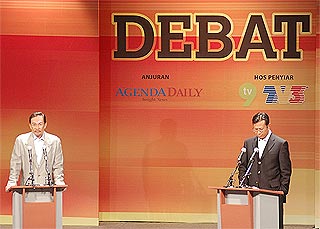 Think on it. Some two years Anwar Ibrahim
debated
Umno’s Ahmad Shabery Cheek on national television on the question of oil prices in Malaysia, a burning issue of the day.
Think on it. Some two years Anwar Ibrahim
debated
Umno’s Ahmad Shabery Cheek on national television on the question of oil prices in Malaysia, a burning issue of the day.
Anwar was sleek and supple, Shabery was strained and taut. Some said the fact the latter held up under the tension was achievement enough. This was a backhanded compliment which is really no compliment.
In the years that he has been in cabinet, has Shabery done or said anything that would make him as known as, say, Idris Jala is now?
Score one for debates being effective at unveiling the hitherto unknown among top leadership aspirants.
TERENCE NETTO has been a journalist for close on four decades. He likes the occupation because it puts him in contact with the eminent without being under the necessity to admire them.


Are you sure you want to delete this comment?
This action cannot be undone.