




Media blasted for photos of pregnant teens
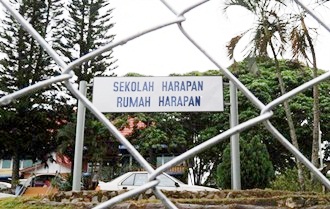
The ethics of several media organisations are being questioned over their visual portrayal of clients registering at a newly-established boarding school for pregnant teens in Malacca.
The ethics of several media organisations are being questioned over their visual portrayal of clients registering at a newly-established boarding school for pregnant teens in Malacca.
 Centre for Independent Journalism executive officer Masjaliza Hamzah said the media has a social responsibility to avoid providing private details that could expose the teenagers to harm, especially when it reports on an issue that carries a social stigma such as teenage pregnancy.
She added that the media should exercise care in using visual material that could have a negative impact on the dignity of victims and cause their families distress.
“Another responsibility is to minimise the stress of the experience for the teenager,” she told Malaysiakini .
“The story could have still been compellingly told without any pictures of the teenager and her family members,” she added.
Masjaliza was referring to news portal Malaysian Insider ’s article on Sept 20 that singled out a teenager and her father, including the details of her family.
The report titled 'Chinese girl first to turn up at school for the pregnant' carried a photo of the teenager despite her father, who was also in the picture, protesting at photographers snapping pictures of them.
During a conference entitled 'Human Rights and the Administration of Juvenile Justice' in 2008, the Human Rights Commission (Suhakam) had expressed concern that the media has frequently violated children’s right to privacy as provided for under Section 15 of the Child Act 2001 when covering cases of juvenile offenders and victims.
In its report, Suhakam said the media has intentionally or unintentionally been revealing their identities by reporting the names of their parents or family members and their residences.
When journalists or the electronic media commit this offence, they should be charged, suggested Suhakam during the event held to commemorate World Human Rights Day.
Respecting privacy
Meanwhile, women’s rights organisation Empower also objected to the media’s visual portrayal of the teens as the former had violated the privacy and confidentiality that the school claimed it was upholding.
Its executive director Maria Chin Abdullah, said the school and the media had failed to understand that respecting privacy and confidentiality must begin from the victim’s or women’s point of view.
“They (the victims) should decide on whether they want to be exposed in the media, to be photographed, to have their details published in the media, and a consultation has to happen between the school and the girls.
“Have they done this? Are the girls aware of their right to say ‘No’ to being photographed?” she questioned.
Maria said this when referring to a report on the issue in English language daily Star , that featured a photograph of a pregnant girl walking into the school’s compound although the face had been pixellated.
The report titled ‘Pregnant teen enters school’ depicted one of the girls coming out of the dormitory facility called Rumah Harapan.
Is school best approach?
Maria also proposed that a shelter instead of a special school should be established to provide the girls with professional help, counselling, and time and space to decide on what they want to do with their pregnancy.
“Education can then be considered once they have decided on their next course of action. If they need to take time off from their studies, they should be able to do so and rejoin the school or other schools later,” she suggested.
“The immediate concern and help to be offered should be the health (physical and mental) and well-being of the girls, and how to support them to cope with the prejudice, the pregnancy and their parents,” she added.
Maria suggested that such schools needed to do more research on other positive practices adopted in other countries so that they can provide proper help to the girls.
She added that it was necessary for their approach to come from the girls’ needs and rights, and not from the school’s point of view of how good and bad behaviour can be handled.
“If they continue to do (things in the current manner), they will create more harm and leave more guilt for the girls; and at the end of the day, they are not helping but disempowering the girls and making them carry the burden of their so-called wrongdoing, when the boys get away with lighter penalties,” she added.


Are you sure you want to delete this comment?
This action cannot be undone.