




NUJ: Sneaking into meetings 'common practice'
The National Union of Journalists Malaysia (NUJ) says that undercover journalists “sneaking” into closed door events was a “trivial matter” and common practice in Malaysian journalism, and that many were specially assigned by their “masters” to do so.
The National Union of Journalists Malaysia (NUJ) says that undercover journalists “sneaking” into closed door events was a “trivial matter” and common practice in Malaysian journalism, and that many were specially assigned by their “masters” to do so.
The matter was discussed at the NUJ exco meeting on Oct 7, where members discussed several matters pertaining to issues of press freedom and journalism ethics in the country.
One of the key issues discussed was the persecution of Malaysian Insider journalist Boo Su Lyn , who had sneaked into a closed door Puteri Umno meeting on Sept 27.
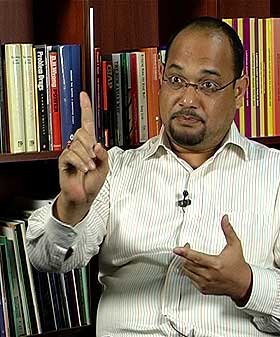 “NUJ would like to assert that …. Boo Su Lyn had acted responsibly in her duty by stating her name clearly in the story byline,” NUJ president Hata Wahari (
right
) said in a statement today.
“NUJ would like to assert that …. Boo Su Lyn had acted responsibly in her duty by stating her name clearly in the story byline,” NUJ president Hata Wahari (
right
) said in a statement today.
“Cases of journalists going undercover into closed door meetings is a common practice in Malaysian journalism, in particular the closed door Umno presidential briefings are always infiltrated by journalists who are specially tasked to do so,” said Hata.
He said that following the police report that has been made against Boo, the authorities need to investigate the truth behind the statements that she had reported in the news portal to establish if they were true or fabricated.
If the report was fabricated, Hata said the journalist should be punished.
However, he added that, “NUJ also holds that if her report is true, then appropriate action should be taken against the deputy director of Biro Tata Negara (BTN) Hamim Husain …(for the contents of his statements).”
The Malaysian Insider in its report last week had claimed that Hamim had made derogatory remarks by claiming Malaysian Chinese as “ si sepet ” (slit eyes) and Indians as “ si kaki botol ” (alcoholics).
The article prompted Hamim lodged a police report over the article, with Perkasa in tow.
More oppression with media guidelines
Another issue raised in the meeting concerned the KDN’s media guidelines that Home Minister Hishammuddin Hussein had unveiled in a speech recently.
The exco expressed its deep disappointment that the guidelines were formulated without active engagement and consultation with media practitioners and journalists.
“The media industry is one that faces the most oppressive series of laws that has inhibited its development,” said Hata.
“The introduction of the media guidelines will further stifle the media industry in this country.”
The exco called on KDN to abort the media guidelines and reminded that any such initiative should be carried out in consultation with the industry.


Are you sure you want to delete this comment?
This action cannot be undone.