




PAC zooms in on the Horror Nine
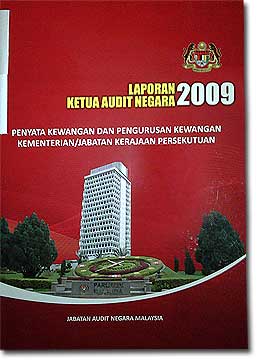
When the Auditor-General’s 2009 report was released early this week, it highlighted the incompetencies and leakages of taxpayers’ funds that had somehow seeped through the bureaucratic system.
While Malaysians sat up and read the reports in horror, the Audit Report has also grabbed the attention of Public Accounts Committee members, who recently announced that they will be investigating nine cases from it.
When the Auditor-General’s 2009 report was released early this week, it highlighted the incompetencies and leakages of taxpayers’ funds that had somehow seeped through the bureaucratic system.
While Malaysians sat up and read the reports in horror, the Audit Report has also grabbed the attention of Public Accounts Committee members, who recently announced that they will be investigating nine cases from it.
They are:
1) The Economic Stimulus Package
Announced in November 2008 , it was meant to kick-start the country’s economy by “spending to generate money” after the US sub-prime scandal which had escalated into a global financial crisis.
 With RM7 billion allocated to it, the auditor-general discovered that part of the funds had been misused, some for
luxury items
.
With RM7 billion allocated to it, the auditor-general discovered that part of the funds had been misused, some for
luxury items
.
RM250 million in funds was allocated to the Defence Ministry for maintenance of military camps and quarters.
However, some of it went into buying a home theatre system, a RM10,000 chandelier and two sofa sets amounting to RM26,000.
The construction work from the allocations of the stimulus package was of such poor quality that RM1.27 million worth of projects needed another RM812,828 to rectify or repair.
2) Batu Maung tuna port
The RM243 million project to build and privatise a fully integrated fisheries port specialising in tuna, was agreed upon in 2004.
The Fisheries Development Authority of Malaysia (LKIM) and a company called Blindforce Sdn Bhd had formed MITP Sdn Bhd, a 40:60 joint venture company to put up the tuna port with RM240 million in bonds, secured through letters of support from the Agriculture Ministry in 2006.
However, the auditor-general reported that LKIM had formed another special purpose vehicle company and then requested MITP transfer 40 percent of their equity to this other company, breaking the concession agreement.
The Audit Report also uncovered a letter of undertaking by LKIM to ensure that MTIP repay almost all of the bonds, going against the concession agreement that the federal government is not obligated to bail out private companies.
3) Penang Port Sdn Bhd (PPSB)
 In this project wholly-owned by the Ministry of Finance Incorporated (MFI), the Audit Report had discovered that a firm, Rayston Consortium Sdn Bhd - appointed through direct negotiation – was way behind schedule in their work, but its contract was not terminated, resulting in a RM6.71 million increment in costs.
At the same time, the PPSB readjusted their cost projection of the third phase of construction from RM414.3 million in 2007 to a whopping RM641.13 million in 2008, jump of 54.8 percent.
The audit team could not verify whether a detailed explanation of the increment was provided by the PPSB board of directors.
Despite that, contractors Konsortium Jamil Ghani Construction Sdn Bhd and Pembinaan Anas Maju Sdn Bhd - appointed through direct negotiations - offered to do the job at RM724.98 million before “compromising” with PPSB for RM682 million.
The auditor-general also reported that there was nothing comprehensive in black and white to support the project costs.
4) PTPTN loans
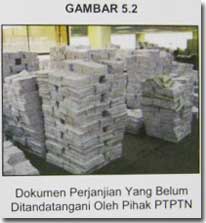 The National Higher Education Fund Corporation, aimed at giving out loans to needy students for higher education at low interest rates, has trapped itself in a
RM46 billion deficit
, with the major contributing factor being defaulters.
The National Higher Education Fund Corporation, aimed at giving out loans to needy students for higher education at low interest rates, has trapped itself in a
RM46 billion deficit
, with the major contributing factor being defaulters.
The Audit Report also found that RM23 million in loans was disbursed in 2009 to 16,013 students who did not apply for it.
And more than half of the 103,525 forms received in 2008 and all the 124,070 forms received in 2009 had not been processed.
5) Health Ministry’s haemodialysis programme
In the 2009 Audit Report, the auditor-general found that the Health Ministry’s haemodialysis (a process to filter blood especially for those whose kidneys have failed) programme severely riddled with weaknesses.
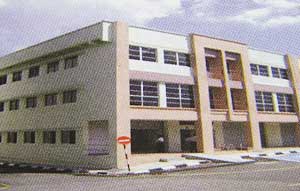 “Among the weaknesses found were the patients’ long waiting period; equipment and medicines that have been paid for but not received; the lack of enforcement on procurement contracts, resulting in fines not paid; poor management of income and revenue; overpaying NGOs in treatment subsidies; overpaying NGOs for their haemodialysis equipment or paying them even before they started operations as well as paying unlicensed NGOs to conduct haemodialysis,” said the report.
Among the irregularities found by the auditor-general were giving out RM296,000 to the Klang Haemodialysis Society for their second premises.
Checks by the audit team had shown that it had not even started up and that was not licensed by the Health Ministry.
6) Additional Food Programme for schoolchildren
 It was also discovered that suppliers for the schoolchildren’s Additional Food Programme (RMT) had been giving out food that
costs a lot less
than what had been contracted for.
It was also discovered that suppliers for the schoolchildren’s Additional Food Programme (RMT) had been giving out food that
costs a lot less
than what had been contracted for.
The programme, introduced to give poor schoolchildren food to supplement their daily meals, had also seen examples such as kids being fed with only white bread and margarine when they were supposed to get sardine sandwiches, fruits and a drink.
In a straw poll taken among the children under the programme by the audit team, showed that nearly 60 percent of them come from families who live in double-storey houses, with cars, satellite TV or cell phones, raising doubt that the hardcore poor are benefiting from the programme.
7) Skudai army camp
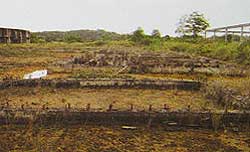 In 1997, the Defence Ministry had entered into an agreement with Kausar Corporation Sdn Bhd Consortium (KCSB) - a joint venture between Kausar Corporation Sdn and Syarikat Koperasi Angkatan Tentera Malaysia Sdn Bhd - to build a RM256 million “7th Brigade Complex” on government land in Skudai.
In an exchange as well, the government had signed a land swap deal to give two plots of government land in Tebrau and Plentong to KCSB for commercial development.
The projected date of completion was 2001, but the construction of the complex project has stalled at 18.3 percent since 2002 to this day.
The two plots of land that had been signed off to KCSB had also been sold off to another company, handing the government the risk of heavy financial losses.
8) The Muadzam Shah Polytechnic Institute in Pahang
The project has changed hands three times since it first started construction in September 2001 with a contract value of RM219 million when each contractor could not deliver the project without delays.
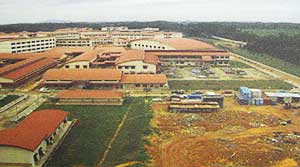 Although slated for completion in September 2003, the project is still not complete todate with the government spending on it standing at RM294.74 million on it, a 34.6 percent rise from the original estimate. This does not include the RM10.55 million in consultancy bills the government has to foot.
Topping that, the government had to spend a total of RM130,000 in rental of space for students in the absence of the polytechnic.
And while the institute was expected to take in 5,000 students annually, the intake is now limited to between 64 and 347 annually.
9) Railway Asset Corporation
 Formed in 1992 after Keretapi Tanah Melayu Berhad was privatised, the Railway Asset Corporation (PAK) was meant to take over all rail assets including plots of land.
But since then, the auditor-general reported that only 30 percent of land has had its ownership transferred to PAK.
Before PAK could take ownership, some of the land sitting on prime real estate, the audit team also noted that KTMB had sold off five lots to private developers, causing PAK to lose RM335.32 million (according to 1995 estimates).
As a result of the delay in transferring land titles to PAK, other government agencies hadalso assumed ownership of the land, building their own facilities without paying rental to PAK.


Are you sure you want to delete this comment?
This action cannot be undone.