




'Don't fear me, fear being audited'
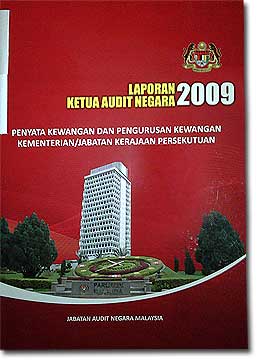
EXCLUSIVE The stories seem the same year after year.
Leafing through the annual auditor-general’s report, there is a never-ending tale of irregularities, project delays and inflated costs.
EXCLUSIVE The stories seem the same year after year.
Leafing through the annual Auditor-General’s Report, there is a never-ending tale of irregularities, project delays and inflated costs.
If it was RM224 for a se
 t of four screwdrivers in the 2008 Audit Report, it was RM871 for toilet signage in the report for last year.
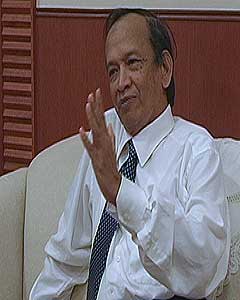
But auditor-general Ambrin Buang is of the opinion that the performance of the civil service has improved over the years.
He explains why in the second and final part of an exclusive interview , also revealing why the civil service can’t seem to shake off ‘bad habits’.
Excerpts follow, with some parts having been edited for brevity and language.
Malaysiakini: Looking at the reports every year, do you think the situation is getting worse?
Ambrin Buang: From financial statements, we can see a number of agencies getting qualified statements from me. It has gone down, so people actually have improved. In that context, it has improved.
Also in financial management in terms of the Accountability Index, we compare it with the report from 2008. In terms of ministries that have (received) a four-star rating, which I believe is 14, that is an improvement.
But in terms of performance audit, it is hard to say because every year, it's a different subject and agency.
Do you think the ‘open tender’ system is the way to go to reduce irregularities in procurement?
Every method has its own risk, even open tenders. Sometimes people quote unreasonably low prices and after that they run away. To revive the project, you'll have to call for another tender and that will delay the project. They will then have to do another measurement based on how far the project is completed. Invariably, that will increase the project cost even more.
So if you a
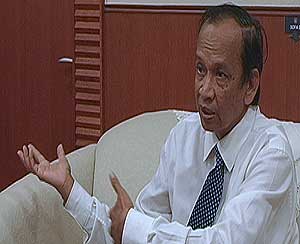 sk me whether we should practise an open tender system, direct negotiation or negotiated tender, the most important thing is that before selecting anybody, do a proper job-
lah
. Find out the track record, be confident of their capacity to undertake the job within that period. Because with some contractors, they have other jobs to complete.
sk me whether we should practise an open tender system, direct negotiation or negotiated tender, the most important thing is that before selecting anybody, do a proper job-
lah
. Find out the track record, be confident of their capacity to undertake the job within that period. Because with some contractors, they have other jobs to complete.
You may be a contractor trying to get tender from me, but you may also be a sub-contractor with a big job from the private sector. And (if) you don't disclose this to me, I’ll assume that you are just working for me. If one of these jobs is in trouble that could affect the cashflow, you will have to manage it.
Then what is the best way of reducing irregularities?
To reduce risks, you cannot make hasty decisions. You must really research the background of the company, their track record and financial standing. If let's say, you are the tenderer applying for a project from me, I'd want to know where you have done work before.
If you have done work with another department, I'll check with the other department. Then I will get some comfort. Because you're probably dealing with unknowns. This is what I mean by (due) diligence. You have to be meticulous but the risks might (still) be there.
When you look at the bigger picture, it appears that every year, the problems tend to be the same, don’t you agree?
Yes, because they are of the same nature. The nature of shortcomings is the same every year in terms of planning, implementation, monitoring. But the entities are different.
So why is it the same?
Can I be philosophical with you on that one? We're all human beings, we all have our own imperfections.
Someti
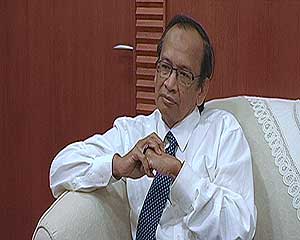 mes the mistakes are small, sometimes they are big. We don't want the big mistakes that will cost the government additional expenditure.
But for everyone to be at the same level of efficiency and diligence would be unrealistic because in the government service, people come and people go. Imagine getting someone relatively inexperienced to do project management.
On the other hand we're dealing with businessmen whose concerns are just profits. They know what they're talking about. (Civil servants) are just officers (who are) asked to negotiate with the contractors. That will then have to depend on their negotiation skills.
I'd like to think that there are enough procedures (to curb leakages). Some people have even said that there are too many.
In your report, you suggested that an Independent Review Panel be set up. What is it?
 That is for big projects above RM100 million. What I meant by an Independent Review Panel is: let's say your friend gets a project, I'll ask you (as an independent party) to give a review on the cost, design, the standards or quality. So the whole objective is to get good value for money, and to have a second opinion so that we can prevent problems later on.
Normally, based on our reports, the (usual) weakness of project management is that the (work) tends to get delayed, and then there will be additional costs and sub-standard quality. If these are not rectified in time, the government will have to spend additional money.
What about for smaller items, like the RM800 toilet signage?
That relates to supervision again. Someone has to be held responsible for that. It shouldn't have happened in the first place. If you can buy something from (hypermarkets) Giant or Tesco, why spend hundreds (of ringgit) on it somewhere else?
So why does it happen? Maybe there are people with problems with their integrity. In everywhere, there will be people trying to find loopholes for their own benefit.
Based on a random sampling in the Audit Report, can you give an estimate of how much we’ve lost due to irregularities and poor governance?
That's a very popular question asked of me. I don't know (the answer). We don't do that kind of (calculation). I also don't want to sensationalise (matters) and say that we've lost RM1 billion. I will not be able to justify that kind of figure.
Why do something that I cannot justify? My business is not to sensationalise things. My business is just to report as accurately as possible. Because we don't do total audits, it's difficult to calculate.
Should civil servants be afraid of you?
If they work with the fear of being audited, I'm sure they will do their best. If they're not audited, nobody would know. If they're unlucky and if their case comes up, then they would have to be audited.
Don't fear me as an auditor, but fear being audited. Also fear god. If you're god-fearing, your conscience will tell you to do a good job. You'd be hardworking and competent.
Sometimes it's sheer inefficiency and has nothing to do with corruption. Corruption cases are criminal. Until you convict a person in court, it's not corruption. When you say corruption, you have to know what you mean.
You have been an auditor-general since 2006. Looking at the report every year, do you get upset over what you find?
Of course I get upset as a taxpayer when I see all these imprudent cases, like any other taxpayer. But as the AG, I acknowledge that wherever there are human beings, I can expect imperfections.
I just hope our report will serve to help people improve themselves. At least then they can know where the past mistakes have been.


Are you sure you want to delete this comment?
This action cannot be undone.