




Tales of duplicity and hubris
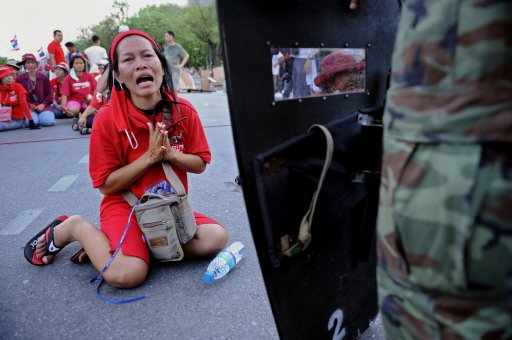
The eruption of political violence in Bangkok last May has been billed as a battle between the rural "commoners" and the feudalistic "aristocrats" - a Thai version of the Marxist class struggle pitting the poor from the impoverished northeast against Bangkok's urban rich.
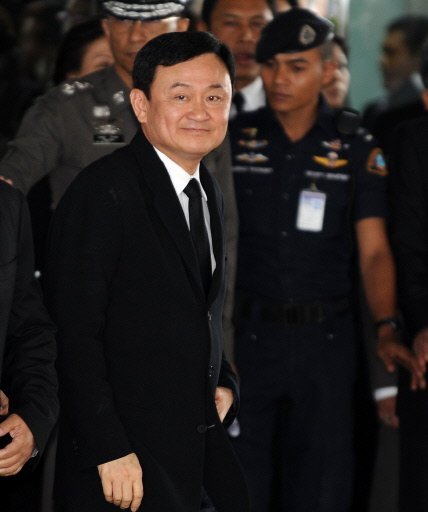
If only it's that simple. But whatever the narrative, one man features prominently - Thaksin Shinawatra . Without doubt, the former premier-turned-fugitive is one of the most controversial political figures in the country's tumultuous history.
The eruption of political violence in Bangkok last May has been billed as a battle between the rural "commoners" and the feudalistic "aristocrats" - a Thai version of the Marxist class struggle pitting the poor from the impoverished northeast against Bangkok's urban rich.
If only it's that simple. But whatever the narrative, one man features prominently - Thaksin Shinawatra . Without doubt, the former premier-turned-fugitive is one of the most controversial political figures in the country's tumultuous history.
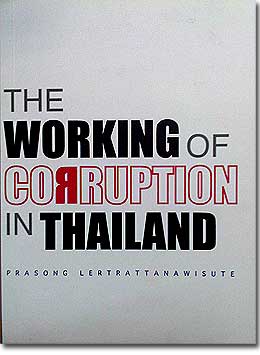 Thaksin's five-year reign - considered long by Thailand's standard - has made him a saint for some people and a sinner for others. Perhaps the best way to understand the man is through
‘The working of corruption in Thailand: Tales of duplicity and hubris'
, a book written by noted Thai journalist Prasong Lertrattanawisute.
Thaksin's five-year reign - considered long by Thailand's standard - has made him a saint for some people and a sinner for others. Perhaps the best way to understand the man is through
‘The working of corruption in Thailand: Tales of duplicity and hubris'
, a book written by noted Thai journalist Prasong Lertrattanawisute.
Thaksin was catapulted to power on the back of his carefully crafted image as the country's saviour in the wake of the 1997 Asian Financial Crisis, which incidently was sparked by the fall of the Thai baht. In the January 2001 elections, the telecommunications billionaire won handsomely to form the new government.
‘Tales of duplicity and hubris' is a collection of investigative reports by Prasong and his editorial team at Matichon Publishing Group on cases of corruption involving Thai politicians, in particular Thaksin. It included Thaksin's various graft cases dating back to 1991 - 10 years before his rise to power.
Thaksin's millionaire maid
The book kicked off its first 26 chapters with the probe into Thaksin falsifying records of his vast assets.
 The painstaking investigation by
Matichon
, which was published shortly before Thaksin was confirmed as prime minister, provided solid evidence that four of his household staff were among the richest men and women in Thailand.
The painstaking investigation by
Matichon
, which was published shortly before Thaksin was confirmed as prime minister, provided solid evidence that four of his household staff were among the richest men and women in Thailand.
The quartet held stocks of several public-listed and unlisted companies belonging to the Shinawatra family worth almost 12 billion baht (RM1.2 billion). The total value of stocks was larger than that of Thailand's two richest families combined.
The Matichon journalists were puzzled by a number of mysterious names among the top shareholders in companies owned by the Shinawatra family. This included a Ms Boonchoo.
Taking a punt, one of the journalists made a telephone call to the house of Bannapoj Damapong, Thaksin's brother-in-law.
"May I speak to Ms Boonchoo please," the journalist asked.
"Ms Boonchoo is not at home. She has gone out to the market," replied the person at the other end of the line.
It was later discovered that Boonchoo was a maid in Thaksin's household. Based on her shares in the Shinawatra family empire, Boonchoo was Thailand's 13th richest stockholder in 1994.
But Boonchoo was not the only millionaire staff in the Thaksin household. Between 1994 and 1997, she and another maid, a driver and a security guard were among the country's ‘super-rich'.
‘Honest and unintentional mistake'
The book also contains details of corruption cases involving other political leaders and high-ranking civil servants going back almost 60 years. It takes readers through the complex world of business, political and legal manipulation in using secret networks of influential nominees.
 Originally written in Thai, the book is a testimony of refined journalistic work backed by research and data analysis. The investigative team spent years painstakingly piecing together information from sources such as the National Anti-Corruption Commission, Securities and Exchange Commission and many others.
In the ‘shares for housemaid' case, the journalists found that Thaksin's stock transfer to his household staffs began in 1991 when he made his first foray into politics and was subsequently appointed to the cabinet.
 Ironically, when
Matichon
first published the story in September 2000, it failed to generate public outrage as many had held out the hope that Thaksin was the answer to the country's problems.
Ironically, when
Matichon
first published the story in September 2000, it failed to generate public outrage as many had held out the hope that Thaksin was the answer to the country's problems.
The expose nevertheless resulted in Thaksin being brought before the Constitutional Court soon after he won nationwide elections. At the court hearing, Thaksin conceded that he made an "honest and unintentional mistake" in not declaring his assets.
However, those who voted him into power were willing to dismiss this blemish and insisted that Thaksin be confirmed as PM. The court eventually voted ‘not guilty' in a 8-7 decision. With that, Thaksin won his first major battle by the skin of his teeth.
Free from the charges, Thaksin proceeded to implement a slew of populist projects targeting the poor - universal access to healthcare, a three-year debt moratorium for farmers, and generous development funds for rural villages.
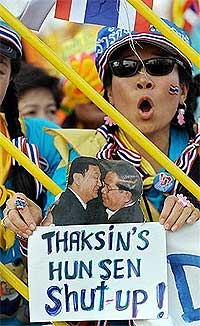 Political analysts called it ‘Thaksinomics'. At the same time, Thaksin appointed friends and relatives to key executives and parliamentary positions.
But his honeymoon soon came to an end when the media found that government contracts won by his friends often came with certain conditions - that they purchase items manufactured by companies controlled by the Thaksin family.
The profits were quickly laundered and transferred to anonymous accounts overseas set up by Thaksin or his children. Public anger grew when his ‘war on drugs' led to the extrajudicial killings of 3,000 ‘suspected' drug dealers by the police.
Thaksin vs media: Round 2
Stung by media criticism, Thaksin fought back in his own enigmatic style - the acquisitions of stocks in some public-listed media organisation through his cronies. His attempt to quietly buy 30 percent of shares in Matichon - his most acerbic critic - through one of his close business associates ended with public uproar and several protests. It led to a humiliating sell-back of shares .
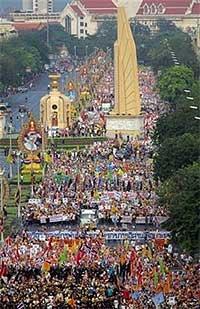
With his honeymoon period over, Thaksin soon faced mass demonstrations, some lasting several months. Thaksin's eventual fall from grace came after the military staged a coup in September 2006 while he was visiting New York. He was slapped with several corruption charges and was later sentenced by the Supreme Court to two years' imprisonment.
He did briefly return to fight the charges. But while out on bail, he received court permission to attend the Beijing Olympic Games in 2008. He never returned.
In February 2010, the Supreme Court declared Thaksin guilty of illegally hiding his assets worth US$7.2 billion in secret overseas accounts when he was prime minister. The court ordered the partial seizure of the assets, leaving around US$4.7 billion (RM14.6 billion) to his family.
Thaksin, who was in self-imposed exile mostly in Dubai, slammed the verdict as biased and unfair and called on his Red Shirt supporters to converge in Bangkok and demand Prime Minster Abhisit Vejjajiva dissolve Parliament. His game plan - that a pro-Thaksin government could be formed so that he could claim back his money.
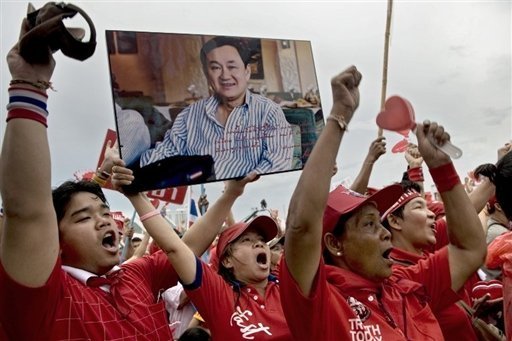 Violent demonstrations ensued for two months which ended with a military crackdown on May 19, resulting in 100 deaths.
By then, Thailand was bitterly divided between the Red Shirts who clamour for the return of Thaksin, those who consider the former prime minister a crook, and the royal-military establishment, which is threatened by a politician with deep pockets.
Whatever direction Thai politics takes, 'Tales of duplicity and hubris' is a contribution from the media on how populist politicians such as Thaksin could manipulate public support to win power.
MUSTAFA ALI is a freelance journalist.


Are you sure you want to delete this comment?
This action cannot be undone.