




MRT the most viable option, says gov't
Amid criticism of the mass rapid transit (MRT) project in Kuala Lumpur, with ground-breaking due less than a year away, the government insists that this is still the best bet.
Amid criticism of the mass rapid transit (MRT) project in Kuala Lumpur, with ground-breaking due less than a year away, the government insists that this is still the best bet.
Due to the rapid rise in population, the federal capital will be gridlocked by then if the MRT is not in place, the Land Public Transport Commission (Spad) said.
According to the Performance Management and Delivery Unit (Pemandu), the Klang Valley population will reach 10 million by 2020.
"By 2020, there could be a rail demand by 4.5 million passengers daily. While the National Key Result Areas initiatives can cover the 1.3 million, who will cover the 3.2 million gap?" asked Spad CEO Mohd Nur Ismal Kamal.
Once completed by 2020, the rail system - which includes the MRT - is expected to cater to 3.2 million passenger trips daily.
At present, the public transportation share only makes up 12 percent, with 1 million people using the railway system.
"Our vision is to increase the ratio of people taking public transportation to the city population to half by 2020, with 50 percent of them using the rail," he said at a media briefing on the MRT project in Kuala Lumpur this morning.
With that, he said, RM20 billion in productivity could be unleashed in the long run, with less traffic congestion providing for time saving.
'Other alternatives already studied thoroughly'
Despite accusations by certain quarters that the MRT project was not backed by a thorough and professional study, Spad maintained that it had already put the other alternatives under the magnifying glass.
"People ask, ‘are we jumping the gun? Have we looked at the other alternatives?'. Of course we have," Mohd Nur said.
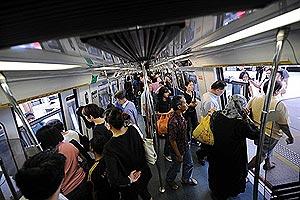 "We looked at the bus rapid transit and the light rapid transit. Although the bus system is still lower than the LRT, there is still a high infrastructure cost to think of, because we would need a segregated lane specially for the bus. It is not appropriate for direct access into the city centre.
"Only the MRT will have the adequate capacity for long-term growth planning," he said.
Once the MRT system is up in place - with government-owned Prasarana as the project and asset owner - only slightly more than a third of the operating revenue will come from non-fare sources.
This means that 64 percent of the operating cost will be borne by tickets, while the rest will have to come from property development, rental and advertising space.
"But the fare will still be controlled. It's just that we have not decided on the formula," Mohd Nur said.
Land acquisition will be a sticky issue
However, acquiring land to build the MRT stations on as well as tunnelling underground tracks - expected to account for 20 percent of the line - could be a speed bump to the project that is scheduled to have its groundbreaking in July.
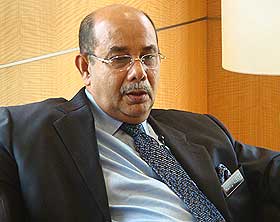 "Discussions are still ongoing with the Attorney-General's Chambers. But the project can still go through, even without amendments to the existing land laws," he said.
Spad chairman Syed Hamid Albar ( left ) chipped in to say that land acquisition should not be a hindrance to the project.
The 60km line of the first phase has been identified to run through the city centre, from Sungai Buloh to Kajang, with 35 stops in between.
At an estimated cost of RM36.6 billion, the government is also planning to start work on two other MRT lines.


Are you sure you want to delete this comment?
This action cannot be undone.