




Malaysia's soccer win: Fleeting or enduring?
COMMENT Is Malaysia’s Suzuki Asean Cup success - its first in this biennial series since its inception in 1996 - a fluke, like unheralded Greece’s victory in the 2004 European Championship or unfancied Denmark’s triumph in the same competition in 1992?
Is it a one-off thing obtained when other powers were slumbering while Malaysia came in from left field and ghosted all the way to the podium’s top?
COMMENT Is Malaysia’s Suzuki Asean Cup success - its first in this biennial series since its inception in 1996 - a fluke, like unheralded Greece’s victory in the 2004 European Championship or unfancied Denmark’s triumph in the same competition in 1992?
Is it a one-off thing obtained when other powers were slumbering while Malaysia came in from left field and ghosted all the way to the podium’s top?
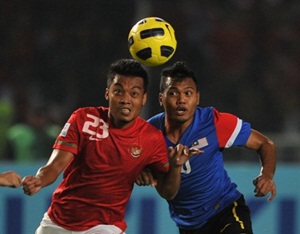 But wait a minute, wasn’t Malaysia once a regional power in the game, as annual hosts of the Merdeka tournament; a qualifier to two Olympic Games (1972 Munich and 1980 Moscow, boycotting the later because of the Soviet invasion of Afghanistan); who had placed third in one Asian Games (1962 Jakarta) and fourth, in more formidable company, at another Asiad (1974 Tehran).
Well, that Malaysia had long been in recession, as playing fields in the country were gobbled up by developers and the Football Association of Malaysia had difficulty understanding that a grassroots development plan is not fast foods or three-in-one beverages – quickly concocted and instantly forgotten.
Malaysian football, in the last 20 years, had been so starved of success that fans had given up hope of its recrudescence.
Fans took to sublimating their frustrations with avidity for English Premier League teams, while muttering under their breadth whenever they see a Korean or Japanese player excelling for EPL (English Premier League) teams, the memory of past Malaysian teams having beaten the two countries at Merdeka tournaments rankling them no end.
Malaysians had virtually given up hope of seeing their national team regain its 1960s to 80s primacy in Southeast Asia as Thailand, Vietnam, and in recent years, Singapore and Indonesia overshadowed us.
So rare became our success at the regional level that Malaysians began to forget what a good Malaysian team looked like.
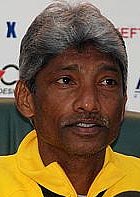 Thus, it can be said that Malaysia’s Suzuki Asean Cup triumph is largely the doing of coach K Rajagopal, whose success with state teams, notably Selangor and Kelantan earlier this decade, paved the path for his stewardship of the national squads of Under-17, Under-20, Under-23 and, finally, of the senior national team.
In other words, Rajagopal or ‘King Raja’ as he is being hailed these days, got to know his charges intimately – their strengths and weaknesses and, because he is a tracksuit coach rather than a touchline one, acquired a surer touch at how to parlay them into a coherent whole greater than the sum of its parts.
Furthermore, his refusal to be daunted by the absence of seven senior players from injury spurred him to challenge his younger charges to rise to the occasion, which is what they eventually did.
School of hard knocks
They say the best football coaches are never really out of the top drawer as players.
As second rate players, they more keenly acquire the touch of the alchemist at turning base metal into gold, thus gaining as coaches the vicarious satisfaction of reaching summits that eluded them as players – this, on the assumption, that coaching is a degenerate form of playing.
As a player in the 1970s with his employer, PKNS, in the Selangor premier league and with his club, Hunters, Rajagopal was a wiry, nippy striker, allowed to shine when the more famous Mokhtar Dahari was having an off-day.
After his playing days, he proceeded through the coaching mill, acquiring the various classes of certification.
His receptivity to systems and concepts of play that reflected the European penchant for organisation more than the Latin flair for outrageous and telling improvisation meant that he stood out as an Asian attendee at coaching academies in Germany and elsewhere.
But advanced soccer coaching certificates are like taking courses in creative writing – there’s no way you know how to do the thing until indeed you do the thing.
Rajagopal apprenticed in the school of hard knocks with the Selangor and Kelantan state teams, before going on to the national age-group squads, always evincing confidence he had what it took to succeed as a coach.
Now that he has succeeded he must avoid the braggadocio that sometimes prompts him to talk like he’s an Alex Ferguson or an Arsene Wenger.
He has done very well but immodesty ill-suits a sports hero, which is what he’s right now.
TERENCE NETTO has been a journalist for close on four decades. He likes the occupation because it puts him in contact with the eminent without being under the necessity to admire them. It is the ideal profession for a temperament that finds power fascinating and its exercise abhorrent.


Are you sure you want to delete this comment?
This action cannot be undone.