




Japan's strategic dilemma in Northeast Asia
The recent tensions in the Korean Peninsula seems to have highlighted Japan's strategic dilemma not only vis-a-vis North Korea but also South Korea, Russia and China. Malaysiakini recently interviewed Professor Lee Poh Ping on the issues.
The recent tensions in the Korean Peninsula seems to have highlighted Japan's strategic dilemma not only vis-a-vis North Korea but also South Korea, Russia and China. Malaysiakini recently interviewed Professor Lee Poh Ping on the issues.
 Besides being a Senior Research Fellow of the Institute of China Studies at the University of Malaya, he is also the president of the Malaysian Association of Japanese Studies (Majas).
Malaysiakini: When Japanese PM Naoto Kan said in early December last year that the Self-Defence Forces (SDF) could be dispatched to South Korea to ensure the safety of Japanese nationals in case of an emergency caused by North Korea, it received negative responses even in South Korea itself.
Why are South Koreans, facing a North Korean threat, still so sensitive to the possibility of Japanese soldiers landing on their land?
Professor Lee Poh Ping: The answer is obvious - negative Korean memories of Japanese colonisation of their country from 1910-1945. The Koreans have no problems concerning economic and even cultural relations with Japan after the end of colonisation but they, and this includes pro-Japanese Koreans, are still sensitive about having Japanese troops in the Korean peninsula for whatever reason.
But more interesting is the Japanese reaction. Kan's remarks, if made about twenty years ago, would have created an almighty political row as to even threaten Kan's political career.
This did not happen even though there were some Japanese criticisms of Kan. This suggests an increasing Japanese tolerance for the dispatch of Japanese troops overseas that could be deemed offensive, something that would violate Article Nine of the Japanese constitution.
This is not to say the Japanese are about to revise or abolish Article Nine - that would probably require a cataclysmic event to do so. But this means that there is no longer an automatic knee jerk negative Japanese reaction any time the military role of Japan arises.
What is the relationship between the defence forces of South Korea and Japan in the face of a common threat perception vis-a-vis North Korea?
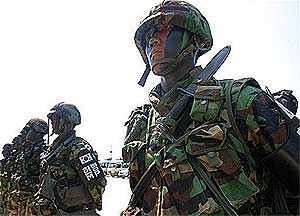
Both now perceive North Korea as a threat. And Japan is an observer to the joint military exercises conducted between the US and South Korea recently. Whether there will be actual military cooperation remains to be seen. As mentioned earlier, South Korean sensitivity is there.
 Apart from the North Korean threat, it is not clear that as far as the reunification of Korea is concerned, the two countries are singing from the same page. South Korean president Lee Myung Bak wants an unified Korea if not by violent means, then peacefully.
Japan wants the removal of the North Korean threat, particularly the denuclearisation of North Korea. They probably do not want a unified Korea which could be a fearsome economic competitor or worse, a potent strategic threat.
One of their great Meiji statesmen, Yamagata Aritomo, has once said that Korea was like a dagger pointed at the heart of Japan. That justified the subsequent Japanese conquest of Korea. I suspect a lot of modern Japanese strategic thinkers still secretly think along this line.
Japan and South Korea still dispute the ownership or sovereignty of Takeshima/Dokto. How does it affect the bilateral relations between Japan and South Korea? How to solve the problem?
Takeshima/Dokto consists of very little land. However, the fishing waters around it are rich. So there is an economic angle to the sovereignty issue. At the present moment, the issue can be considered to be an irritant in the bilateral relations.
I don't know how it can be solved as there is no mutual agreement to take it to the International Court of Justice (ICJ). Probably it should be the Deng Xiaoping approach of leaving it to future generations.
What role would and could Japan play in the current situation on the Korean Peninsula?
Japan for the present moment has little role to play, given that they are prohibited by their constitution to act militarily. They have run out of effective economic sanctions. However, they have an important role in providing economic aid, which North Korea would desperately need, if the Korean issue were to be resolved.
Amidst the tension on the Korean Peninsula, Russia has signaled its resolve to reclaim Japan's Northern Territories or what Russia calls the Kuril Islands through President Medvedev's visit to the disputed area. In your observation, how would Japan handle the issue in the current situation on the Korean Peninsula and the cooling of its relations with China after the latest dispute over the Senkaku/Diaoyu islands?
It has been suggested by some that Medvedev made the visit to one of the disputed islands after the Senkaku/Diayou blowup between China and Japan. If so, it will complicate the issue with both sides not seeing the issue in purely bilateral terms but also considering the positions of relevant third parties.
I don't think the present strategy of Kan, or more likely of Maehara, the Japanese foreign minister, to draw the US into the Senkaku/ Diayou dispute will be effective in the long run. They have to settle with the Chinese who can become very obdurate if the US were to be drawn in.
In its latest defence policy, Japan has clearly identified China as one of its two potential adversaries (the other being North Korea). How do you see the future relations between Japan and China?
This needs another interview. All I will say for now is that the present relations are not good. Ultimately, both, being neighbours and Asian powers, will have to get along with each other and not draw third parties into their disputes.
On the whole, do you see Japan facing a strategic dilemma of not having enough close friends in its immediate neighbourhood?
It is not so much of not having enough close friends in their neighbourhood that is the cause of the Japanese dilemma though it is contributory. Throughout modern Japanese history or even earlier, the Japanese fear of isolation, according to one scholar, has led them to identify with the hegemonic power in the region.
But such identification creates the dilemma of how to avoid either entrapment or abandonment. They do not want to be so close to that hegemonic power that they have to follow that power even to the sacrifice of their national interests.
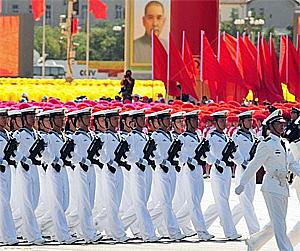 Or if they act too independently, then that hegemonic power will find them to be of no use and might abandon them.
Japan is best able to avoid either when the hegemonic power is unchallenged.
That power is the United States for much of the postwar period.
It becomes more difficult now with a rising China that can challenge US hegemony in the region.
JAMES WONG WING ON is a former member of Parliament (1990-1995) and a former columnist for the Sin Chew Jit Poh Chinese daily. He read political science and economics at the Monash University in Melbourne, Australia. While in Sin Chew , he and a team of journalists won the top awards of the Malaysian Press Institute (MPI) for 1998 and 1999.


Are you sure you want to delete this comment?
This action cannot be undone.