




Witness: Johor sultan has stake in 'crooked bridge'
The Sultan of Johor has a stake in the Malaysia Singapore International Gateway bridge project, better known as the ‘crooked bridge’, the Kuala Lumpur High Court heard today.
The Sultan of Johor has a stake in the Malaysia Singapore International Gateway bridge project, better known as the 'crooked bridge', the Kuala Lumpur High Court heard today.
Sultan of Johor Sultan Ibrahim III secured his stake on the project when he was the Tengku Mahkota (or crown prince) in 1998.
This was revealed by businessman Shazryl Eskay Abdullah in his testimony today.
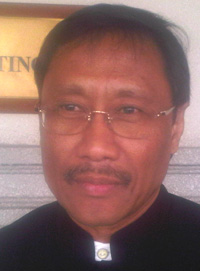 Eskay
(right)
is suing Merong Mahawangsa Sdn Bhd and the company’s major shareholder Yahya A Jalil for RM20 million.
Eskay
(right)
is suing Merong Mahawangsa Sdn Bhd and the company’s major shareholder Yahya A Jalil for RM20 million.
According to his statement of claim, the defendants failed to pay him RM20 million as agreed for helping the defendants secure the crooked bridge project.
Yahya, who as Merong Mahawangsa director, was alleged by Eskay to have had sought his help to procure the project from the government and RM640 million in foreign funds for the project.
In his testimony, Eskay said that he had initially wanted a 16.66 percent stake in Merong Mahawangsa in return for successfully helping the company secure the project.
Change in agreement
He claims that on July 3, 1998, Yahya had however contacted him and informed him that this arrangement could not be executed.
"Yahya informed me there was a change of situation in Merong Mahawangsa. Yahya explained to me the then Tengku Mahkota Johor (the present sultan) would become a shareholder in the company.
“He told me that our (initial) agreement for me to have 16.66 percent share in the company could not materialise. Yahya had with him a prepared letter of undertaking and gave it to me to read.
"He offered to compensate me with a lump sum of RM20 million for giving up my entitlement of 16.66 percent stake in the company,” he said.
Eskay, who is the third witness for the plaintiff, said he was shocked to hear Yahya’s alternative arrangement.
“I felt betrayed, dismayed and upset. After I re-composed myself, I asked him how could I be sure the defendants would pay me the sum of RM20 million by Nov 3, 1998, since the project has not started,” the businessman said.
“The second defendant (Yahya) assured me not to worry because the Tengku Mahkota was coming in with the money, and the defendants would use the money to pay the sum of RM20 million,” he said.
Eskay said with that assurance, he accepted it and both of them signed the letter of undertaking dated July 3, 1998 as he had no choice.
The businessman, in his statement of claim indicated there were several VVIPs who wanted to be partners and directors in Merong Mahawangsa.
Sultan Ibrahim had sometime in June last year called for the project's revival.
"Given the importance of the Johor Causeway for the people, my family from the time of my ancestor Almarhum Sultan Ibrahim down to my father, Almarhum Sultan Iskandar, has supported efforts to improve on the Johor Causeway," said the ruler as reported by Bernama .
'Megat Junid a family friend'
Answering questions from his counsel CV Prabhakaran, Eskay said Yahya had sought his help in February 1998 because he was well linked with the government as he was a former diplomat.
“He wanted me to help him by using my good relationship and contacts in the government to increase his stake in that consortium (Suria Kalbu Sdn Bhd).
“I advised him that his eligibility for a majority stake of 60 percent had to be supported by availability of substantial funds as the project was estimated to cost RM690 million at that time.
“He admitted to me that he did not have access to such funding facilities. With that he also requested me to seek foreign funding. In return, he promised I would be entitled to 16.66 percent equity in the defendants company,” he said.
 He said he managed to secure international funding from Charles E Jay Company, based in the United States, and then approached Megat Junid Megat Ayob (
right
), who was then deputy home minister, about the project as he was a family friend.
He said he managed to secure international funding from Charles E Jay Company, based in the United States, and then approached Megat Junid Megat Ayob (
right
), who was then deputy home minister, about the project as he was a family friend.
“Sometime in late Feb 1998, I met Megat Junid personally and briefed him about the Johor-Singapore bridge project and also informed him about my arrangement with the funder in the United States.
“I requested his assistance to discuss with EPU to help me and Yahya to increase our share in the consortium from 20 percent to 60 percent. He said he would help and he did,” said Eskay.
'Consortium benefited from my work'
He said on June 25, 1998, the director-general of EPU upon the agreement of the then prime minister Dr Mahathir Mohamad, awarded the project then called "Cadangan pembinaan jambatan menggantikan Tambak Johor secara penswastaan" (Proposal to replace the Johor causeway via privatisation) to three companies.
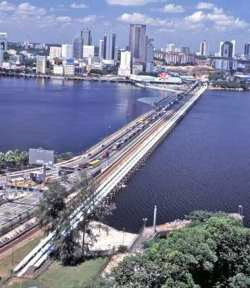 The companies are Ibex Corporation (subsidiary of Merong Mahawangsa) that held a 60 percent stake, and also Transwater Corporation and Diversified Resources Bhd which held a 20 percent stake each.
Eskay said he is entitled to receive the RM20 million award although the Suria Kalbu consortium had been replaced with Gerbang Perdana Sdn Bhd.
“Maybe in order to evade payment of RM20 million to me, Suria Kalbu has been replaced with Gerbang Perdana. Nonetheless the defendants had received the benefits of my services and the defendants ave at all times acknowledged it, in particular, by their very own letter of undertaking (LoU) dated July 3, 1998.
“They are duty bound to pay me the RM20 million and cannot deny their obligation to pay me under the LoU, simply because they use a different consortium company to undertake the said project.”
Eskay said although the project had changed from privatisation to “turnkey”, the defendants had received benefits from his work.
“In fact, the project which started at RM690 million is now worth RM2 billion with the Customs Immigration and Quarantine Complex, bridge, and the diversion road link package. The risk involved in a turnkey project is considerably less than in a privatisation project,” he said.
Plaintiff closes case
On cross-examination by the defendent's counsel Stanley Chang, Eskay maintained he was entitled to the award although the nature of the project had changed.
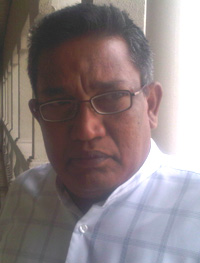 Yesterday, Megat Junid's former bodyguard Mohamad Mahti Abdul Rahim
testified
that Eskay obtained a letter from the Economic Planning Unit (EPU), which awarded him the 'crooked bridge' project.
Yesterday, Megat Junid's former bodyguard Mohamad Mahti Abdul Rahim
testified
that Eskay obtained a letter from the Economic Planning Unit (EPU), which awarded him the 'crooked bridge' project.
The project was first mooted by the Mahathir administration but talks with Singapore on the matter broke down. Concessions sought by Singapore were not agreeable by Malaysia.
Thus, Mahathir wanted to proceed with a 'crooked' half-bridge on the Malaysia side that would at least allow water and ships to pass through the Straits of Johor.
Mahathir's successor, Abdullah Ahmad Badawi, cancelled the project in 2006, following a bitter feud between the two leaders.
Mahathir had last year asked for the crooked bridge project to be revived.
The plaintiff has closed its case and tomorrow the hearing will resume before Justice VT Singham.


Are you sure you want to delete this comment?
This action cannot be undone.