




Gerakan, S'gor: Rethink nuclear ambitions
In view of what has happened to Japan’s nuclear plants following the massive earthquake and tsunami there, the government should take a re-look and study all possible implications of its plan to build nuclear plants in the country.
In view of what has happened to Japan’s nuclear plants following the massive earthquake and tsunami there, the government should take a re-look and study all possible implications of its plan to build nuclear plants in the country.
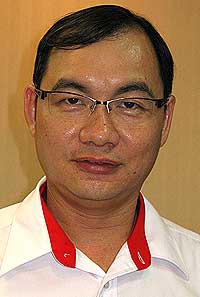 Saying this today, BN component member Gerakan’s head of environment, safety and quality of life bureau, Dr Cheah Soon Hai (
right
), said the government should re-assess the pros and cons, benefits and risks of having nuclear plants in the country.
Saying this today, BN component member Gerakan’s head of environment, safety and quality of life bureau, Dr Cheah Soon Hai (
right
), said the government should re-assess the pros and cons, benefits and risks of having nuclear plants in the country.
The government should also set up a parliamentary select committee to get views and experts' advice on the matter.
"The government cannot ignore the public's concern and apprehension over health and safety aspects. The people's welfare must come first," he said in a statement.
Cheah, who is also Derga State Assemblyman, said there is no foolproof system to prevent radiation and the possibility of leakages, as nuclear reactors built today may not be able to withstand the future onslaught of nature and the environment impact in the future.
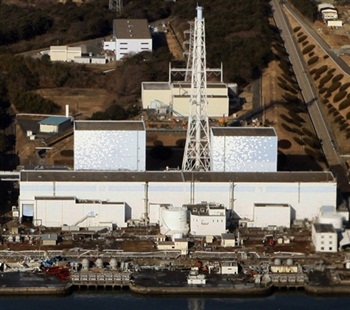 When the nuclear plants were built several years ago, the Japanese authorities had given ample assurances that they were safe and located away from populous areas.
"Now we see the Japanese authorities and their nuclear experts scratching their heads over the leakages and scrambling to solve the problem. But the people's lives are already endangered," said Cheah.
"Thus, we hope our government will be more careful as we cannot foretell the future. It will be useless to cry over spilt milk," he added.
Yesterday, Energy, Green Technology and Water Minister Peter Chin Fah Kui said the government would be transparent in its planning, policies and implementation stages with regard to building nuclear plants in the country.
Chin said there was still time to study everything as the first nuclear plant in the country would not be built for at least 10 years.
Lest we forget 2004
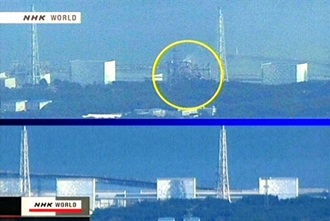 Meanwhile, Selangor exco in charge of tourism, consumer affairs and environment Elizabeth Wong warned that the Fukushima nuclear reactor disaster has shown that the safety back-up plans in place were inadequate.
“Despite being warned by experts and citizen groups that stronger earthquakes and tsunamis could happen, they failed to plan for them,” said Wong, who is also the PKR supreme council member.
Recounting the tsunami tragedies on the coasts of countries in and between the Indian Ocean and South China Sea, Wong said the government should have learned about the nation’s vulnerability to the effects of earthquakes.
 “Whether they be built on the west or east coast of Peninsular (Malaysia), the proposed two nuclear power plants will be vulnerable to seismic-related activities,” said Wong in a statement.
Every country that has a nuclear programme, or is contemplating one like Malaysia, has a responsibility to understand what is happening at the Fukushima reactors.
“We also have to understand what it tells us about the risks of nuclear power and whether nuclear-based electricity is worth the cost.”
All the safety back-up plans prepared by the authorities in Japan were knocked out in one fell swoop, said Wong ( left ), as a meltdown appears to be taking place after two explosions.
The authorities have even resorted to the desperate measure of pumping in sea water to prevent a total meltdown, she added.
“The nuclear industry and nuclear agencies have a long history of accidents, cover-ups and poor follow-up on safety standards. Japan is not unique in this regard, as it is a pattern found around the world.”
Despite being warned by experts and citizen groups that stronger earthquakes and tsunamis could happen, they failed to plan for them, she added.
“We do not need to take the path of nuclear power. Instead it should be a distant, desperate last resort and we should be prioritising renewables and energy efficiency,” she said, citing the downward price trend of solar power.
“With a Renewable Energy Bill currently tabled and an Energy Efficiency Bill in the works, it is unconscionable for Malaysia to go ahead with nuclear power in light of the nuclear disaster in Japan, and the pattern of nuclear accidents around the world.
“The price of nuclear power is not worth the risk because safer, cheaper and more sensible alternatives exist.
“We call on the federal government to put an immediate stop to the current nuclear power plans for the good of the nation and the safety of our citizens.”


Are you sure you want to delete this comment?
This action cannot be undone.