




MACC lawyer questions Sivanesan's credibility
The credibility of marketing officer T Sivanesan, who had testified yesterday before the Royal Commission of Inquiry that he was assaulted twice while detained under custody of the Malaysian Anti-Corruption Commission (MACC), came under scrutiny today.
The alleged assault victim gave conflicting testimony during the inquest and at the RCI yesterday.
The discrepancy was pointed out by MACC lawyer Muhammad Shafee Abdullah, who asked Sivanesan about the inconsistency.
The first concerns him putting down in his police report and also testifying in the Teoh Beng Hock inquest that his hands were not handcuffed when a bag of ice was placed on his private part, and that he managed to remove it.
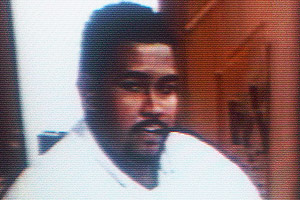 However, Sivanesan, 24 (
left
), yesterday testified that his hands were cuffed.
However, Sivanesan, 24 (
left
), yesterday testified that his hands were cuffed.
This resulted in the RCI chief commissioner, Federal Court judge James Foong, to reprimand Sivanesan and query him which version is the truth?
“I was having fever ( demam ) when I lodged the report. And at the inquest I testified according to what I had stated in the police report.
“However, yesterday at this RCI remembered that both my hands were cuffed. That is why I stated what I said yesterday and it is correct,” he said.
This resulted in Foong asking whether he was well or was having fever yesterday, to which Sivanesan testified he was well.
Anther inconsistency pointed out by Shafee was that yesterday Sivanesan told the RCI he was picked up from his home at 1.30pm on Sept 4, 2008. However, in his police report, the witness states he was arrested sometime at 9am.
The other points included his testimony yesterday that he had fainted twice as a result of being assaulted twice once on the night of Sept 4 and again on Sept 7, 2008. However, in his police report Sivanesan states he nearly fainted between midnight and 6.30am in the morning of Sept 7.
Shafee: Are you lying?
As a result of the inconsistency, Shafee suggested to Sivanesan that he was lying in the RCI, to which Sivanesan disagreed.
There was also a light moment in court when Shafee asked about Sivanesan’s claim of being hit with a rotan to his private part, is it to his penis (batang) or the scrotum (telur), to which the witness admitted it was to his penis.
“However, there was no cut to that part,” Sivanesan said, adding he could not remember whether the cane struck him on that part very hard or was merely a tap.
The witness however, said his underwear was torn as a result of the incident and he had brought the said clothing at the inquest to show it.
Shafee accused Sivanesan again of lying that if his penis was struck hard by the rotan, he would have died, to which the witness disagreed.
When asked by the senior MACC counsel, Sivanesan admitted he was a DAP member but he is also a member of BN. The witness denied that he joined the DAP and was placed in a position at Selangor Pakatan government subsidiary Kumpulan Semesta Sdn Bhd as a reward for his testimony that he was assaulted.
He also denied suggestions made by Shafee that he had met senior DAP members including Lee Kee Hiong, Lim Kit Siang, Lee Wye Ming, Seri Kembangan assemblyperson Ean Yong Hian Wah and also Teresa Kok, the Kinrara assemblyperson and a Selangor state executive councillor.
Shafee had alleged that the meeting with the senior DAP members was as a result of him arguing that he had not been given what he was promised following his testimony over being assaulted by the MACC.
Sivanesan agreed that he had lodged a report against a DAP man for allegedly threatening him in February.
Psychological evaluation only since 2008
Meanwhile, the director of the MACC Academy, Samarajoo Manikam, testified at the RCI that the anti-graft officers had only been psychologically screened since 2008.
“This is to ascertain they have a good profile,” he said, adding that the officers were recruited via the Public Services Commission.
 Samarajoo was asked this question by commissioner former Court of Appeal judge T Selventhiranathan and another commissioner, psychologist Professor Mohd Hatta Shahrom, who noted it would be important for officers to undergo such a screening to identify bad hats.
The witness said the academy has been operation since 2005 and is the first of its kind in the world specially to combat graft.
He said new recruits who possessed SPM or diploma would undergo courses with the academy to become investigation officers or assistant investigation officers.
Samarajoo said if they do not pass the required courses, authority cards would not be issued to them.
Samarajoo, who holds a Masters in Criminology and has 29 years experience, was asked by Foong what took the academy so long to improve on its teaching methods.
“You have the Police and Criminal Evidence Act 1984 (PACE) Codes of Practice in the UK, and the Independent Commission Against Corruption (ICAC) which the MACC could have emulated. But what took you so long to model after them,” Foong asked.
The chief commissioner also criticised the MACC’s training as its credibility was at stake, and “its products were now in question” following Teoh’s death and the recent death of Selangor Customs Department assistant director Ahmad Sarbani Mohamed last Wednesday.
Samarajoo admitted that the MACC is still looking into the matter and noted the academy lacks research officers and funds. He noted that the academy received an allocation of RM9.9 million last year, of which only RM3 million is for organising course.
“The others are for emoluments and maintenance of the academy,” he said.
Samarajoo admitted that he had not been to visit ICAC but has visited the International Anti-Corruption Academy in Vienna which was still not in operation.
This led to Foong to question on the need to go so far, whereas the MACC could have learnt more from an established anti-graft body like Hong Kong’s ICAC.
The RCI is being held over Teoh’s death on July 16, 2009, after he was detained overnight at the Selangor MACC headquarters in Plaza Masalam, Shah Alam.
The commission continues tomorrow.


Are you sure you want to delete this comment?
This action cannot be undone.