




Opposition eyes improved election result in S'pore
Singaporeans went to the polls today with opposition parties hoping to reduce the government's overwhelming majority amid voter discontent over the cost of living and immigration policies.
Singaporeans went to the polls today with opposition parties hoping to reduce the government's overwhelming majority amid voter discontent over the cost of living and immigration policies.
The ruling People's Action Party (PAP), in power since 1959, won 82 of the 84 seats contested in 2006 but now faced its most vigorous challenge in decades.
Six opposition parties are fighting the PAP, which was taken aback by the depth of voter resentment during the campaign, forcing the government to issue a rare apology for policy mistakes and appeal for support from new voters.
 Apart from PAP, others in the fray are the Workers' Party (WP) led by Low Thia Khiang, Reform Party (RF) led by Kenneth Jeyaretnam and Singapore Democratic Alliance (SDA) led by Chiam See Tong, which is composed of the Singapore Malay National Organization (PKMS) and the Singapore People's Party (SPP).
Others include the National Solidarity Party (NSP) and the Singapore Democratic Party (SDP).
Voting is compulsory for Singaporeans and close to half of the 2.2 million voters will be casting their ballots for the first time, partly because of uncontested seats in past polls.
This adds an element of uncertainty in a country where publishing pre-election poll results is banned.
"People used to say they don't vote for the opposition because they don't have much of a choice, but the Workers' Party is fielding quite a strong team this time," voter Annie Lim, 61, said in Aljunied, the most hard-fought constituency.
Polling closes at 8pm
More than 50 Aljunied voters were already in the queue at a polling station located in a public housing estate before it opened at 8am. Voters had until 8pm to cast ballots and results should be known a few hours after that.
"This election is different. So many constituencies are being contested and the opposition has fielded many quality candidates," said Andrew Poh, a regional manager with an aviation firm.
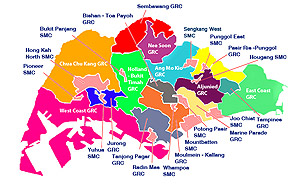 Of the 87 seats in the incoming parliament, five have already been won gifted by a walkover for a PAP team led by the republic's 87-year-old independence leader Lee Kuan Yew.
His son, Prime Minister Lee Hsien Loong, 59, has apologised for policy mistakes and gaffes since the last polls, including the 2008 escape of a suspected Islamic militant, failure to prevent floods in 2010 and high home prices.
Another sensitive issue was the rapid influx of immigrants in recent years, which Singaporeans blamed for depressing wages, causing overcrowding and straining public services at the expense of citizens.
"We're trying our best on your behalf. And if we didn't quite get it right, I'm sorry but we will try and do better the next time," the prime minister said at an open-air rally at the financial district during the campaign.
Opposition uses new media
Opposition parties have relied heavily on the web, particularly social media platforms such as Facebook and Twitter, because the mainstream newspapers and broadcast media are widely regarded as PAP mouthpieces.
The opposition has fielded successful professionals, entrepreneurs, former civil servants and ex-PAP activists as candidates.
 The PAP ticket is led by former civil servants and military officers, pro-government union officers and community organisers for the party.
The ruling party has long relied on its strong economic record to overwhelm the opposition in elections, but has been accused of stifling dissent to perpetuate its hold on power.
The economy grew a record 14.5 percent in 2010 and per capita gross domestic product stood at S$59,813 (RM144,862), according to the statistics department, making Singaporeans the second wealthiest Asians after the Japanese.
But the prosperity has not been spread evenly and inflation this year is forecast at 3.0-4.0 percent as a result of rising food and oil prices.
Apart from seats won or lost, the PAP's overall share of the popular vote in Saturday's polls will be closely watched.
The party won 67 percent of the overall vote in 2006, down from 75 percent in 2001.
Swing of up 12% expected
"Given the strength of the opposition slate, we expect an electoral swing of 7-12 percentage points from the PAP," Prasenjit Basu, Daiwa Capital Markets regional chief economist, said in a note to clients.
"The enhanced opposition representation in the new parliament will give a substantive new voice to dissent, providing for greater debate on key policy issues."
The Elections Department said an opposition party had made several complaints, including an allegation that a PAP candidate had updated her Facebook page on Friday, contravening a 24-hour "cooling off" period before the start of polls when parties were not allowed to campaign.
"We had responded to National Solidarity Party that they may wish to lodge a police report," a spokeswoman for the department said.
As at 5pm, 1.85 million Singaporeans, or 83.5 percent of eligible voters, had cast their votes, the department said in a separate statement.
- Agencies
Singapore's democratic opening
S'pore's political awakening likely to impact Johor


Are you sure you want to delete this comment?
This action cannot be undone.